
About Frederick Bernays Wiener
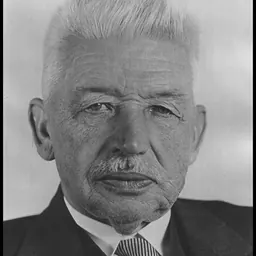
Lived 1906 – 1996 (aged 90). Frederick Bernays Wiener was an American lawyer.
Frederick Bernays "Fritz" Wiener (June 1, 1906 – October 1, 1996) was an American jurist specializing in military justice and constitutional law who became famous for the 1957 case of Reid v. Covert, which represents the only time a lawyer lost in the Supreme Court of the United States but prevailed on rehearing. That case was particularly notable in that it established that "no agreement with a foreign nation [i.e., no treaty] can confer power on the Congress, or on any other branch of Government, which is free from the restraints of the Constitution."
He is also noted for arguing for the victorious appellants in the racial discrimination case Moose Lodge No. 107 v. Irvis, , and the losing appellant in the reapportionment case Roman v. Sincock. "
Education and career Wiener graduated summa cum laude from Brown University in 1927, and magna cum laude from Harvard Law School, where he was note editor for the Harvard Law Review, in 1930. He was admitted to the bar of Rhode Island the next year, and the Supreme Court bar in 1934.
During World War II, he served in the Judge Advocate General's Corps, retiring from the United States Army in 1966 with the rank of colonel. Working for the Solicitor General's Office and later in private practice, he often argued before the U.S. Supreme Court.
From 1951 to 1956, he lectured in law at George Washington University, while also lecturing before foreign and domestic groups. In 1962 he was awarded a Guggenheim Fellowship. He retired from active practice in 1973 while continuing occasional consultations. before the United States Senate Governmental Affairs Subcommittee on Civil Service, Post Office and General Services, chaired by Senator Ted Stevens, against the passage of Senate Bill 2116, a bill which, based on the findings of the Commission on Wartime Relocation and Internment of Civilians, sought to provide an apology and financial reparations to Japanese-Americans interned during World War II. Wiener testified that the commission's report contained numerous misstatements and omissions that led to erroneous conclusions, in part because several of the commissioners had made up their minds before the investigation began. The bill died in committee without coming up for a vote.
In March 2020, Paul R. Baier—the Judge Henry A. Politz Professor of Law at LSU Law Center—published a biography of Wiener based on his unpublished draft autobiography, titled Written in Water.
Don’t just read it —
keep it.
Full-length biographies made to live with: read them, listen on the way to work, watch them tonight.
- E-book
- Audio
- Video
Instant download · yours to keep · every purchase keeps this site free
Important facts
Family & relationships
People in Frederick Bernays Wiener's life
Named in this biography and alive at the same time


Related people
Same field, nearest in time


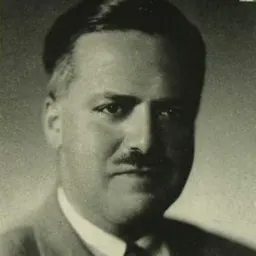

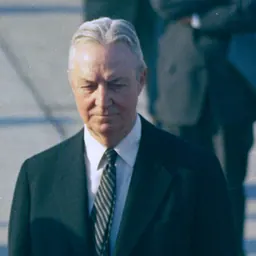
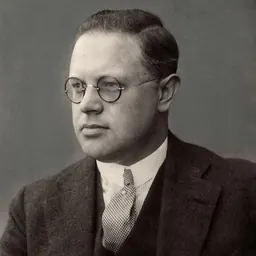
Contemporaries
People whose lives overlapped Frederick Bernays Wiener's

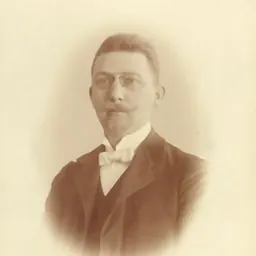


Frequently asked questions
Who was Frederick Bernays Wiener?
American lawyer (1906-1996)
When was Frederick Bernays Wiener born?
Frederick Bernays Wiener was born on 1 June 1906 in New York City.
When did Frederick Bernays Wiener die?
Frederick Bernays Wiener died on 1 October 1996 in Phoenix.
What was Frederick Bernays Wiener's occupation?
Frederick Bernays Wiener was a lawyer.
What nationality was Frederick Bernays Wiener?
Frederick Bernays Wiener was American.
Sources & further reading
· Wikipedia: Frederick Bernays Wiener
· DBpedia: Frederick Bernays Wiener
Cite this page
APA: Biography.guide. (2026). Frederick Bernays Wiener. https://biography.guide/frederick-bernays-wiener/
MLA: "Frederick Bernays Wiener." Biography.guide, https://biography.guide/frederick-bernays-wiener/.
Chicago: "Frederick Bernays Wiener." Biography.guide. https://biography.guide/frederick-bernays-wiener/.
Data last updated: 2026-09-20 · Spot an error? Report a correction.
Page generated 2026-09-27 05:32 UTC