
About Frederick Bailes
Lived 1889 – 1970 (aged 80–81). Frederick Bailes was an American and New Zealand writer.
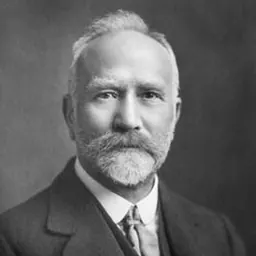
Frederick William Bailes (1889–1970) was a New Zealand-born American author, lecturer, and prominent figure in the New Thought and Religious Science (Science of Mind) movements. A close associate of Ernest Holmes, Bailes served as Assistant Dean of the Institute of Religious Science and was a best-selling author on the application of mental principles to physical healing.
Early life and medical training Bailes was born on February 15, 1889, in Dunedin, Otago, New Zealand, to John Philip Bailes and Mary Thomson. Raised in a pioneer family with an Anglican and missionary spirit, he pursued medical missionary work as a young man. In 1915, he was completing his training at the London Missionary School of Medicine, which was connected with the London Homeopathic Hospital.
One month before his graduation, Bailes was diagnosed with severe diabetes mellitus. Because this occurred prior to the discovery of insulin, the condition was considered terminal. Harley Street specialists gave him a maximum of a year or two to live, which permanently barred him from missionary work.
During this crisis, a friend introduced him to the writings of British philosopher Thomas Troward and specifically his book The Creative Process in the Individual. Applying Troward's principles of a "Universal Creative Law," Bailes engaged in mental and spiritual treatment. He noted that his laboratory tests fluctuated greatly over the next four years before his blood sugar finally stabilized, an experience he attributed to a "complete surrender to the flow of Mind." He attended the Moody Bible Institute in Chicago, where he met his first wife, Mina. Settling in Wisconsin, he served as the pastor of a Baptist church in Clinton while also enrolling at Beloit College. He used his subsequent physical vitality as proof of the restorative power of mental laws; he captained Beloit's undefeated soccer team and, in February 1918, won first honors at the thirtieth annual Wisconsin Intercollegiate Oratorical Association contest with his address, "The Winning Morale."
Bailes and Mina Isidore Gjelhaug were married by his brother, Rev. Stanley Bailes, in Grand Forks, North Dakota, on September 15, 1918. The following year, on December 10, 1921, he married Ida Lidia Amelia Wollerman in Rockford, Illinois.
Career Early ministry, national lecturing, and Religious Science After serving as a Baptist minister, Bailes transitioned into the field of success psychology and vocational analysis. By 1929, he toured the country as the president of the National Society of Psychology and Health, delivering lectures on finding one's proper vocation in cities such as Beaumont, Texas. He continued to travel extensively, eventually lecturing in thirty-three different countries across three world tours. Bailes rose to become the Assistant Dean and a principal teacher at the institute. He headed the movement's largest church, lecturing to capacity audiences of up to 2,500 people at venues such as the Fox-Wilshire Theatre, and broadcasting twice weekly on the Los Angeles radio station KFWB. In September 1945, he was officially approved by the Board as a teacher alongside Holmes, contributing practical coursework to the institute's curriculum.
Two years later on June 11, 1946, the Board refused Bailes's request to open a downtown Los Angeles chapter, Bailes stated that the denial would force his resignation. The Board accepted, and Bailes left the institute.
He also had syndicated radio broadcasts on KFWB, KFVD, and KGFJ. He rejected psychoanalysis, stating that healing was achieved through the spiritual recognition of the "Infinite Mind" rather than the resolution of subconscious conflict. His methodology has been analyzed in scholarly studies of energy healing; epidemiologist and scholar Jeff Levin notes that for Bailes, "the treatment takes place wholly within the mind of the practitioner" and the healer "does not try to influence the mind of the patient."
His teaching centered on "exact mental equivalents." Bailes wrote: "The Law does not reason... It takes exactly what we put in our mental equivalent." He cited an individual who visualized a house but failed to manifest the income for its maintenance as evidence that the Law provides only what is included in the mental directive. He categorized physical ailments as "distorted thought-forms," arguing that while no disease was inherently incurable, certain individuals remained so because they would not alter their thought patterns.
Bailes applied these principles to behavioral issues in What Is This Power That Heals?, arguing that recovery from alcoholism required self-worth rather than willpower. He stated that these laws applied equally to business and interpersonal relations.
Bailes advocated for a "complete surrender to the flow" of intelligence and instructed practitioners to avoid "mentally infected" environments and persons who focused on illness. According to historian Charles S. Braden, Bailes viewed the recovery of Ralph Waldo Emerson from tuberculosis as a primary example of this principle, asserting that Emerson was healed unconsciously by dwelling "deep in the sense of oneness with the Over-Soul."
Hidden Power for Human Problems (1957) was a best-seller published by Prentice Hall. He had one daughter, Gloria Lidia Bailes (1931–1968).
He retired from active ministry around 1957 and spent his later years residing in Lake Hughes, California. He died on July 23, 1970, at the age of 81.
Publications
Don’t just read it —
keep it.
Full-length biographies made to live with: read them, listen on the way to work, watch them tonight.
- E-book
- Audio
- Video
Instant download · yours to keep · every purchase keeps this site free
Important facts
People in Frederick Bailes's life
Named in this biography and alive at the same time



Related people
Same field, nearest in time


Contemporaries
People whose lives overlapped Frederick Bailes's




Frequently asked questions
Who was Frederick Bailes?
American author
When was Frederick Bailes born?
Frederick Bailes was born in 1889 in New Zealand.
When did Frederick Bailes die?
Frederick Bailes died in 1970 in United States.
What was Frederick Bailes's occupation?
Frederick Bailes was a writer.
What nationality was Frederick Bailes?
Frederick Bailes was American and New Zealand.
Sources & further reading
Cite this page
APA: Biography.guide. (2026). Frederick Bailes. https://biography.guide/frederick-bailes/
MLA: "Frederick Bailes." Biography.guide, https://biography.guide/frederick-bailes/.
Chicago: "Frederick Bailes." Biography.guide. https://biography.guide/frederick-bailes/.
Data last updated: 2026-09-20 · Spot an error? Report a correction.
Page generated 2026-09-27 05:03 UTC