
About Frederick Ashton
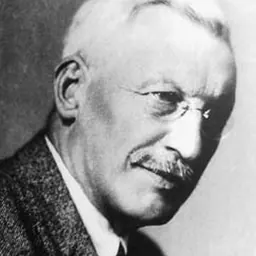
Lived 1904 – 1988 (aged 84). Frederick Ashton was a British dancer, choreographer, ballet dancer, screenwriter, librettist and ballet master.
Sir Frederick William Mallandaine Ashton (17 September 190418 August 1988) was a British ballet dancer and choreographer. He also worked as a director and choreographer in opera, film and revue.
Determined to be a dancer despite the opposition of his conventional middle-class family, Ashton was accepted as a pupil by Léonide Massine and then by Marie Rambert. In 1926 Rambert encouraged him to try his hand at choreography, and though he continued to dance professionally, with success, it was as a choreographer that he became famous.
Ashton was chief choreographer to Ninette de Valois, from 1935 until his retirement in 1963, in the company known successively as the Vic-Wells Ballet, the Sadler's Wells Ballet and the Royal Ballet. He succeeded de Valois as director of the company, serving until his own retirement in 1970.
Ashton is widely credited with the creation of a specifically English genre of ballet. Among his best-known works are Façade (1931), Symphonic Variations (1946), Cinderella (1948), La fille mal gardée (1960), Monotones I and II (1965), Enigma Variations (1968) and the ballet film The Tales of Beatrix Potter (1971).
Life and career
Early years Ashton was born in Guayaquil, Ecuador, the fourth of the five children of George Ashton (1864–1924) and his second wife, Georgiana (1869–1939), née Fulcher. George Ashton was manager of the Central and South American Cable Company and vice-consul at the British consulate in Guayaquil.
In 1907, the family moved to Lima, Peru, where Ashton attended a Dominican school. When they returned to Guayaquil in 1914, he attended a school for children of the English colony. One of his formative influences was serving as an altar boy, which inspired in him a love of ritual, as demonstrated in The Wise Virgins. Ashton's father sent him to England in 1919 to Dover College, where he was miserable. Homosexual, and with an accent that his classmates laughed at, he did not fit in at a minor public school of the early 1920s. . She encouraged him to try choreographing. His first attempt was in 1926 for a revue staged by Nigel Playfair and Rambert's husband Ashley Dukes. The Observer commented on "an engaging little ballet called A Tragedy of Fashion: or The Scarlet Scissors, which Mr. Eugene Goossens has set most suitably to music. Miss Marie Rambert, as an impudently vivacious mannequin, and Mr. Frederick Ashton as a distracted man modist, lead the dancing. It is as chic a trifle as Mr Playfair's modish establishment leads you to expect." The costumes and scenery were by Sophie Fedorovitch, who continued to work with Ashton for more than twenty years, and became, in his words, "not only my dearest friend but my greatest artistic collaborator and adviser".
Rambert sought to widen her students' horizons, taking them to see London performances by the Diaghilev Ballet. They had a great influence on Ashton—most particularly Bronislava Nijinska's ballet Les biches. In 1930 Ashton created an innovative ballet, Capriol Suite, using Peter Warlock's 1926 suite of the same name. The music was based on 16th-century French music, and Ashton researched the dances of the earlier era, and created a period piece with "basse danse, pavane, tordion, and bransle—smoothly mixing robust masculine leaps with courtly duets."
Vic-Wells Ashton's association with Ninette de Valois, founder of the Vic-Wells Ballet, began in 1931, when he created a comic ballet, Regatta for her. but The Manchester Guardian considered that "it completely fails ... definitely a poor show". Nevertheless, Ashton was by now recognised as a choreographer of considerable talent and had gained a national, though not yet international, reputation.
In 1933 Ashton devised another work for de Valois and her company, the ballet-divertissement Les Rendezvous. Robert Greskovic describes the work as a "classically precise yet frothy excursion showcas[ing] big skirted 'ballet girls' and dashing swain partners". The piece was an immediate success, has been revived many times, and at 2013 remains in the Royal Ballet's repertoire eighty years after its creation.
Sadler's Wells and Covent Garden Shortly before the outbreak of the Second World War Ashton was offered a position in New York with what was to become the American Ballet Theatre. He declined, and returned to de Valois' company, soon renamed "Sadler's Wells Ballet". In Ballet magazine, Lynette Halewood commented in 2000, "No other work by Ashton is so disturbing and so bleak". quote= Mr. Frederick Ashton has devised a ballet for six dancers without drama and without characterisation – a "pure" ballet, in which the interest is wholly concentrated upon the dance and its relation to the music. That the new ballet holds one's attention from the first motionless tableau until the dancers sink into repose again at the end is a measure of Mr. Ashton's success. — The Times on Symphonic Variations, 1946 and The Story of Three Loves (1953), and directed operas at Glyndebourne (Britten's Albert Herring, 1947) and Covent Garden (Massenet's Manon, 1947, and Gluck's Orpheus, 1953, conducted by Sir John Barbirolli with Kathleen Ferrier in the title role).
Ashton's second full-length ballet for de Valois' company was Sylvia (1952). Ashton's biographer Kathrine Sorley Walker considers that it works "even less well" than Cinderella, but contemporary reviews praised it with little or no reservation. In 2005, reviewing a New York revival, the critic Jennie Schulman called it a "blockbuster", "radiant" with "choreographic abundance to please even the most finicky of gods and the most demanding of balletomanes".
Ashton's third full-length ballet was Romeo and Juliet for the Royal Danish Ballet in 1955. It was a considerable success, but Ashton resisted attempts to present it at Covent Garden, which he thought too large a theatre and stage for his intimate treatment of the story. It was not seen in London until 1985 when it was produced by the London Festival Ballet rather than at Covent Garden.
Royal Ballet In October 1956 Elizabeth II granted Sadler's Wells Ballet a charter, giving it the title of "the Royal Ballet" with effect from 15 January 1957. This recognised the eminence the company had achieved: internationally it was widely regarded as "the leading company outside Russia". De Valois remained the director of the company, with Ashton as principal choreographer.
When de Valois retired in 1963, Ashton succeeded her as director. His time in charge was looked on as something of a golden age. Under him, the corps de ballet was recognised as rivalling and even excelling the best anywhere else in the world. He continued to add to the repertoire with his own new productions, he persuaded his former mentor Bronislava Nijinska to revive her Les biches and Les noces, and he presented Mam'zelle Angot by his other mentor, Massine. He also brought in Antony Tudor, his English contemporary, better known in the US, to stage both new and old works. Ashton had frequently told colleagues how he looked forward to his own retirement, but nonetheless was hurt by the abruptness with which his departure was arranged and announced by Webster. He stood down in July 1970 after a farewell gala organised by Michael Somes, John Hart and Leslie Edwards.
After his retirement, Ashton made several short ballets as pièces d'occasion, but his only longer works were the cinema film, The Tales of Beatrix Potter made in 1970 and released in 1971, and A Month in the Country (1976), a one-act piece, lasting about forty minutes, freely adapted from Turgenev's comedy of manners. The piece has been revived regularly, in every decade since the premiere.
Ashton's last years were marred by the death of his partner, Martyn Thomas, in a car crash in 1985 – a blow from which Ashton never fully recovered. this in Benesh notation is transcribed thus:
centre
It was based on a step used by Anna Pavlova in a gavotte that she frequently performed. Alicia Markova recalled in 1994 that Ashton had first used the step in a short ballet that concluded Nigel Playfair's 1930 production of Marriage à la Mode. It is not seen in Ashton's 1931 Façade, but after that, it became a feature of his choreography. The critic Alastair Macaulay writes:
Ashton himself danced the step as the timorous sister in Cinderella, and later he and Fonteyn danced a gentle version of it together in Salut d'amour, created by Ashton for her sixtieth birthday gala at Covent Garden. The Royal Ballet has a demonstration of the step on its website, explained by the company's ballet mistress, Ursula Hageli and danced by Romany Pajdak.
He also worked on the BBC production "The Mercury Ballet". Rights to most of his other ballets were left to his nephew, Anthony Russell-Roberts, who was Administrative Director of the Royal Ballet from 1983 to 2009.
To perpetuate the legacy of Ashton and his ballets, the Frederick Ashton Foundation was set up in 2011. It is independent of, but works closely with, the Royal Ballet.
Honours Ashton was appointed Commander of the Order of the British Empire (CBE) in the 1950 Birthday Honours, knighted in the 1962 Birthday Honours, appointed Companion of Honour (CH) in the 1970 Birthday Honours for services to the ballet, and appointed to the Order of Merit (OM) in 1977.
His honours from other countries included the Legion of Honour (France, 1960) and the Order of the Dannebrog (Denmark, 1964). He received the Queen Elizabeth II Coronation Award from the Royal Academy of Dance in 1959. He was awarded the Freedom of the City of London (1981), and received honorary doctorates from the universities of Durham (1962), East Anglia (1967), London (1970), Hull (1971) and Oxford (1976).
Notes, references and sources
Don’t just read it —
keep it.
Full-length biographies made to live with: read them, listen on the way to work, watch them tonight.
- E-book
- Audio
- Video
Instant download · yours to keep · every purchase keeps this site free
Important facts
People in Frederick Ashton's life
Named in this biography and alive at the same time




Related people
Same field, nearest in time


Contemporaries
People whose lives overlapped Frederick Ashton's




Frequently asked questions
Who was Frederick Ashton?
British dancer and choreographer (1904–1988)
When was Frederick Ashton born?
Frederick Ashton was born on 17 September 1904 in Guayaquil.
When did Frederick Ashton die?
Frederick Ashton died on 18 October 1988 in Eye.
What was Frederick Ashton's occupation?
Frederick Ashton was a dancer, choreographer, ballet dancer, screenwriter, librettist and ballet master.
What nationality was Frederick Ashton?
Frederick Ashton was British.
Sources & further reading
Cite this page
APA: Biography.guide. (2026). Frederick Ashton. https://biography.guide/frederick-ashton/
MLA: "Frederick Ashton." Biography.guide, https://biography.guide/frederick-ashton/.
Chicago: "Frederick Ashton." Biography.guide. https://biography.guide/frederick-ashton/.
Data last updated: 2026-09-26 · Spot an error? Report a correction.
Page generated 2026-09-27 05:14 UTC