
About Frédéric Lordon
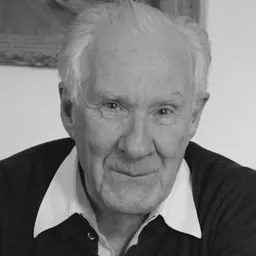
Born 1962. Frédéric Lordon is a French economist, sociologist, director of Research at CNRS and philosopher.
Frédéric Lordon (born 15 January 1962) is a French economist and philosopher, CNRS Director of Research at the Centre européen de sociologie et de science politique in Paris. He is an influential figure in France's Nuit debout movement and has regularly contributed to French broadcast and print media on French and European politics, and also writes a regular opinion column for Le Monde diplomatique. He has argued in favour of Communism as an alternative to Capitalism in books, articles and media appearances, and has been engaged in a project of re-grounding the social sciences in a Spinoza-inspired materialism. He is considered one of the most prominent intellectual voices of the radical left in France today.
Education Lordon studied at the École nationale des Ponts et Chaussées, beginning his studies in 1982 and receiving his degree there in 1985. He graduated with an MBA from the Institut Supérieur des Affaires in 1987. Supervised by Robert Boyer at the École des hautes études en sciences sociales, he completed his doctoral thesis in 1993, in which he "undertook a mathematical modelling of the Regulation School's theses on economic crisis. In the 90s, teaching at Sciences Po and then researching at the CNRS, he turned his attention to economic-policy formation."
Career Lordon teaches at the Ecole des Hautes Etudes en Sciences Sociales, in Paris.
He has served since 2004 as a director of research at the French National Centre for Scientific Research (CNRS). He is a member of ("Appalled Economists"), a group of economists formed in 2010 who reject the positions of mainstream economics, such as the efficient-market hypothesis, etc.
An early observer of the subprime mortgage crisis, he proposed the implementation of a tax he nicknamed SLAM, for Shareholder Limited Authorized Margin, the effect of which would be to limit profits so that profit making ventures in the real economy are not determined "only by the interests of the stock exchange market."
Lordon played an instrumental role in the rise of the Nuit debout movement. He wrote a piece in the February 2016 issue of Le Monde diplomatique on François Ruffin's film, Merci patron!, describing the film as a clarion call for a potential uprising. This prompted Ruffin to organise a public meeting which led to the organisation of the public occupation of Paris's Place de la République on 31 March 2016. Lordon spoke at the 31 March protest, highlighting the goals of disparate protest movements. He never talked to national media about his role in the movement, explaining that he did not wish to be seen as the leader of a leaderless movement.
Work While Lordon was considered in his early career to be indebted to, and involved with, the French 'regulation school' (a school of economic thought which developed in France in the 1970s and which was indebted to systems theory, the Annales school among others), more recently he has moved towards a much more radically Communist position, and has argued in a number of books and articles for the necessity of naming Communism as a concrete political vision for a post-capitalist society.
Lordon's work is an attempt to integrate Spinoza's concepts, such as conatus, into the study of political economy, and Spinoza's influence is clear across Lordon's works. In Vivre sans?, Lordon uses Spinoza's philosophy in order to critique certain currents of contemporary radical left thought, especially The Invisible Committee and Giorgio Agamben, as well as Gilles Deleuze, Jacques Rancière, and Alain Badiou. In Vivre sans? (2019), "A conception of political action and power drawn from Spinoza is accordingly juxtaposed to a constellation of the antipolitical that evades the urgent challenges of modern political collectivity and conflict via intransitivity (Deleuze's becomings without a future), aesthetics (Rancière's rare political moments) or virtuosity (Badiou's political subject as exceptional sage)." He was also critical of the European Union's treatment of Greece's Syriza government in following their 2015 bailout referendum, claiming that "Since the first day of the Syriza government, the European institutions have had no project other than to make sure that it bites the dust, with an exemplary punishment that will make it into a lesson to think about for any other government that might get the idea of not just capitulating; as if it were necessary to erase any trace of the first authentic change of power in Europe for decades."
Books (in French) Les Quadratures de la politique économique ("The quadratures of political economy"), Paris, Albin Michel, 1997 Fonds de pension, piège à cons. Mirage de la démocratie actionnariale ("Pension funds, a trap for fools. Mirage of shareholder democracy"), Paris, Liber/Raisons d'agir, 2000 La Politique du capital ("The capitalist policy"), Paris, Odile Jacob, 2002 Et la vertu sauvera le monde ("And virtue will save the world"), Paris, Liber/Raisons d'agir, 2003 L'intérêt souverain — Essai d'anthropologie économique spinoziste ("The sovereign interest — Essay of spinozean anthropology"), Paris, La Découverte, 2006 Spinoza et les sciences sociales. De l'économie des affects à la puissance de la multitude ("Spinoza and the social sciences. From the sentimental economy to the power of the multitudes"), In collaboration with Yves Citton. Paris, Éditions Amsterdam, 2008 Jusqu'à quand ? Pour en finir avec les crises financières ("Until when? To put an end to financial crises"), Paris, Éditions Raisons d’agir, 2008 Conflits et pouvoirs dans les institutions du capitalisme ("Conflicts and powers in the capitalist institutions"), Presses de la Fondation des Sciences Politiques, Paris, 2008 La crise de trop – Reconstruction d'un monde failli ("The crisis of too much _ Reconstruction of a failed world"), Paris, Éditions Fayard, 2009 Capitalisme, désir et servitude. Marx et Spinoza ("Capitalism, desire and servitude. Marx and Spinoza"), La Fabrique éditions, 2010 In English: Willing Slaves of Capital, translated by Gabriel Ash. (London & New York: Verso Books, 2014), ISBN 9781781681602 D'un retournement l'autre. Comédie sérieuse sur la crise financière (""From one turn to another. Serious comedy on the financial crisis), Paris, Seuil, 2011 L'intérêt souverain – Essai d'anthropologie économique ("The sovereign interest — Essay of economic anthropology"), Paris, La Découverte, 2011 Imperium - Structures et affects des corps politique ("Imperium - Structures and affects of political bodies"), Paris, La Fabrique, 2015 In English: Imperium: Structures and Affects of Political Bodies, translated by Andy Bliss, foreword by Alberto Toscano. (London & New York: Verso Books, 2022) ISBN 1786636425 Les affects de la politique ("The Affects of politics"), Paris, Éditions du Seuil, 2016 La condition anarchique ("The anarchic condition"), Paris, Seuil, 2018 Vivre sans ? : Institutions, police, travail, argent...("Living Without? : Institutions, police, work, money..."), Paris, La Fabrique, 2019 Figures du communisme ("Figures of Communism"), Paris, La Fabrique, 2021
Don’t just read it —
keep it.
Full-length biographies made to live with: read them, listen on the way to work, watch them tonight.
- E-book
- Audio
- Video
Instant download · yours to keep · every purchase keeps this site free
Important facts
People in Frédéric Lordon's life
Named in this biography and alive at the same time





Related people
Same field, nearest in time




Contemporaries
People whose lives overlapped Frédéric Lordon's





Frequently asked questions
Who is Frédéric Lordon?
French economist
When was Frédéric Lordon born?
Frédéric Lordon was born on 15 January 1962 in France.
What is Frédéric Lordon's occupation?
Frédéric Lordon is an economist, sociologist, director of Research at CNRS and philosopher.
What nationality is Frédéric Lordon?
Frédéric Lordon is French.
Sources & further reading
Cite this page
APA: Biography.guide. (2026). Frédéric Lordon. https://biography.guide/frederic-lordon/
MLA: "Frédéric Lordon." Biography.guide, https://biography.guide/frederic-lordon/.
Chicago: "Frédéric Lordon." Biography.guide. https://biography.guide/frederic-lordon/.
Data last updated: 2026-09-20 · Spot an error? Report a correction.
Page generated 2026-09-27 05:26 UTC