
About Fred Lake
Lived 1866 – 1931 (aged 65). Fred Lake was an American baseball player.
Frederick Lovett Lake (October 16, 1866 – November 24, 1931) was a Canadian professional baseball catcher and Major League manager for Boston American and National leagues teams in the early 20th century.
Lake hailed from Cornwallis Township, Kings County, Nova Scotia. His professional debut came with the Boston Beaneaters in 1891, but he was in and out of the Major Leagues, amassing a total of 125 at-bats in five seasons. Lake was a long time resident of Boston, where he died at the age of 65. Before having Fred in 1866, the couple had given birth to their first child, Edgar James, their second son, Rupert, and daughter Alice. The family moved to Boston in 1868, when Fred was 2, and had three more children, Walter, Nellie, and Charles. Wesley died on May 31, 1879, leaving Julia to raise her seven children alone in East Boston. As a young teenager, Fred was dependent on his mother as well as his two older brothers who had jobs in a local pottery factory. He attended the local elementary and high school where he learned to play baseball.
In 1907 he played for Little Rock, Arkansas, and became a scout for the Boston Red Sox. Lake was credited for discovering some great players such as Tris Speaker, Smokey Joe Wood, Harry Hooper and Bill Carrigan. Two well-known players on the 1908 Red Sox were Cy Young and Smoky Joe Wood. Lake continued as manager of the 1909 Red Sox and advanced the team to third place, with a record of 88–63. That season, Lake had added rookie and future Hall of Famer Harry Hooper to the team as well as moving Tris Speaker to full-time in center field. After the season, Lake asked team owner John I. Taylor for a raise, but his request was denied by Taylor, who claimed that the team's success had nothing to do with Lake's managing. Due to their stubbornness on the issue, Lake was replaced as manager before the 1910 season.
Boston Doves After leaving the Red Sox, Lake took over the Boston Beaneaters, nicknamed the Doves, which are now the Atlanta Braves. However, he struggled to bring the same success to the Doves that he had achieved with the Red Sox because the players were not as talented. In 1909 the team finished 45–108, and in 1910 they finished 53–100 in 8th place. Despite the unsuccessful season, an interesting story was published about Lake in the Mansfield (Ohio) News on October 4. In New York the other day, several hundred orphans were guests at the Polo Grounds. The Giants were facing the Doves and the score was close. Lake became upset with an umpire's call and told the umpire how wrong he was. He was ejected from the game. The orphans cheered this and then said some unkind words to Mr. Lake. The manager did not become angry. He smiled, walked over to where the orphans were. He opened his traveling bag and began to throw baseballs up to the kids. The jeers turned to cheers and the children turned their insulting comments towards the umpire.
St. Louis Browns After 1910 Lake resigned from the Doves and a new manager was hired, there was talk of Lake taking over to manage the St. Louis Browns. However, the Doves would not release him from his contract, so he was hired as Chief Scout for the Browns. However, Lake was frustrated by the lack of skilled minor league players that year and the Browns only ended up hiring three of the players he had scouted. In the October 18, 1911 Colorado Springs Gazette, Lake summarizes his frustration: The low quality of minor league players is a result of the early picking of players a year ago. The promising players of 1910 were taken too early and the result is this year's crop is way below the big league standard. My idea of scouting is to stay off men who you know will not prosper in the big leagues and buy up only the players who you feel will make good when tried out. I have worked with that idea in view. There are many players who are hitting and fielding well in the minors but they lack the qualifications necessary for a major league player. For that reason there is little reason for lining up a player of that stripe.
Lake left the Browns after the 1911 season.
Late career Lake moved on to the International League in 1912 as manager of the Providence team. In 1913 he managed the New Bedford Whalers of the New England League, and moved the team to become the Fitchburg in 1914 due to poor attendance. However, within days of opening, Lake moved the team to Manchester, New Hampshire, again due to poor attendance and the team became the Manchester Textiles. The club finished the season in last place, causing Lake to sell the club to former Dartmouth athlete and coach of the Lehigh University squad, Tom Keady, in 1915.
Lake began coaching in 1916 for Colby College in Maine, and for Tufts University in Boston a few years later. In 1925 he was hired to coach the Harvard University Seconds.
At 61 years old in 1926, Lake returned to managing with the Nashua Millionaires franchise of the New England League. However, he soon stepped down and gave the team to Walter Keating, instead choosing to stay on as vice-president and scout for the team.
Managerial record Team Year Regular season PostseasonGamesWonLostWin %Finish Won Lost Win % ResultBOS 392217 5th in AL – – – –BOS 1518863 3rd in AL – – – –BOS total 190 110 80 0 0 – BOD 15353100 8th in NL – – – –BOD total 153 53 100 0 0 – Total 343 163 180 0 0 –
Family life and death By 1900, Lake had married his wife Lydia Griffin and the couple had had four daughters. Shortly after 1900 Griffin gave birth to their first son and final child, Fred Jr.
In November 1931, after an extremely unstable life and career, Lake was admitted to New England Deaconess Hospital in Boston where he died due to heart problems on November 24, 1931. He is buried in Oak Grove Cemetery in Medford, Massachusetts.
His wife, Lydia, survived him for another 13 years, dying on September 25, 1944. In the 1930 U.S. Census, his son, Fred Lake Jr. was listed as living with his wife Myrtle and son Fred Lake III in Quincy, Massachusetts.
Don’t just read it —
keep it.
Full-length biographies made to live with: read them, listen on the way to work, watch them tonight.
- E-book
- Audio
- Video
Instant download · yours to keep · every purchase keeps this site free
Important facts
People in Fred Lake's life
Named in this biography and alive at the same time
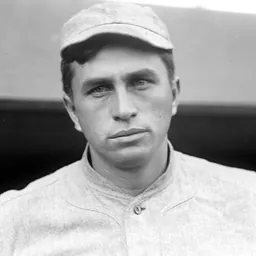
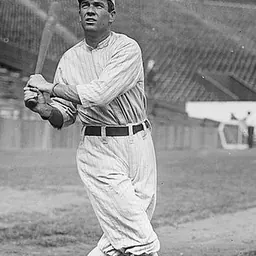


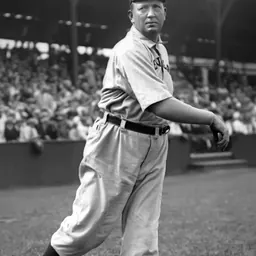
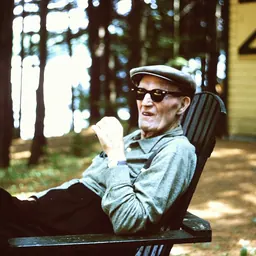


Related people
Same field, nearest in time

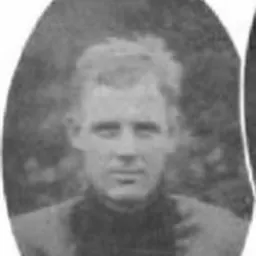

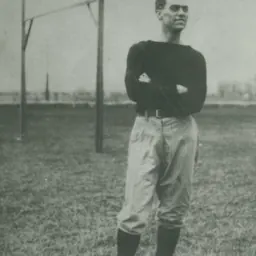
Contemporaries
People whose lives overlapped Fred Lake's


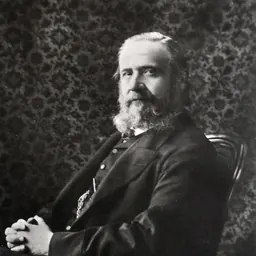


Frequently asked questions
Who was Fred Lake?
baseball player and manager
When was Fred Lake born?
Fred Lake was born on 16 October 1866 in Cornwallis Park.
When did Fred Lake die?
Fred Lake died on 24 November 1931 in Boston.
What was Fred Lake's occupation?
Fred Lake was a baseball player.
What nationality was Fred Lake?
Fred Lake was American.
Sources & further reading
Cite this page
APA: Biography.guide. (2026). Fred Lake. https://biography.guide/fred-lake-baseball-player/
MLA: "Fred Lake." Biography.guide, https://biography.guide/fred-lake-baseball-player/.
Chicago: "Fred Lake." Biography.guide. https://biography.guide/fred-lake-baseball-player/.
Data last updated: 2026-09-20 · Spot an error? Report a correction.
Page generated 2026-09-27 05:30 UTC