
Frazelia Campbell
American classical scholar, daughter of Frederick and Julia Swartz Campbell
About Frazelia Campbell
Lived 1849 – 1930 (aged 81). Frazelia Campbell was an American translator and classical scholar.
Frazelia Campbell (March 18, 1849 – October 5, 1930) was an American classicist, linguist and teacher. She was featured in the "12 Black Classicists" travelling exhibition celebrating the achievements of African Americans working in Classical education.
Early life Frazelia Campbell was born in Charleston, South Carolina on 18 March 1849 to Frederick and Julia Swartz Campbell.
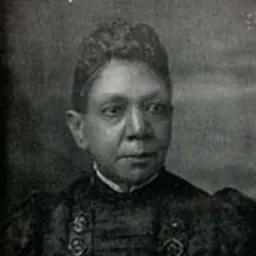
Education Campbell studied at Philadelphia's Institute for Colored Youth (ICY), graduating in 1867. The ICY was founded in 1839 by a Society of Friends which based its teaching on the classical curriculum. She was probably taught by Fanny Jackson Coppin, a graduate of Oberlin College and a campaigner for women's education who taught Greek, Latin, and Mathematics at the institute from 1865 and served as its Principal from 1869 to 1902. Campbell gave a paper titled "The Worth of Books" on the school's 1865 commencement program, and another in 1866 called "Sic Itur ad Astra." Two years later, in 1868, she presented her essay "Virgil and Grey" at the school's winter commencement. Her education did not end there as she further completed a summer school at the University of Pennsylvania in 1908. In 1876, she became the principal of the Girls' High School at the institute. During her time at the Institute for Colored Youth and at Allen University, she published articles on a range of classical and educational topics in the African Methodist Episcopal Church Review. Campbell taught Latin, German and Spanish
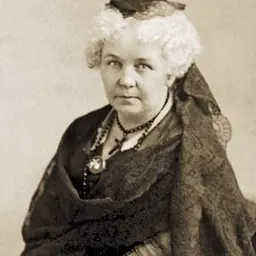
Notable works One of her essays which concerned Tacitus' conception of Germanic women called 'Tacitus' German Women', was published in the African Methodist Episcopal Review. Campbell disagreed with Elizabeth Cady Stanton, who linked the "present improved condition" of modern women to the "exalted sentiment for women which prevailed among the Germans during Tacitus' times."
Legacy Campbell is one of only two women, along with Helen Maria Chesnutt, to be featured in the '12 Black Classicists' exhibition, which celebrates the contributions of African Americans to Classical education in the 19th and early 20th centuries. She was also given an honorable mention in Lawson Andrew Scruggs' 19th century collection of distinctive Black Women.
Select publications "Die Beiden Piccolomini," African Methodist Episcopal Church Review 1 (Jan., 1885), pp. 200–204 "Tacitus' German Women," African Methodist Episcopal Church Review 2 (Oct., 1885), pp. 167–73 "Milton's Satan," African Methodist Episcopal Church Review 7 (Oct., 1885), pp. 196–198 "The Sixteenth Century in the Education of Modern Thought," African Methodist Episcopal Church Review 19 (July, 1903), pp. 31–40.
Don’t just read it —
keep it.
Full-length biographies made to live with: read them, listen on the way to work, watch them tonight.
- E-book
- Audio
- Video
Instant download · yours to keep · every purchase keeps this site free
Important facts
People in Frazelia Campbell's life
Named in this biography and alive at the same time

Related people
Same field, nearest in time


Contemporaries
People whose lives overlapped Frazelia Campbell's



Frequently asked questions
Who was Frazelia Campbell?
American classical scholar, daughter of Frederick and Julia Swartz Campbell
When was Frazelia Campbell born?
Frazelia Campbell was born on 18 March 1849 in Charleston.
When did Frazelia Campbell die?
Frazelia Campbell died on 6 October 1930 in Philadelphia.
What was Frazelia Campbell's occupation?
Frazelia Campbell was a translator and classical scholar.
What nationality was Frazelia Campbell?
Frazelia Campbell was American.
Sources & further reading
· Wikipedia: Frazelia Campbell
Cite this page
APA: Biography.guide. (2026). Frazelia Campbell. https://biography.guide/frazelia-campbell/
MLA: "Frazelia Campbell." Biography.guide, https://biography.guide/frazelia-campbell/.
Chicago: "Frazelia Campbell." Biography.guide. https://biography.guide/frazelia-campbell/.
Data last updated: 2026-09-20 · Spot an error? Report a correction.
Page generated 2026-09-27 05:27 UTC