
About Franz Waxman
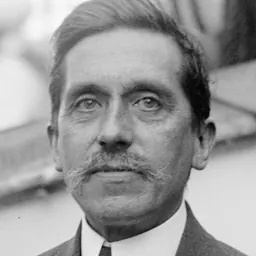
Lived 1906 – 1967 (aged 60). Franz Waxman was a German composer, conductor, film score composer, music arranger, pianist and musician.
Franz Waxman (né Wachsmann; December 24, 1906 – February 24, 1967) was a German-born composer and conductor of Jewish descent, known primarily for his work in the film music genre. His film scores include Bride of Frankenstein, Rebecca, Sunset Boulevard, A Place in the Sun, Stalag 17, Rear Window, Peyton Place, The Nun's Story, and Taras Bulba. He received twelve Academy Award nominations, and won two Oscars in consecutive years (for Sunset Boulevard and A Place in the Sun). He also received a Golden Globe Award for the former film. Bernard Herrmann said that the score for Taras Bulba was "the score of a lifetime."
He also composed concert works, including the oratorio Joshua (1959), and The Song of Terezín (1964–65), a work for orchestra, chorus, and children's chorus based upon poetry written by children in the Theresienstadt concentration camp during World War II. Waxman also founded the Los Angeles Music Festival in 1947 with which he conducted a number of West Coast premieres by fellow film composers, and concert composers alike.
Biography
Early life (1906–1934) Waxman was born Franz Wachsmann in Königshütte to Jewish parents in the German Empire's Prussian Province of Silesia (now Chorzów, Poland). At the age of three Waxman suffered a serious eye injury involving boiling water tipped from a stove, which left his vision permanently impaired.
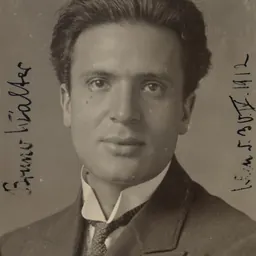
In 1923, at age 16, Waxman enrolled in the Dresden Music Academy and studied composition and conducting. Waxman lived from the money he made playing popular music and managed to put himself through school. While working as a pianist with the Weintraub Syncopators, a dance band, Waxman met Frederick Hollander, who eventually introduced Waxman to the eminent conductor Bruno Walter.
Waxman worked as an orchestrator for the German film industry, including on Hollander's score for The Blue Angel (1930). One of his first dramatic scores was for the film Liliom (1934). That year Waxman suffered a severe beating by Nazi sympathizers in Berlin that led him to leave Germany and move with his wife first to Paris, Waxman, however, was more interested in composition than musical direction for film, and in 1936 he left Universal to become a composer at MGM.
Rebecca was Hitchcock's first Hollywood film as part of his contract with David O. Selznick, and thus it was the first time he was allowed a full symphonic score.
In 1943, Waxman left MGM and moved to Warner Bros., where he worked alongside such great film composers as Max Steiner and Erich Wolfgang Korngold. A period of extended composition followed, including such films as Mr. Skeffington (1944) and Objective, Burma! (1945).
In 1947, Waxman formed the Los Angeles Music Festival, for which he served as music director and conductor for the rest of his life. Waxman's goal with the LA Music Festival was to bring the thriving town to "European cultural standards", according to Tony Thomas.
Post-war film scores (1947–1959) By 1947, Waxman had left Warner Bros., to become a freelance film composer, taking only the jobs he wanted rather than being appointed by the studio. Waxman had used classical forms before: the climactic "Creation" cue from The Bride of Frankenstein (1935), as Christopher Palmer expresses it, "is in effect a fantasia on one note."
His work on Sunset Boulevard (1950) led to an Academy Award. The score is fast-paced and powerful, utilizing various techniques to highlight the insanity of Norma Desmond, including low pulsing notes (first heard in The Bride of Frankenstein) and frequent trills. According to Mervyn Cooke, Richard Strauss's opera Salome was the inspiration for the wild trills heard during Desmond's insane final performance.
Waxman received a second consecutive Oscar for A Place in the Sun (1951). However, while awards for film music highlighted the beginning of the 1950s, Waxman now began to write serious works for the concert hall. The Sinfonietta for Strings and Timpani came in 1955 and 1959 saw the completion of Waxman's oratorio Joshua.
Later life (1960–1967)
Waxman's later life saw continuing growth of his reputation as a composer. Christopher Palmer writes that at the time of his death in 1967, "Waxman was at the zenith of his powers." Waxman's output in the 1960s was perhaps more subdued than that which came before it, however he did write Taras Bulba in 1962. Waxman worked on several television shows, including Gunsmoke, in 1966.
The Song of Terezín (1964–65) was based upon poetry by children trapped in the Nazi's Theresienstadt concentration camp. The work is composed for mixed chorus, children's chorus, soprano soloist, and orchestra.
Waxman died from cancer in February 1967, two months after his sixtieth birthday. 1936) Fury (1936) The Invisible Ray (1936) The Devil-Doll (1936) Captains Courageous (1937) Flash Gordon's Trip to Mars (serial, stock music from Bride of Frankenstein, 1938) A Christmas Carol (1938) The Adventures of Huckleberry Finn (1939) The Young in Heart (1938, 2 Academy Award nominations) On Borrowed Time (1939) Lady of the Tropics (1939) Flash Gordon Conquers the Universe (serial, stock music from Bride of Frankenstein, 1940) Strange Cargo (1940) Rebecca (1940, Academy Award nomination) Boom Town (1940) The Philadelphia Story (1940) Suspicion (1941, Academy Award nomination) Dr. Jekyll and Mr. Hyde (1941, Academy Award nomination) Woman of the Year (1942) Her Cardboard Lover (1942) Edge of Darkness (1943) Destination Tokyo (1943) Air Force (1943) To Have and Have Not (1944, uncredited) Mr. Skeffington (1944) Objective, Burma! (1945, Academy Award nomination) Hotel Berlin (1945) Humoresque (1946, Academy Award nomination) Possessed (1947) That Hagen Girl (1947) Cry Wolf (1947) The Paradine Case (1947) Sorry, Wrong Number (1948) Alias Nick Beal (1949) Night Unto Night (1949) Johnny Holiday (1949) Sunset Boulevard (1950) (Academy Award) The Furies (1950) Night and the City (1950) Dark City (1950) The Blue Veil (1951) He Ran All the Way (1951) Anne of the Indies (1951) A Place in the Sun (1951) (Academy Award) Red Mountain (1951) Decision Before Dawn (1951) Phone Call from a Stranger (1952) Come Back, Little Sheba (1952) My Cousin Rachel (1952) Botany Bay (1953) Stalag 17 (1953) Demetrius and the Gladiators (1954) Elephant Walk (1954) Prince Valiant (1954) Rear Window (1954) The Silver Chalice (1954) (Academy Award nomination) Mister Roberts (1955) Untamed (1955) Miracle in the Rain (1956) Peyton Place (1957) Sayonara (1957) The Spirit of St. Louis (1957) Run Silent, Run Deep (1958) The Nun's Story (1959) (Academy Award nomination) Sunrise at Campobello (1960) Cimarron (1960) Return to Peyton Place (1961) The Big Bankroll (1961) My Geisha (1962) Hemingway's Adventures of a Young Man (1962) Taras Bulba (1962, Academy Award nomination) Lost Command (1966) The Raid (1966) Gunsmoke episodes 11.18 & 11.19 The Longest Hundred Miles (1967)
Selected concert works Carmen Fantasie (1946), for violin and orchestra Rhapsody for Piano and Orchestra (1947) Tristan and Isolde Fantasy, for violin, piano and orchestra Four Scenes from Childhood (1948), for violin and piano (written for Jascha Heifetz on the occasion of the birth of his son Jay) Auld Lang Syne Variations (1947), for violin and chamber ensemble. Movements: "Eine kleine Nichtmusik," "Moonlight Concerto," "Chaconne a son gout," and "Hommage to Shostakofiev." The Song of Terezín (1964–65), based on poems by children of Theresienstadt concentration camp Joshua (1959), Oratorio
Don’t just read it —
keep it.
Full-length biographies made to live with: read them, listen on the way to work, watch them tonight.
- E-book
- Audio
- Video
Instant download · yours to keep · every purchase keeps this site free
Important facts
People in Franz Waxman's life
Named in this biography and alive at the same time







Related people
Same field, nearest in time


Contemporaries
People whose lives overlapped Franz Waxman's
Frequently asked questions
Who was Franz Waxman?
German film composer (1906-1967)
When was Franz Waxman born?
Franz Waxman was born on 24 December 1906 in Chorzów.
When did Franz Waxman die?
Franz Waxman died on 24 February 1967 in Los Angeles.
What was Franz Waxman's occupation?
Franz Waxman was a composer, conductor, film score composer, music arranger, pianist and musician.
What nationality was Franz Waxman?
Franz Waxman was German.
Sources & further reading
Cite this page
APA: Biography.guide. (2026). Franz Waxman. https://biography.guide/franz-waxman/
MLA: "Franz Waxman." Biography.guide, https://biography.guide/franz-waxman/.
Chicago: "Franz Waxman." Biography.guide. https://biography.guide/franz-waxman/.
Data last updated: 2026-09-20 · Spot an error? Report a correction.
Page generated 2026-09-27 05:10 UTC