
About Franz-Josef Spieker
Lived 1933 – 1978 (aged 44). Franz-Josef Spieker was a German film director, film actor, screenwriter, director, film critic and filmmaking.
Franz-Josef Spieker (24 November 1933, Paderborn – 18 March 1978, near Bali) was a German filmmaker.
Spieker studied theater and literary sciences at the DIFF (German Institute for Film and Television) in Munich. He worked as a photojournalist and film critic and later became an assistant director of Géza von Radványi in 1957, Stanley Kubrick (Paths of Glory) and Douglas Sirk, as a production and editing assistant.
In 1958, he shot his first short film, and in 1962, he signed the Oberhausen Manifesto. In the same year, he participated in the anthology film (Look After Your Daughters), a predecessor to the sex report film, with the producer Walter Koppel wanting to win over the signatories of the Manifesto.
Spieker became famous in 1967 with his first full-length feature film , a satire on stubbornness, which made him a hope-bearer of New German Cinema. The satire on Bundeswehr, and the social satire , while still acclaimed, but was not as popular as Wilder Reiter GmbH.
Spieker still made numerous short films and received the silver Deutscher Filmpreis in 1977 for Persönlichkeitstest on behalf of his production company, Cinema 80. He was found dead on the beaches of Bali. As a signatory of the Oberhausen Manifesto, he was posthumously honored with the gold Deutscher Filmpreis in 1982.
Filmography Feature films 1964: (anthology film) 1967: 1968: 1969: 1970: Drücker (TV film) Short films 1958: Menschen bei 30 Grad (documentary) 1958: El Salvador (documentary) 1958: Insel in der Sonne (documentary) 1959: Masken und Gesichter 1960: Alltag der 7. Muse 1961: Süden im Schatten 1963: Doppelkonzert 1964: Das Malschiff 1965: Salzburg Sight and Sound (documentary) 1972: Das Jodelsystem 1972: Abstraktes Echo 1973: Spuren und Kontakte (documentary) 1974: Pashupatinath Abendraga 1975: Straßenartisten 1977: Der Persönlichkeitstest 1978: Nirmala (unfinished)
Don’t just read it —
keep it.
Full-length biographies made to live with: read them, listen on the way to work, watch them tonight.
- E-book
- Audio
- Video
Instant download · yours to keep · every purchase keeps this site free
Important facts
People in Franz-Josef Spieker's life
Named in this biography and alive at the same time


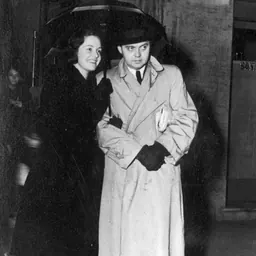

Related people
Same field, nearest in time




Contemporaries
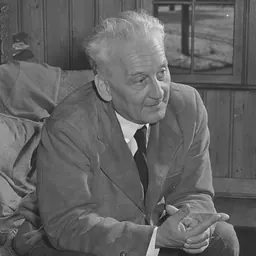
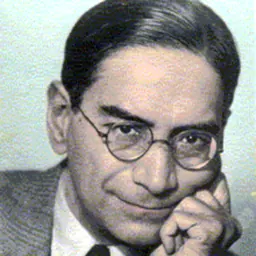
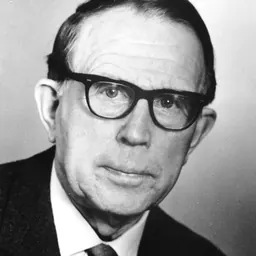
People whose lives overlapped Franz-Josef Spieker's



Frequently asked questions
Who was Franz-Josef Spieker?
German film director (1933-1978)
When was Franz-Josef Spieker born?
Franz-Josef Spieker was born on 24 November 1933 in Paderborn.
When did Franz-Josef Spieker die?
Franz-Josef Spieker died on 18 March 1978 in Bali.
What was Franz-Josef Spieker's occupation?
Franz-Josef Spieker was a film director, film actor, screenwriter, director, film critic and filmmaking.
What nationality was Franz-Josef Spieker?
Franz-Josef Spieker was German.
Sources & further reading
· Wikipedia: Franz-Josef Spieker
· DBpedia: Franz-Josef Spieker
Cite this page
APA: Biography.guide. (2026). Franz-Josef Spieker. https://biography.guide/franz-josef-spieker/
MLA: "Franz-Josef Spieker." Biography.guide, https://biography.guide/franz-josef-spieker/.
Chicago: "Franz-Josef Spieker." Biography.guide. https://biography.guide/franz-josef-spieker/.
Data last updated: 2026-09-20 · Spot an error? Report a correction.
Page generated 2026-09-27 05:04 UTC