
About Franz Ehrlich
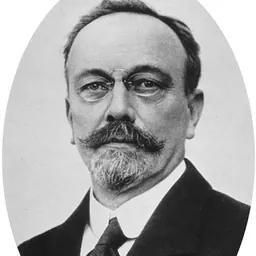
Lived 1907 – 1984 (aged 76). Franz Ehrlich was a German architect, graphic artist, painter and designer.
Franz Ehrlich (28 December 1907, Reudnitz near Leipzig – 28 November 1984, Bernburg) was a German architect, calligrapher and graphic designer. He was a student at the Bauhaus in Dessau from 1927 to 1930. Ehrlich was a Communist and was arrested and imprisoned by the Nazi regime in 1935.
Life After completing elementary schooling at Täubchenweg in Leipzig, Ehrlich began a metal working apprenticeship where he became a part of the German Metal Workers' Union Metallarbeitergewerkschaft (DMV) and the Sozialistischen Arbeiter-Jugend (SAJ). In 1923, he visited the Bauhaus exhibition of New Objectivity architecture which sparked his interest in the movement. After completing his apprenticeship and other schooling he studied at the Bauhaus Dessau from 1927 to 1930.
In 1930, Ehrlich left the Bauhaus and followed Walter Gropius to work as a freelance designer in Berlin and later in Leipzig. After the takeover of power by National Socialism in 1933, Franz Ehrlich joined the anti-fascist resistance and took part in the production of illegal magazines and leaflets for the Young Communist League known as the Kommunistische Jugendverband Deutschlands (KJVD).
Initially imprisoned in the Waldheim penitentiary, he spent most of his sentence in the Zwickau penitentiary. In August 1937 he was released from prison and taken into protective custody. He was taken to Buchenwald concentration camp where, because he was an architect, he was tasked to design the entrance gates for the camp, including the motto Jedem das Seine (German: "to each his own" or "to each what he deserves"). Ehrlich subsequently became the paid main designer for the camp's construction office, designing furnishings for the commandant's house among other jobs. Later a fellow prisoner claimed Ehrlich had helped the resistance by passing construction details to them. From 1954 to 1975, he served the Stasi as an informer.
Legacy Ehrlich became an important architect in the GDR. He bequeathed the Bauhaus Dessau Foundation a collection of approximately 7000 items, including life drawings, art works, furniture, plans, studies, photographs and publications. The collection is of considerable significance as it sheds light on the work of former Bauhaus students between 1933 and 1945 and on those who subsequently worked in the GDR.
Don’t just read it —
keep it.
Full-length biographies made to live with: read them, listen on the way to work, watch them tonight.
- E-book
- Audio
- Video
Instant download · yours to keep · every purchase keeps this site free
Important facts
People in Franz Ehrlich's life
Named in this biography and alive at the same time

Related people
Same field, nearest in time
Contemporaries
People whose lives overlapped Franz Ehrlich's



Frequently asked questions
Who was Franz Ehrlich?
German architect (1907–1984)
When was Franz Ehrlich born?
Franz Ehrlich was born on 28 December 1907 in Reudnitz.
When did Franz Ehrlich die?
Franz Ehrlich died on 28 November 1984 in Bernburg.
What was Franz Ehrlich's occupation?
Franz Ehrlich was an architect, graphic artist, painter and designer.
What nationality was Franz Ehrlich?
Franz Ehrlich was German.
Sources & further reading
Cite this page
APA: Biography.guide. (2026). Franz Ehrlich. https://biography.guide/franz-ehrlich/
MLA: "Franz Ehrlich." Biography.guide, https://biography.guide/franz-ehrlich/.
Chicago: "Franz Ehrlich." Biography.guide. https://biography.guide/franz-ehrlich/.
Data last updated: 2026-09-20 · Spot an error? Report a correction.
Page generated 2026-09-27 04:58 UTC