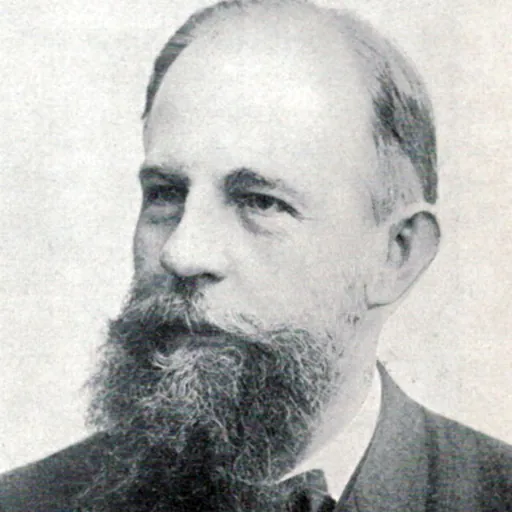
About Franz Andreas Meyer
Lived 1837 – 1901 (aged 63). Franz Andreas Meyer was a civil engineer and architect.
Franz Ferdinand Carl Andreas Meyer (6 December 1837, Hamburg - 17 March 1901, Bad Wildungen) was a German civil engineer, known primarily as the creator of the Speicherstadt on Hamburg's waterfront.
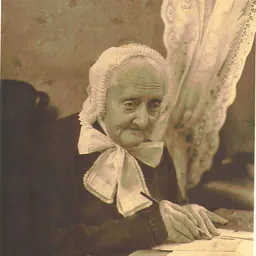
Biography He was born to Ferdinand Wilhelm Meyer (1800–1862), a merchant who had to abandon his business in 1851, due to financial difficulties. After attending the private boys' school operated by Elise Averdieck, he switched to the Gelehrtenschule des Johanneums. He left there in 1854 to enroll at the Technical University of Hanover. There, he studied with Conrad Wilhelm Hase and became a lifelong adherent of the Hanover school of architecture. After completing his studies, in 1858, he worked for Hase for a year, then joined the Royal Hanoverian State Railways, where he participated in building the Bremen to Bremerhaven line.
He returned to Hamburg in 1862 and found employment with the Port Authority. Three years later, he appointed the Technical Manager, under the Director of hydraulic engineering. When the position of District Engineer became vacant in 1868, he moved to the city Building Department. That same year, he married Antonie Mathilde Goßler (1848–1920), a niece of Senator Hermann Goßler. Upon the retirement of Christian Wilhelm Plath (1820–1894) in 1872, he was named Chief Engineer, a position he held until his death.
When plans for the Speicherstadt were nearing completion in 1883, he became chief planner and designer for the project. He also became an advisor to the Hamburger Freihafen-Lagerhaus-Gesellschaft, which was charged with operating the warehouses. He hired several architects, including Wilhelm Emil Meerwein, Bernhard Georg Hanssen, Hugo Stammann and Gustav Zinnow, to produce the detailed specifications. In addition to the Speicherstadt, he personally designed a number of bridges. He also engineered the (Four Nations Fountain), and took part in the renovation of .
Overall, however, his emphasis was on projects for improving public health, which included public baths and water filtration systems. Following the of 1892, he was able to create drainage and sewage systems that had been proposed by William Lindley in the late 1850s, but rejected by the Hamburg Parliament. He also planned most of Hamburg's inner city parks, and was involved in planning the Ohlsdorf Cemetery. By 1896, he had prepared a general development plan for railways, canals, parks, and other public spaces.
Don’t just read it —
keep it.
Full-length biographies made to live with: read them, listen on the way to work, watch them tonight.
- E-book
- Audio
- Video
Instant download · yours to keep · every purchase keeps this site free
Important facts
People in Franz Andreas Meyer's life
Named in this biography and alive at the same time


Related people
Same field, nearest in time


Contemporaries
People whose lives overlapped Franz Andreas Meyer's


Frequently asked questions
Who was Franz Andreas Meyer?
German civil engineer (1837–1901)
When was Franz Andreas Meyer born?
Franz Andreas Meyer was born on 6 December 1837 in Hamburg.
When did Franz Andreas Meyer die?
Franz Andreas Meyer died on 17 March 1901 in Bad Wildungen.
What was Franz Andreas Meyer's occupation?
Franz Andreas Meyer was a civil engineer and architect.
What nationality was Franz Andreas Meyer?
Franz Andreas Meyer's recorded nationality: Hamburg, German Confederation, North German Confederation.
Sources & further reading
· Wikipedia: Franz Andreas Meyer
· DBpedia: Franz Andreas Meyer
Cite this page
APA: Biography.guide. (2026). Franz Andreas Meyer. https://biography.guide/franz-andreas-meyer/
MLA: "Franz Andreas Meyer." Biography.guide, https://biography.guide/franz-andreas-meyer/.
Chicago: "Franz Andreas Meyer." Biography.guide. https://biography.guide/franz-andreas-meyer/.
Data last updated: 2026-09-20 · Spot an error? Report a correction.
Page generated 2026-09-27 05:09 UTC