
About František Škroup
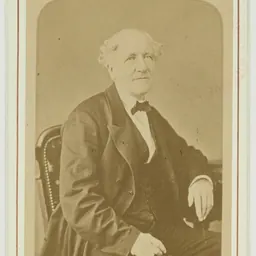
Lived 1801 – 1862 (aged 60). František Škroup was an Austrian conductor, composer, singer, organist, flautist and music educator.
František Jan Škroup (; 3 June 1801 – 7 February 1862) was a Czech composer and conductor. His brother Jan Nepomuk Škroup was also a successful composer and his father, Dominik Škroup, and other brother Ignác Škroup were lesser known composers. He is the author of the melody for the Czech national anthem "Kde domov můj?".
Biography Škroup was born on 3 June 1801 in Osice near Hradec Králové in Bohemia. At the age of eleven he moved to Prague where he supported himself as a choir boy and flautist. He continued his schooling at one of the most important Czech national revival movement centres, Hradec Králové, where he was a choirboy at the cathedral. While there he studied with the local choirmaster and composer Franz Volkert. He later moved back to Prague to study at the university. He became a fairly successful opera and singspiel composer producing more than a dozen stage works. Among Škroup's part-time jobs was organist at the "Temple of the Israelite Society for Regulated Worship," known since the late nineteen-forties as the "Spanish synagogue." His last position was as the musical director of the German opera in Dutch Rotterdam. He died in Rotterdam on 7 February 18 and, as a person without means, was buried in a mass grave. He also produced an oratorio, a mass, and a few other sacred works. He is best remembered today as the author of the melody for the Czech national anthem "Kde domov můj?".
Works From 1827 Škroup was a conductor at the Estates Theatre in Prague. There he led the Czech premières of many famous works by composers such as Richard Wagner. Škroup's oeuvre consists mainly of Czech and German opera which gained significant local popularity.
Opera, Singspiel and Incidental Music Dráteník, Singspiel in 2 Acts (1825); libretto by Josef Krasoslav Chmelenský; Škroup sang the title role. Dráteník is considered the first Czech opera. Der Nachtschatten, Singspiel (1827); libretto C.J. Schikaneder Oldřich a Božena (Oldřich and Božena), Opera (1828); German title: Uldarich und Božena (1833); libretto by Josef Krasoslav Chmelenský Der Prinz und die Schlange (The Prince and the Snake, or Amor in the Amazon) (1829); Czech title: Princ a had neb Amor mezi Amazonkami (1835) Bratrovrah, Biblical Melodrama (1831); libretto by Jan Nepomuk Štěpánek Die Drachenhöhle (1832) Fidlovačka aneb Žádný hněv a žádná rvačka (Fidlovačka, or No Anger and No Brawl), Folk Scenes of Prague Life with Song and Dance (1834); play by Josef Kajetán Tyl; includes "Kde domov můj?" Libušin sňatek (Libuše's Marriage) (libretto by Josef Krasoslav Chmelenský, 1835, rewritten 1850) Čestmír (1835); incidental music to the historical drama Pouť k chrámu umění (Pilgrimage to the Temple of Art) (1846) The Spectre's Bride Drahomíra, Opera (première 20 November 1848); German libretto by V.A. Svoboda-Návarovský Žižkova smrt (Žižka's Death) (1850); incidental music to the historical drama by Josef Jiří Kolár Der Meergeuse (The Sea Geus), Romantic Opera in 3 Acts (1851); libretto by Johann Carl Hickel; premièred in 2003 at the Estates Theatre in Prague; Czech title: Mořský geus Don César a spanilá Magelona (Don Cesar and the Comely Magolena), Incidental Music (1852) Columbus, Opera in 3 Acts (1855); original German libretto by Josef Krasoslav Chmelenský; Czech version premièred on 3 February 1942 with libretto translated by František Pujman
Orchestral Chrudimská ouvertura (Chrudim Overture) (1854); overture for the opening of the municipal theatre in Chrudim, Bohemia
Chamber music String Quartet No. 1 in F major, Op. 24 String Quartet No. 2 in C minor, Op. 25 String Quartet No. 3 in G major, Op. 29 Trio for Clarinet (or Violin), Cello and Piano, Op.27 Trio facile in F Major for Violin (or Flute), Cello and Piano, Op.28 Trio facile for Violin (or Flute), Cello and Piano, Op.30
Piano Polonaise Deutsche Tänze (1824)
Vocal Věnec ze zpěvů vlasteneckých uvitý a obětovaný dívkám vlastenským (Wreath of Patriotic Songs Collected for and Dedicated to Patriotic Girls) (1835–1839); 5 volumes edited by Škroup and Chmelenský Dobrou noc (Good Night) for Horn, Voice and Harp (or Piano); words by Josef Krasoslav Chmelenský Píseň společní; words by František Čelakovský; Both songs are included in Věnec ze zpěvů vlasteneckých uvitý a obětovaný dívkám vlastenským. Věnec (1843-1844), second part
Don’t just read it —
keep it.
Full-length biographies made to live with: read them, listen on the way to work, watch them tonight.
- E-book
- Audio
- Video
Instant download · yours to keep · every purchase keeps this site free
Important facts
People in František Škroup's life
Named in this biography and alive at the same time


Related people
Same field, nearest in time



Contemporaries
People whose lives overlapped František Škroup's





Frequently asked questions
Who was František Škroup?
Czech composer and conductor (1801–1862)
When was František Škroup born?
František Škroup was born on 3 June 1801 in Osice.
When did František Škroup die?
František Škroup died on 7 February 1862 in Rotterdam.
What was František Škroup's occupation?
František Škroup was a conductor, composer, singer, organist, flautist and music educator.
What nationality was František Škroup?
František Škroup was Austrian.
Sources & further reading
Cite this page
APA: Biography.guide. (2026). František Škroup. https://biography.guide/frantisek-skroup/
MLA: "František Škroup." Biography.guide, https://biography.guide/frantisek-skroup/.
Chicago: "František Škroup." Biography.guide. https://biography.guide/frantisek-skroup/.
Data last updated: 2026-09-20 · Spot an error? Report a correction.
Page generated 2026-09-27 05:26 UTC