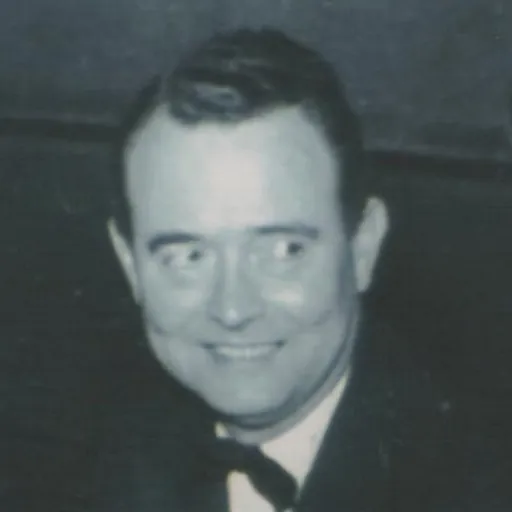
About František Čáp
Lived 1913 – 1972 (aged 58). František Čáp was a Yugoslav, Czech and Austrian film director, screenwriter, director, film screenwriter and writer.
František Čáp (7 December 1913 – 12 January 1972), also known as Franz Cap in Germany, was a Czech film director and screenwriter, who was also active in Germany and Yugoslavia. He directed 32 films between 1939 and 1970. Having created Slovene film classics such as Vesna, Ne čakaj na maj, and Naš avto, he was also one of the most popular directors of early Slovene cinema in the 1950s and 1960s.
Life Čáp was born in Čachovice (now in the central Czech Republic). As an already established professional, he moved to Ljubljana in 1952, following an invitation by Branimir Tuma, the director of Triglav Film. In 1957, he moved to Portorož, a coastal town in southwestern Slovenia, where he lived until his death.
In the 1950s and 1960s, Čap directed five films for Triglav film and another six coproductions and non-Slovene productions. Čáp's first Yugoslav film, the romantic comedy Vesna (1953), had elements of Heimatfilm and pre–World War II Czech and Austrian melodrama, and it proved highly successful both artistically and commercially, as did its sequel Ne čakaj na maj (1957).
During his "Yugoslav era", Čap engaged not only in Slovene productions, but also in various other acclaimed productions and coproductions. He directed Am Anfang war es Sünde (Sin / Greh, 1954, Saphir Film) and the romantic drama La ragazza della salina (Sand, Love and Salt / Kruh in sol, 1957), which featured Marcello Mastroianni. For Bosna film, he directed a drama about juvenile delinquency, Vrata ostaju otvorena (The Door Remains Open, 1959), introducing Milena Dravić, one of the leading film stars in Yugoslavia, in her very first film role, and another comedy, Srešćemo se večeras (Meet You Tonight, 1962).
In 1956, Čáp shot Die Geierwally (The Vulture Wally), based on the novel by Wilhelmine von Hillern, in Germany, while X-25 javlja ("X-25 Reports", 1960), a World War II spy thriller set in Zagreb, saw extensive international theatrical release as well.
The name object of early criticism, however, was the misrepresentation (or lack of representation) of Slovene culture in Čáp's cinema, especially in the hugely popular comedies. A number of reviewers saw Čáp as a foreigner that had never assimilated to Slovene culture. They resented that the films were not specific enough and could be set anywhere in central Europe. These reviews seem traditionalist and xenophobic from contemporary point of view. Contemporary Slovene film theorists have largely praised Čáp's "foreignness" or "otherness", reasoning that his ignorance for regional values and conflicts has actually helped him to maintain the necessary objective distance and his particular sense of film direction and storytelling.
Selected filmography
A Step into the Darkness (Czech: Krok do tmy) (1937) - screenwriter only Virginity (Czech: Panenství) (1937) - screenwriter only Fiery Summer (Czech: Ohnivé léto) (1939) Grandmother (Czech: Babička) (1940) Jan Cimbura (1941) Nocturnal Butterfly (Czech: Noční motýl) (1941) The Dancer (1943) Mist on the Moors (Czech: Mlhy na Blatech) (1944) The Girl from Beskydy Mountains (Czech: Děvčica z Beskyd) (1944) Men Without Wings (Czech: Muži bez křídel) (1946) Sign of the Anchor (Czech: Znamení kotvy) (1947) Muzikant (1948) White Darkness (1948) Crown Jewels (German: Kronjuwelen) (1950) All Clues Lead to Berlin (German: Die Spur führt nach Berlin) (1952) Vesna (1953) The Beginning Was Sin (German: Am Anfang war es Sünde) (1954) Moments of Decision (Slovene: Trenutki odločitve) (1955) The Vulture Wally (German: Die Geierwally) (1956) Don't Whisper (Slovene: Ne čakaj na maj) (1957) Sand, Love and Salt (Slovene: Kruh in sol) (1957) The Door Remains Open (Serbo-Croatian: Vrata ostaju otvorena) (1957) X 25 Reports (Slovene: X 25 javlja) (1960) Meet You Tonight (Serbo-Croatian: Srešćemo se večeras) (1962) Our Car (Slovene: Naš avto) (1962) Mafia – Die ehrenwerte Gesellschaft (1966, TV miniseries) (1968–1969, TV series)
Awards Nocturnal Butterfly - Targa di segnalazione at 1941 Venice Film Festival Men Without Wings - Grand Prix at 1946 Cannes Film Festival Vesna - The Critics' Choice Award at the 1954 Pula Film Festival Moments of Decision - Big Golden Arena for Best Film at the 1955 Pula Film Festival
Don’t just read it —
keep it.
Full-length biographies made to live with: read them, listen on the way to work, watch them tonight.
- E-book
- Audio
- Video
Instant download · yours to keep · every purchase keeps this site free
Important facts
People in František Čáp's life
Named in this biography and alive at the same time



Related people
Same field, nearest in time



Contemporaries
People whose lives overlapped František Čáp's




Frequently asked questions
Who was František Čáp?
Czech film director (1913–1972)
When was František Čáp born?
František Čáp was born on 7 December 1913 in Čachovice, Nedrahovice.
When did František Čáp die?
František Čáp died on 12 January 1972 in Ankaran.
What was František Čáp's occupation?
František Čáp was a film director, screenwriter, director, film screenwriter and writer.
What nationality was František Čáp?
František Čáp was Yugoslav, Czech and Austrian.
Sources & further reading
Cite this page
APA: Biography.guide. (2026). František Čáp. https://biography.guide/frantisek-cap/
MLA: "František Čáp." Biography.guide, https://biography.guide/frantisek-cap/.
Chicago: "František Čáp." Biography.guide. https://biography.guide/frantisek-cap/.
Data last updated: 2026-09-22 · Spot an error? Report a correction.
Portrait: Wikimedia Commons · author & licence
Page generated 2026-09-27 05:02 UTC