
About Franklin J. Schaffner
Lived 1921 – 1989 (aged 68). Franklin J. Schaffner was an American film director, trade unionist and director.
Franklin James Schaffner (May 30, 1920 – July 2, 1989) was an American film, television, and stage director. He won the Academy Award for Best Director for Patton, and is known for the films Planet of the Apes (1968), Nicholas and Alexandra (1971), Papillon (1973), and The Boys from Brazil (1978). He served as president of the Directors Guild of America between 1987 and 1989.
Early life (from far left) Stanley O'Toole, Gregory Peck and Franklin J. Schaffner outside Franklin & Marshall College after accepting an honorary degree in 1977
Schaffner was born in Tokyo, Japan, the son of American missionaries Sarah Horting (née Swords) and Paul Franklin Schaffner, and was raised in Japan.
The Schaffners returned to the United States and settled in Lancaster, Pennsylvania when Franklin Schaffner was 5 years old. Franklin Schaffner attended J.P. McCaskey High School, where he appeared as Mr. Darcy in the school's production of Pride and Prejudice.
Television career Schaffner returned to the United States after the war. He worked for a world peace organization, then as an assistant director for the documentary film series The March of Time. He became a director in the news and public affairs department of CBS television, where his jobs including covering sports, beauty pageants and public-service programs.
In 1950 he directed "The Traitor", the first episode of Ford Theatre. He also did adaptations of Alice in Wonderland and Treasure Island.
He directed "Thunder on Sycamore Street" by Reginald Rose for Studio One. He and Rose reunited on Twelve Angry Men which won Schaffner an Emmy for Best Director.
The following year Schaffner earned another Emmy for his work on the 1955 TV adaptation of the Broadway play The Caine Mutiny Court-Martial, shown on the anthology series Ford Star Jubilee.
Schaffner became one of three regular directors on The Kaiser Aluminum Hour; the others were George Roy Hill and Fielder Cook. He was also a regular director on Playhouse 90.
He was the original director on the series, The Defenders, created by Rose. Schaffner's work earned him another Emmy.
In 1960, he directed Allen Drury's stage play Advise and Consent. This earned him the Best Director recognition in the Variety Critics Poll.
In the realm of network television, Schaffner also received widespread critical acclaim in 1962 for his groundbreaking collaboration with the First Lady of the United States Jacqueline Kennedy and CBS television's Musical Director Alfredo Antonini in the production of A Tour of the White House with Mrs. John F. Kennedy, a television special broadcast to over 80 million viewers worldwide.
Schaffner's contributions in this production earned him a nomination in 1963 by the Directors Guild of America, for its award in the category of Outstanding Directorial Achievement in Television.
Feature films Early films In January 1960 Schaffner signed a multi picture deal with Columbia Pictures.
In May 1961 he signed to make A Summer Place at 20th Century Fox with Fabian and Dolores Hart. The film was not made. Schaffner directed The Good Years (1962) for TV with Henry Fonda and Lucille Ball. Other TV work included The Great American Robbery.
Instead Schaffner's first motion picture was The Stripper (1963), made at Fox from a play by William Inge, starring Richard Beymer and Joanne Woodward. The film was well-received critically, but not a commercial success.
He continued to work for TV including The Legend of Lylah Clare.
Schaffner later made The Best Man (1964) based on a play by Gore Vidal and The War Lord (1965), based on a play by Leslie Stevens, with Charlton Heston. In a 1966 interview he said "as you mature you learn that the story is the most important thing." He announced various films for Columbia – The Day Lincoln Was Shot, The Whistle Blows for Victory and The Green Beret – but they were not made.
He went to Britain to make The Double Man (1967) with Yul Brynner, a film Schaffner admitted he did for the money.
Peak Schaffner had a huge critical and commercial hit in Planet of the Apes (1968) starring Heston at 20th Century Fox.
In December 1968 Schaffner signed a non-exclusive three-picture deal with Columbia.
His next film was for 20th Century Fox, however: Patton (1970), a biopic of General Patton starring George C. Scott. It was a major success for which Schaffner won the Academy Award for Best Director and the Directors Guild of America Award for Best Director.
He made Nicholas and Alexandra (1971) for producer Sam Spiegel, based on the book of the same name by Robert K. Massie. It was an expensive box-office failure. Schaffner followed it with Papillon (1973) a $14 million epic with Steve McQueen and Dustin Hoffman that was a considerable financial success. In 1971 he said his films "are almost always about people who are out of their time and place." He ended up making neither: Dynasty was never made, and French Lieutenant was made a decade later by another director.
Schaffner reunited with George C. Scott in Islands in the Stream (1977), based on the novel by Ernest Hemingway. He then did The Boys from Brazil (1978) based on a novel by Ira Levin with Gregory Peck and Laurence Olivier.
Later work His later films included Sphinx (1981), a $10 million thriller about Egypt based on a novel by Robin Cook and produced by Stanley O'Toole, who had made Boys from Brazil with Schaffner. It was a commercial and critical failure, as was Yes, Giorgio (1982), a musical comedy starring Luciano Pavarotti.
Schaffner's last films were the critically well-received Lionheart (1987) and Welcome Home (1989).
Schaffner was president of the Directors Guild of America from 1987 until his death in 1989.
Frequent collaborators Jerry Goldsmith composed the music for seven of his films: The Stripper, Planet of the Apes, Patton, Papillon, Islands in the Stream, The Boys from Brazil and Lionheart. Four of them were nominated for the Academy Award for Best Original Score.
Schaffner twice worked with actors Charlton Heston and Maurice Evans (The War Lord; Planet of the Apes), George C. Scott (Patton; Islands in the Stream) and Laurence Olivier (Nicholas and Alexandra; The Boys from Brazil).
Personal life
Schaffner married Helen Jean Gilchrist in 1948. The couple had two children, Jennie and Kate. She died in 2007.
Schaffner died on July 2, 1989, at the age of 69. He was released 10 days before his death from a hospital where he was being treated for lung cancer.
Critical perception Screenwriter William Goldman identified Schaffner in 1981 as being one of the three best directors (then living) at handling "scope" (a gift for screen epics) in films. The other two were David Lean and Richard Attenborough.
Legacy In 1991, Schaffner's widow, Jean Schaffner, established the Franklin J. Schaffner Alumni Medal (colloquially known as the Franklin J. Schaffner Award), which is awarded by the American Film Institute at its annual ceremony to an alumnus of either the AFI Conservatory or the AFI Conservatory Directing Workshop for Women who best embodies the qualities of the late director: talent, taste, dedication and commitment to quality filmmaking.
The Directors Guild of America also began presenting a Franklin J. Schaffner Achievement Award to associate directors or stage managers in 1991.
The moving image collection of Franklin J. Schaffner is held at the Academy Film Archive.
In May 2020, the mayor of Lancaster, Pennsylvania, proclaimed Franklin Schaffner Week (May 23–30, 2020) to mark the centennial of his birth.
Filmography
Film Year Title Director Producer 1952 The Wings of the Dove 1963 The Stripper 1964 The Best Man 1965 The War Lord 1967 The Double Man 1968 Planet of the Apes 1970 Patton 1971 Nicholas and Alexandra 1973 Papillon 1977 Islands in the Stream 1978 The Boys from Brazil 1981 Sphinx 1982 Yes, Giorgio 1987 Lionheart 1989 Welcome Home
Television Year Title Notes 1948–51 The Ford Theatre Hour 22 episodes 1949 Wesley 13 episodes 1949–56 Studio One 110 episodes 1951 Tales of Tomorrow 5 episodes 1953–59 Person to Person 248 episodes 1955 The Best of Broadway 1 episode 1955–56 Ford Star Jubilee 2 episodes 1956–57 The Kaiser Aluminum Hour 6 episodes 1957 Producers' Showcase 1 episode 1957–60 Playhouse 90 19 episodes 1959 Startime 1 episode 1961–62 The Defenders 6 episodes 1962 A Tour of the White House with Mrs. John F. Kennedy Documentary special 1962–64 The DuPont Show of the Week 10 episodes 1967 ABC Stage 67 1 episode
TV movies Cry Vengeance! (1961) The Good Years (1962) Ambassador at Large (1964) One-Eyed Jacks Are Wild (1966)
Awards and nominations Film
Television
Don’t just read it —
keep it.
Full-length biographies made to live with: read them, listen on the way to work, watch them tonight.
- E-book
- Audio
- Video
Instant download · yours to keep · every purchase keeps this site free
Important facts
People in Franklin J. Schaffner's life
Named in this biography and alive at the same time

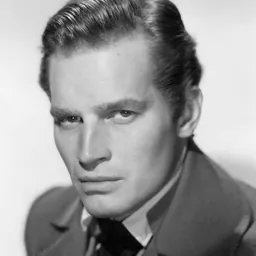


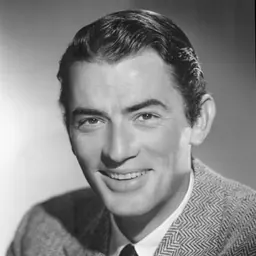
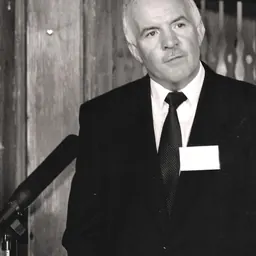


Related people
Same field, nearest in time

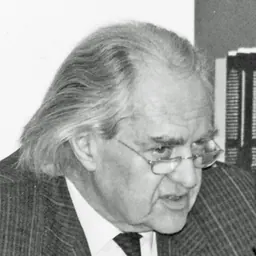


Contemporaries
People whose lives overlapped Franklin J. Schaffner's

Frequently asked questions
Who was Franklin J. Schaffner?
American film director (1920–1989)
When was Franklin J. Schaffner born?
Franklin J. Schaffner was born on 30 May 1921 in Tokyo.
When did Franklin J. Schaffner die?
Franklin J. Schaffner died on 2 July 1989 in Santa Monica.
What was Franklin J. Schaffner's occupation?
Franklin J. Schaffner was a film director, trade unionist and director.
What nationality was Franklin J. Schaffner?
Franklin J. Schaffner was American.
Sources & further reading
· Wikipedia: Franklin J. Schaffner
· DBpedia: Franklin J. Schaffner
Cite this page
APA: Biography.guide. (2026). Franklin J. Schaffner. https://biography.guide/franklin-j-schaffner/
MLA: "Franklin J. Schaffner." Biography.guide, https://biography.guide/franklin-j-schaffner/.
Chicago: "Franklin J. Schaffner." Biography.guide. https://biography.guide/franklin-j-schaffner/.
Data last updated: 2026-09-22 · Spot an error? Report a correction.
Page generated 2026-09-27 05:21 UTC