
About Franklin Boukaka
Lived 1940 – 1972 (aged 31). Franklin Boukaka was a Congolese artist, musician and songwriter.
Franklin Boukaka (October 10, 1940 - about February 23–24, 1972) was a Congolese baritone singer, guitarist, and songwriter who is recognized as a pioneer of Congolese popular music. He performed in bands based in each of "the two Congos," i.e., the countries now named the Republic of the Congo and the Democratic Republic of the Congo; toured worldwide; achieved broad popularity; took outspoken political stances; and is widely believed to have been the victim of an extrajudicial execution during an attempted coup in the Republic of the Congo.
Early life Franklin Boukaka was born François Boukaka on October 10, 1940, in Brazzaville (the capital of present-day Congo-Brazzavile).
In November 1958, with a number of other musicians mostly from Brazzaville, including his friend Michel Boyibanda who had been in Sympathic Jazz with him, Boukaka founded Negro Band. According to some sources, Negro Band was founded and always based in Brazzaville, Subsequently, still in Leopoldville, with Jeannot Bombenga and Casino Mutshipule from African Jazz, he founded the band Vox Africa; other members of its first lineup included Papa Noël and Djeskain Massengo.
Cercul Jazz, 1962-67 In 1962, his place of employment returned from Leopoldville to Brazzaville where he joined the band Cercul Jazz, which two colleagues from Sexy Jazz had joined five years earlier. Cercul Jazz was founded in 1954 and named after a youth organization with which it was affiliated, Cercule Culturel de Bacongo. Boukaka became a leader of the group, and developed a substantial following. Cercul Jazz recorded his composition "Pont sur le Congo" (Bridge on the Congo), suggesting that, with colonialism finished, the two Congos ought to unite. Its lyrics included (translated):
Accept this day my prayer For a united Congo. If we accept the teachings of Lumumba Kinshasa and Brazza will get on well together. Brothers and sisters of the two banks, Let's join hands and forge the glory Of our Congo. and the refrain names sixteen martyrs killed for their beliefs, including Patrice Lumumba, Che Guevara, Malcolm X, Simon Kimbangu, Albert Luthuli, and Andre Matswa. This song has been called prophetic, given that Boukaka was apparently killed for his own convictions a few years later. It may also be seen as an implicit criticism of the political leadership of the two Congos at that time, for failing to live up to the heroic standards of their predecessors.
In 1969, Boukaka performed with his sanza troupe at the Pan-African Cultural Festival in Algiers. They performed together at the 1970 version of the Quinzaine Artistique et Culturelle Nationale, the annual Guinean national festival. The Guinean record label Syliphone released three records of him with that band.
Family life Boukaka was married to Antoinette Mouanga, who died after they separated. Two of his popular songs were inspired by her: "Luzolo" and one known as "Antoinette Mouanga" or "Mwanga." persons listed as deceased in the failed coup. The circumstances of his death were never explained. Congolese-music historian Gary Stewart reports that "many Congolese suspect he was executed - all the more so because his name had originally turned up on a list of those who had been arrested."
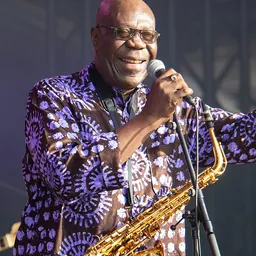
Evaluations and remembrance Boukaka has been lauded for his "exceptional musical talent," and specifically "his appealing stage presence, mellow baritone, and increasingly incisive compositions." But nearly fifty years later, Boukaka continues to be remembered. More recordings of his music have been issued after his death than while he was alive. Recent newspaper columns, blog posts and other essays from, for example, India, the Netherlands, the United States, and Kenya recall his life and highlight his music, particularly the "timeless" song "Le Bucheron." While at least one Western expert on Congolese music disdains it," perhaps because it is played so much, the song has been the subject of numerous covers and remakes, for example, by John Kazadi of Zimbabwe in 1985, the Nairobi City Ensemble in 2005, Manu Dibango, Aïcha Koné (fr), and Bisso Na Bisso with Passi. In 2016, the French publisher La Doxa Éditions published in his memory Franklin, l’insoumis: d'après une idée de Marien Fauney Ngombé (Franklin, the rebellious: based on an idea by Marien Fauney Ngombé). It is a book of fourteen short stories by fourteen authors including Ndèye Fatou Kane, each inspired by a song by Boukaka.
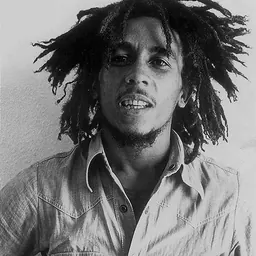
Boukaka's political engagement and opposition to authority have been compared to those of Bob Marley and Fela Kuti. He is referred to as a martyr, and his death at the young age of 32 lamented.
Discography Singles and EPs Franklin Boukaka, "Ba Yemba Ba Congo" / "Yambi Na Bana Poto" / "Les Brazzavilloises" / "Pasi Na Komona" (Riviera Afrique, 231.305) 1969 Franklin Boukaka avec Keletigui et ses Tambourinis, "Munu Ngiedi" / "Kitoko Mingi" (Editions Syliphone Conakry, SYL 251) 1970 Franklin Boukaka avec Keletigui et ses Tambourinis, "M’Bongi Eyi" / "Tata aleleti" (Editions Syliphone Conakry, SYL 252) 1970 [recorded live at the Palais de la Peuple, Guinea] Franklin Boukaka avec Keletigui et ses Tambourinis, "Unité Africaine" / "Kitoko Mingi" (Editions Syliphone Conakry, SYL 253) 1971 Franklin Boukaka, "Le Bucheron" / "Nakoki" (Sonafric, SAF 1518) 1972 Franklin Boukaka, arrangements et direction orchestre Manu Dibango, "Dia Bikolo" / "Luzolo" (Sonafric, SAF 1528) 1972 Franklin Boukaka, "Etumba" / "Les Immortels" (Sonafric, SAF 1506) unknown Franklin Boukaka, direction orchestre Manu Dibango, "Le Bucheron" / "Likambo Oyo" (Sonafric, SAF 1578) unknown Franklin Boukaka, "M'Bongi" / "Ya M'Bamba" (Sonafric, SAF 1711) unknown
Albums Numerous recordings of Boukaka's 1955-67 performances with groups including Negro Band, Vox Africa, Cercul Jazz, and possibly others have been issued under the names of those groups, and are not included here. Some of those have been collected on albums issued under his name: Franklin Boukaka (EMI Pathe C 064-15992) 1978 [album sometimes known as "Bibi," as the title of its first track. All 11 tracks were originally released by Cercul Jazz on Pathe: track 1 on the Congo? Bolingo! compilation (Pathé CPTX 240.807), tracks 2-5 on Super Cercul Nº 1 (Stenco EG 783), tracks 6-7 on Cercul Interafricain, and tracks 8-11 on Super Cercul Nº 2 (Stenco Pathé EG 799).] Franklin Boukaka, Les Merveilles du Passé 1967 (African 360.153) 1986 [compilation of 1960s singles, side 1 with two tracks by Cercul Jazz, and two tracks by Negro Band. Side 2 contains four tracks by Orchestre Negro-Succes, of Bavon Marie-Marie. No source indicates any connection between Boukaka and that group; so, despite the album's name and cover, Boukaka is apparently not on Side 2.] 1967 Paris recording session with Gilles Sala: Franklin Boukaka ses Sanzas et Son Orchestre Congolais, Survivance (Gilles Sala GS 8403) 1983 [described as reissue of a 1967 release; 6 tracks, the four on Riviera Afrique 231.305 (above), "Kue Tu Kuenda," and "Couple Ya Bolingo"] Franklin Boukaka ses Sanzas et Son Orchestre Congolais, Survivance (Bolibana Collection) (Bolibana Productions BIP 333) 2010? [same as GS 8403 plus an additional, seventh track, "Rendez-vous à Bamako"] 1970 Paris recording session with Manu Dibango: Franklin Boukaka, arrangements et direction orchestre Manu Dibango (Sonafric SAF 50 001) 1970 or 1974 [sometimes known as "Le Bucheron," as the title of its first track] Franklin Boukaka à Paris, arrangements et direction orchestre Manu Dibango (Sonafric SAF 50 048) 1977 [reissue of SAF 50 001 with the addition of two tracks, "Etumba" and "Les Immortels," for a total of 12 tracks instead of 10, and a change of one song title from "Nakoki" to the erroneous "Nakoko".] Franklin Boukaka à Paris, arrangements Manu Dibango (Sonafric – CD 50048) 1999 [CD reissue of SAF 50 048]
Included on compilations 1er Festival Culturel Africain, Alger 1969, Culture et Arts Congo-Brazzaville (LPL 4779, 4780) 19?? [Eleven tracks by various artists, with two - the first and last - by Franklin Boukaka et les Sanzas: "Les Immortels" and "Mpassi Zi Sakidi"] Afrique Varietes (Riviera Afrique – 521.186 T) 1972 [Sixteen tracks by various artists, including five by Franklin Boukaka Ses Sanzas Et Son Orchestre Congolais: the four on Riviera Afrique 231.305, and "Kue Tu Kuenda"] Keletigui et ses Tambourinis: The Syliphone Years (Sterns STCD3031-32) 2009 [Includes "M'bongi Eyi" by Franklin Boukaka avec Keletigui et ses Tambourinis]
Don’t just read it —
keep it.
Full-length biographies made to live with: read them, listen on the way to work, watch them tonight.
- E-book
- Audio
- Video
Instant download · yours to keep · every purchase keeps this site free
Important facts
People in Franklin Boukaka's life
Named in this biography and alive at the same time






Related people
Same field, nearest in time




Contemporaries
People whose lives overlapped Franklin Boukaka's
Frequently asked questions
Who was Franklin Boukaka?
Congolese artist (1940-1972)
When was Franklin Boukaka born?
Franklin Boukaka was born on 10 October 1940 in Brazzaville.
When did Franklin Boukaka die?
Franklin Boukaka died on 22 February 1972 in Brazzaville.
What was Franklin Boukaka's occupation?
Franklin Boukaka was an artist, musician and songwriter.
What nationality was Franklin Boukaka?
Franklin Boukaka was Congolese.
Sources & further reading
Cite this page
APA: Biography.guide. (2026). Franklin Boukaka. https://biography.guide/franklin-boukaka/
MLA: "Franklin Boukaka." Biography.guide, https://biography.guide/franklin-boukaka/.
Chicago: "Franklin Boukaka." Biography.guide. https://biography.guide/franklin-boukaka/.
Data last updated: 2026-09-20 · Spot an error? Report a correction.
Page generated 2026-09-27 04:58 UTC