
About Franklin Booth
Lived 1874 – 1948 (aged 74). Franklin Booth was an American writer, illustrator and artist.
Franklin Booth (July 18, 1874 – August 25, 1948) was an American artist known for his detailed pen-and-ink illustrations. He had a unique illustration style based upon his early recreation of wood engraving illustrations with pen and ink. His skill as a draftsman and style made him a popular magazine illustrator in the early 20th century. He was one of the first modern ex libris designers in the United States.
Using watercolor, Booth created book illustrations, such as James Whitcomb Riley's The Flying Islands of the Night. During World War I, he created posters for recruitment, fundraising, and other efforts. As Art Deco style illustrations became popular, his work in latter years was found in commercial publications and catalogs. Although he "believe in schools to a certain extent" at one point in his career, he co-founded the Phoenix Art Institute and was an educator for 21 years. He was inducted into the Society of Illustrators Hall of Fame.
Early life and education Jay Franklin Booth was born in 1874 and raised on a farm near Carmel, Indiana. His parents, Susan Wright and John Thomas Booth, had eight children. Booth, the third child,
He expressed his view of formal education, "I believe in schools to a certain extent, yet I think a knowledge of art is not a thing held in trust by any, but is, rather, universal and comes to them who hunger and thirst after it." and studied for three months each at the School of the Art Institute of Chicago and the Art Students League of New York.
Career
His skilled draftsmanship and unique style made him a popular illustrator. Collier's, Harper's Magazine,
Booth created advertising art for organizations, such as Rolls-Royce, Whitman's Candy, Bulova Watches, He also created illustrations for several Victor-Victrola record covers.
Booth contributed to World War I by illustrating recruitment posters, US savings bonds envelopes, booklets and death certificates for American soldiers who perished in France and Belgium, and work for the Red Cross.
He illustrated books like James Whitcomb Riley's The Flying Islands of the Night (1913), which included multiple plates of his watercolor images. "It includes Booth's open compositions and attention to classical forms, with skies filled with soft quiet washes of hues in place of fields of tone." Meredith Nicholson's The Poet, and Five-Foot Book Shelf, one of the Harvard Classics editions. In 1934 and 1935, he wrote a series of articles about the art of illustration for the Professional Art Quarterly. "A Continent Is Bridged", an illustration by Franklin Booth, was drawn for the Atlantic Telephone & Telegraph Company for the observance of the twenty-fifth anniversary of transcontinental telephone service in 1940.
He created illustrations—like of a black-eyed susan and box turtle—for several stamps for a 1941 wildlife conservation series by the National Wildlife Federation. During his career, he helped develop a process of permanent reproduction of line design on titles and aluminum with the Reynolds Metals Company. He then settled in a studio on 57th Street in New York City. He spent his summers in Indiana, where he was friends with James Whitcomb Riley, a poet. in his studio in New York City.
Books about him and his illustrations include Franklin Booth: American Illustrator (2006) by editor Manuel Auad and Franklin Booth: Painter with a Pen (2002) by John Fleskes.
Quotations "I have always admired the beauty of Franklin Booth's work and regard him as an exponent of the very best in American Illustration". ~ Norman Rockwell. "Booth's pen-and-inks have the lush richness of a fine old tapestry plus an exciting imagination". ~ James Montgomery Flagg. "I have always stood spellbound before one of Booth's noble pen paintings. They recall today the Golden Age of American Illustration when such giants as Pyle, Abbey, Remington, and Gibson set a standard hard to reach. Booth earned his place beside such men as These". ~ Dean Cornwell. "I still wish I could do a pen drawing the way Franklin Booth handled them. The present-day student who wants quick success should be forced to copy a few of his illustrations just for the discipline. I used to do them just for the love of it". ~ Milton Caniff.
Don’t just read it —
keep it.
Full-length biographies made to live with: read them, listen on the way to work, watch them tonight.
- E-book
- Audio
- Video
Instant download · yours to keep · every purchase keeps this site free
Important facts
People in Franklin Booth's life
Named in this biography and alive at the same time



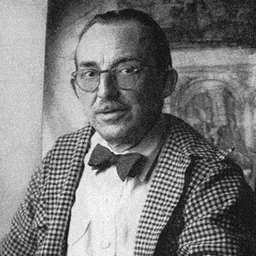

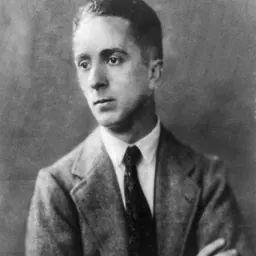
Related people
Same field, nearest in time




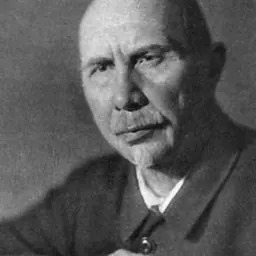
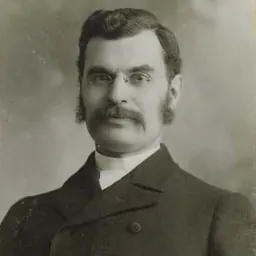
Contemporaries
People whose lives overlapped Franklin Booth's

Frequently asked questions
Who was Franklin Booth?
American artist
When was Franklin Booth born?
Franklin Booth was born on 8 July 1874 in Carmel.
When did Franklin Booth die?
Franklin Booth died on 28 August 1948 in New York City.
What was Franklin Booth's occupation?
Franklin Booth was a writer, illustrator and artist.
What nationality was Franklin Booth?
Franklin Booth was American.
Sources & further reading
Cite this page
APA: Biography.guide. (2026). Franklin Booth. https://biography.guide/franklin-booth/
MLA: "Franklin Booth." Biography.guide, https://biography.guide/franklin-booth/.
Chicago: "Franklin Booth." Biography.guide. https://biography.guide/franklin-booth/.
Data last updated: 2026-09-20 · Spot an error? Report a correction.
Page generated 2026-09-27 05:33 UTC