
About Frank Tweedy
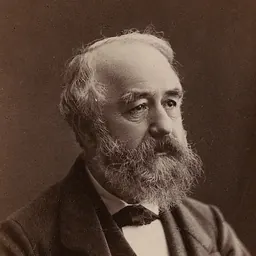
Lived 1854 – 1937 (aged 83). Frank Tweedy was an American botanist and surveyor.
Frank Tweedy (1854–1937) was an American topographer and botanist. He worked on pioneering surveys first in the Adirondacks, and then in the American West. He also made major contributions to our knowledge of the western flora and vegetation. He is perhaps best known for his studies in Yellowstone National Park.
Life Ancestry and early life Frank Tweedy was born to Oliver Burr and Maria Lord Tweedy in New York City in 1854, the youngest of nine children. His surname refers to the River Tweed in the Borders region of Scotland and England. His ancestors were among the separatist Pilgrims who arrived in New England on the Mayflower. His great great grandfather, Colonel Andrew Burr (1696-1763), commanded the Connecticut militia in the capture of Louisburg during the French and Indian Wars. Frank's father, Oliver Burr (1806–1898), was in the fur hat business. He moved the business from Danbury, CT, to his wife Maria Lord's (1813–1883) home in New York City. Frank Tweedy's ancestors operated five Tweedy hat and clothing businesses in Danbury during the 1800's. The map included here shows the main watershed regions for the Adirondack Mountains with the star marking Twitchell Lake in Big Moose, NY, where Frank Tweedy had a surveying basecamp for his 1879 season.
In 1873, Frank entered Union College in Schenectady, New York as a sophomore. While in college he participated in sports, serving as captain and stroke of his crew in the intercollegiate regatta on Saratoga Lake, N.Y., held in July 1875. He graduated in 1875 with a degree in civil engineering. In August after his graduation, Frank resided in the hamlet of Number Four, the main western gateway to the Adirondack wilderness 18 miles east of Lowville, NY, where he collected and reported one of his first plant specimens collected on the shore of Beaver Lake—northeastern bladderwort or Utricularia resupinata. Another specimen Frank collected in the shallow water of Beaver Lake that summer was yellow pond-lily, botanical name Nuphar lutea.
Career and later life Frank Tweedy worked as a surveyor on the Adirondack Survey (1876–1879); as a sanitation engineer in Newport, Rhode Island (1880–1882); as a surveyor for the Northern Pacific Survey in Washington Territory (1882–1884); and as a surveyor and topographer for the US Geological Survey, mainly in the Rocky Mountains, from 1884 until his retirement in 1928.
Tweedy's routine during this time was to do survey fieldwork during the summer season, and then engage in map production—often a two-year process—off-season. At the same time, he continued to collect plants, publishing occasionally, and building his reputation as a botanist. When his family relocated from New York City to Plainfield, NJ, in the mid-1870s, Union College's Concordiensis informed alumni two years after his graduation that "Tweedy is botanizing at Plainfield, N.J."
Frank Tweedy married Emma Adelaide Hayden in December 1889; they had two children, a son Temple Hayden, and a daughter, Gertrude. Frank and Emma raised their family in the District of Columbia, having moved there when he joined the USGS. Frank became a member of the following clubs and societies:
Society of Colonial Wars
National Geographic Society
National Philatelic Society
University Club of Washington During this four-year time-frame, Frank was based in Plainfield, New Jersey. Colvin included this map in his 1880 Seventh Annual Report on the Progress of the Topographical Survey of the Adirondack Region of New York, with a glowing tribute to his young surveyor: "Both the field and map work have been executed by Assistant F. Tweedy, C. E., whom I placed in charge of this division, and the results are very satisfactory and extremely creditable to him. His experiences in effecting the first survey of this wild and romantic stream have been varied and remarkable, and the labor severe."
Tweedy's second main task for the Adirondack Survey was to resurvey the western boundary to the 1771 Totten and Crossfield (T&C) Purchase of over a million acres of land. Verplanck Colvin frequently lamented "the stigma of unreliability and uncertainty" for all the old lines for counties, townships, and land purchases, which thousands of deeds were based on." That Purchase had been divided into fifty Townships in 1772 in expectation of selling the Township Lots to farmers at a handsome profit. It took land speculators over a hundred years to realize this wilderness and climate were not conducive to farming. Frank's two maps of the Beaver River have been combined into one on a website for navigating the Stillwater Reservoir, formed after Beaver River was dammed up in two stages just before and after 1900. In May 2021, Benchmark No. 4-- one of five Colvin instructed Tweedy to install along that 24-mile T&C western boundary line—was discovered "in the solid rock" directly under that cairn of stones marking an important historical Corner.
American west In 1882, Tweedy was appointed assistant topographer for the Northern Transcontinental Survey, in Washington (he continued to live in Newport during the winter). Thus began Tweedy's explorations—topographical and botanical—of the American West. This excursion, not far north of the route taken by Lewis and Clark, became the centerpiece in Frank Tweedy's autobiography, where he narrated seven dangers faced that tested his faith and shaped his character.
An Oregon newspaper reported on the crew's mission as they passed through Portland, verifying heights above sea level for key mountain peaks and passes, and taking inventory of the unique variety in tree species: "The forestry expert finds that the trees of the Cascade mountains are greater in variety than in any other part of the United States if not in the world." The New York Public Library holds a collection of maps drafted during this two-season tour, crediting Tweedy's work on topography and publishing a map of Yakima City color coding the hemlocks, pines, and spruce species present in that wilderness.
1896 U.S. Geological Survey Geological Map of Yellowstone National Park (4 sheets) – Topography by Frank Tweedy
Two years later, in 1884, Tweedy joined the US Geological Survey first as topographer, and then topographical engineer (1915). Frank summarized this long stretch in his career as follows: "Worked in the Yellowstone Park, followed with map work in Montana, Wyoming, Colorado, and New Mexico. The work was mainly along the Rocky Mountains." Tweedy's survey work at this time added to a new effort by USGS to create and publish a Geologic Atlas of the United States," with Frank's topographical contribution on the "Three Forks, Montana Folio which was part of this publication. This atlas included in-depth explanation of the geological evolution of this region 110 miles north of Yellowstone.
1:125,000 topographic map of Laramie Quadrangle, Albany Co., WY, USA; 1895. Triangulation, topography by Frank Tweedy.
With few visible peaks in his earlier Adirondack survey work, Tweedy was unable to lay out many right triangles with a baseline for calculating multiple distances from that base via Pythagorean geometry. In the Rocky Mountains peaks were commonly visible from the ground, although terrain was much more rugged. In the 1888 to 1899 timeframe, Frank set up a system of triangulation using the Yellowstone River and the Union Pacific Railroad as a baseline, sighting his instrument to "stone cairns on the higher points or simple wooden tripods 10 to 20 feet high on the lower points." The National Geologic Map Database project (NGMDB) lists the following Quadrangles for which Frank Tweedy headed up both triangulation and topography: In Montana, Helena & Fort Logan (1888) and Big Timber (1889); and for Wyoming, Ishawooa (1893), Laramie (1895), Bald Mtn (1898), Dayton (1899), and South Dakota-Newcastle (1899). In 1892 and 1893, Frank Tweedy worked for the USGS in Albany County, Wyoming, to produce the Laramie Sheet (1:125,000 topographic map, published in 1895) pictured here.
The turn of the century saw two significant changes in Frank's career, first with a shift of his mapping labors to Colorado and South Dakota, and with "Frank Tweedy in charge of section," overseeing the total mapping effort. The NGMDB displays the following sampling of six Quadrangles from this period for two states: In South Dakota, Red Water (1903–1906); and in Colorado, Central City (1904), Fort Collins (1905–1906), Loveland (1905–1906), Livermore (1905–1907), and Eaton (1908). Several collections from the 1860s have been reported, but labels on the imaged specimens contradict, likely misread or misinterpreted during digitization. Two were part of Tweedy's personal herbarium but not collected by him (no collector listed). One was collected by Tweedy, but in 1879.
By 1879, Frank Tweedy was making contributions to the botanical literature, with articles in the Bulletin of the Torrey Botanical Club. In May, he reported two likely state records for New Jersey, collected the previous year: Papaver dubium and Aralia quinquefolia (probably one of the four native aralias in the state ). "On looking over the latest edition of 'Catalogus Plantarum in Nova Caesarea Repertarum' I do not find these two plants. They appear to be new to the State," he wrote.
For the next several years, Tweedy continued to publish collections and observations of note, from New Jersey, New York, and Rhode Island. In 1880, he reported he had made quite a few collections of the carnivorous Utricularia resupinata (northeastern bladderwort) from upstate New York, confirming earlier reports. "I do not think it is uncommon through Northern New York" he noted. We now know such changes are developmental abnormalities controlled by homeobox genes.
In 1880, Frank Tweedy was hired as a sanitation engineer in Newport, Rhode Island, and promptly began investigating the local flora. a habit that would gain him respect in the years to come.
Washington Territory In 1882, Tweedy's botanical explorations jumped across the continent when he took a job as assistant topographer for the Northern Transcontinental Survey in Washington Territory (he continued to live in Newport during the winter).
Calandrinia (Lewisia) tweedyi holotype, collected by Frank Tweedy. Gray Herbarium. In Washington Territory, Tweedy found a new kind of excitement—novelties (today called species new to science). His first discovery was Tweedy's reedgrass, in the Wenatchee Mountains. Scribner ended his description of the grass with accolades for the collector: "Mr. Tweedy has been a careful and zealous collector of the plants of the various sections of our country which he has visited, and it is with pleasure that I dedicate this species to him."
During his two field seasons in Washington Territory, Frank Tweedy not only surveyed topography and collected plants, he also took detailed notes on the plant ecology of the areas where he worked. In 1883, he published "Notes on the Coniferae of Washington Territory"—specifically coniferous trees on the eastern slope of the Cascade Mountains. "The damp winds from Puget Sound, after passing over the crest of the mountains, are gradually deprived of their moisture until ... the soil becomes too dry to support a growth of timber." Tweedy went on to describe in detail factors affecting timberline and the distribution of the many conifer species, again showing himself to be an astute observer and ecologist. Tweedy had joined the US Geological Survey as a topographer, spending the previous field season in Yellowstone National Park.
As he had in his earlier 'Notes", Tweedy wrote effusively of Yellowstone's landscapes. "Aside from the wonderful geyser basins and hundreds of boiling springs, but few regions can compare with it in the variety of its topographic features : — Plateaus diversified by deep cañons, lakes, and ponds of the greatest beauty of outline; mountain ranges of every possible description, from the rounded massive form to those of the most rugged and precipitous character." He then described at length, five pages in all, the geographic regions, topographical features, streams and lakes of the Park, the intent being to provide a reference source for locations mentioned later in the book. In 1898, when Professor Aven Nelson of the University of Wyoming was planning a lengthy plant collecting trip to Yellowstone, he contacted Rocky Mountain botany expert Per Axel Rydberg for advice. In his reply, Rydberg recommended reviewing Tweedy's work: "The flora of the park is, however well worked up as several collectors have been in there, viz., the Hayden Survey, C.C. Parry, Letteman, Burglehous, &c. The one that has done the most, however, is Frank Tweedy of U.S. Geological Survey. He spent two whole summers in the park."
The next spring, Rydberg sent another letter to Nelson, this one with a map: "Mr. F. Tweedy has kindly sent me a map, on which he has indicated the routes he has traveled in the Park. I have made a tracing of a map of the park. It is of a small scale and many times smaller than that he sent to me, but I have tried to copy his routes thereon as well as that of myself and Mr. Bessey in 1897." Tweedy's routes form a web across the northeast quarter of the Park, with several excursions south and west. It appears Rydberg and Bessey stuck to the roads.
In the summer of 1897, Tweedy made close to 500 collections in western Wyoming, many from the Teton Forest Reserve. In 1900, he collected extensively along the east slope of the Bighorn Mountains, represented by nearly 700 specimens in the Rocky Mountain Herbarium, University of Wyoming.
Colorado In the 1890s and early 1900s, Frank Tweedy collected plants in Colorado while surveying for the US Geologic Survey in the Telluride, Durango, Boulder and Central City areas. He made well over a thousand collections, some twenty of which were initially determined (mainly by Per Axel Rydberg) to be new species. However, most of these taxa have not survived taxonomic revision, having been combined with existing taxa, or demoted to subspecies or variety. As far as we know, Tweedy's collecting in Colorado marked the end of his large scale botanizing in the American West. (if family treatment is available). Accessed Sep 2020.
At least 35 plant taxa were named in honor of Frank Tweedy, who made the first collections. The following are still recognized, though sometimes with a name change. None have survived taxonomic revision (minor in the case of the stipa). However, Nelson did not receive the specimens directly from Tweedy. Rather he purchased them from botanist and plant specimen dealer Amos Arthur Heller.
Literary works Tweedy authored several works in addition to his academic and professional contributions. In 1918 he produced a collection of short stories, which he dedicated to his wife. Then in 1926 he drafted an autobiographical account based on his first trip to the American West, in the early 1880's.
In The Discarded Confidante and Other Stories, Frank changed the names of characters in his eight short stories but clearly focused on his family circle, offering this dedication: "To my wife this volume of stories is affectionally dedicated."
This stanza in Kipling's longer poem summed up the direction his life had been taking since his work assignment in the Adirondacks. Exploring wild new frontiers perfectly captured Frank's sense of calling and purpose. In his own words: "I shut my eyes and see again in mental vision what I saw then [as a young man] and so impressed me. The great open spaces -- the rushing waters -- the virgin forests -- the mighty mountain ranges." and now held by The Adirondack Experience in their Museum at Blue Mountain Lake Village, NY.
Don’t just read it —
keep it.
Full-length biographies made to live with: read them, listen on the way to work, watch them tonight.
- E-book
- Audio
- Video
Instant download · yours to keep · every purchase keeps this site free
Important facts
People in Frank Tweedy's life
Named in this biography and alive at the same time



Related people
Same field, nearest in time



Contemporaries
People whose lives overlapped Frank Tweedy's





Frequently asked questions
Who was Frank Tweedy?
botanist (1854-1937)
When was Frank Tweedy born?
Frank Tweedy was born on 12 June 1854 in New York City.
When did Frank Tweedy die?
Frank Tweedy died on 28 June 1937.
What was Frank Tweedy's occupation?
Frank Tweedy was a botanist and surveyor.
What nationality was Frank Tweedy?
Frank Tweedy was American.
Sources & further reading
Cite this page
APA: Biography.guide. (2026). Frank Tweedy. https://biography.guide/frank-tweedy/
MLA: "Frank Tweedy." Biography.guide, https://biography.guide/frank-tweedy/.
Chicago: "Frank Tweedy." Biography.guide. https://biography.guide/frank-tweedy/.
Data last updated: 2026-09-26 · Spot an error? Report a correction.
Page generated 2026-09-27 05:14 UTC