
About Frank Tapp
Lived 1883 – 1953 (aged 69–70). Frank Tapp was a British composer and pianist.
Frank Harold Tapp (1883 – 15 June 1953, often Frank H. Tapp, sometimes Frank W. Tapp) was a British composer, pianist and conductor associated with the City of Bath, where he was the director of the Pump Room concerts between 1910 and 1917. Tapp was an accomplished pianist, and the composer of three symphonies and other orchestral works.
Career Frank Tapp was born in Bath, making his first appearance as a pianist when he was only five. He first studied music locally with the organist Sir Percy Buck. He went on to study at the Royal College of Music, where his teachers included Charles Villiers Stanford, Sir Frederick Bridge and Charles Wood as well as John Arthur St. Oswald Dykes (piano) and William Sewell (organ). The Pump Room was (and is) famous for its salon and light music, but Tapp also programmed new and challenging repertoire - such as the first West of England performance of Elgar's Enigma Variations, his own Symphony No. 1 The Tempest (in 1913), and Schoenberg's Five Orchestral Pieces. Over sixty symphonies, including all nine of Beethoven's, were programmed during his time there. He left the orchestra in 1917: some sources say he was sacked for programming the Schoenberg.
As a pianist he performed Liszt's Piano Concerto No. 1 with the Bournemouth Municipal Orchestra in December 1916, and made his solo debut appearance at Steinway Hall on 20 October 1917, performing Beethoven's Waldstein Sonata. In 1924 he married Kathleen Mary Vaughan. His address in 1935 was 129 Leeside Crescent, Golders Green in London. He later returned to Bath, where local orchestras continued to perform his music.
Music While he was still a student at the RCM, Tapp's Rhapsody for Two Pianos received its first performance in December 1907, with Tapp and Harold Rhodes (1889-1956) as the pianists. Another work for piano and orchestra, the Symphonic Variations (on Tom Bowling) was performed in Bournemouth on 4 November 1909, with the composer as soloist. His Rhapsody for Piano and Orchestra on a Theme from Tippereary was one of his most popular works - it was initially taken up by the touring pianist Marie Novello, but Tapp himself also played it, and there were over 400 performances. Also popular were three piano concertante works (1915, 1930 and 1935) using the tune Pop Goes the Weasel as the basis for variations. Jürgen Schaarwächter says the music is modelled on Elgar to a considerable degree. Only the first and third movements survive. There are also five overtures, including Metropolis, which won second prize in a competition put on by the Daily Telegraph and which was premiered at the Proms on 30 August 1934. His overture Beachy Head, which features three saxophones, was premiered in 1938 and recorded in 1942. In chamber music there is a String Trio (1909, first performed by the Walenn Trio), a Fantasy wind quintet, and a Violin Sonata (1931). Light solo piano pieces include Valse Caprice (1907, published by Stainer & Bell) and the waltz Moonlight Mysteries, published by Metzler & Co.
Selected works Divertimento for string orchestra English Landmarks, suite Fantasy Quintette for wind instruments Five Cameos for strings (performed in Bath, 1941) Knick Knacks, suite The Land of Fancy, suite Overtures: Metropolis, An Island Festival, Highgate Hill, Beachy Head (premiere 1938), Village Revels Rhapsody for two pianos (1907) Rhapsody for two pianos and double string orchestra Suite de ballet for orchestra (premiere 1923, Bournemouth) Suite for string orchestra, JSB (Homage to J.S. Bach) Symphony in E, The Tempest (1913) Symphony No. 2 in D Symphony No. 3 in Eb Symphonic Suite for string orchestra Symphonic Variations for piano and orchestra (two sets) Violin Sonata (1931)
Don’t just read it —
keep it.
Full-length biographies made to live with: read them, listen on the way to work, watch them tonight.
- E-book
- Audio
- Video
Instant download · yours to keep · every purchase keeps this site free
Important facts
People in Frank Tapp's life
Named in this biography and alive at the same time


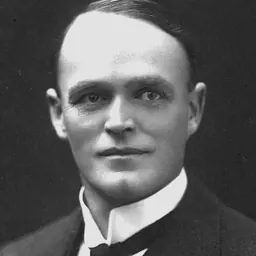




Related people
Same field, nearest in time
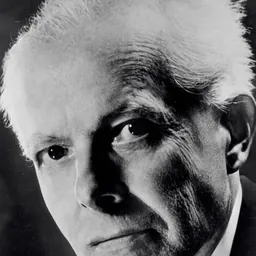


Contemporaries
People whose lives overlapped Frank Tapp's


Frequently asked questions
Who was Frank Tapp?
British composer and pianist
When was Frank Tapp born?
Frank Tapp was born in 1883 in Bath.
When did Frank Tapp die?
Frank Tapp died in 1953.
What was Frank Tapp's occupation?
Frank Tapp was a composer and pianist.
What nationality was Frank Tapp?
Frank Tapp was British.
Sources & further reading
Cite this page
APA: Biography.guide. (2026). Frank Tapp. https://biography.guide/frank-tapp/
MLA: "Frank Tapp." Biography.guide, https://biography.guide/frank-tapp/.
Chicago: "Frank Tapp." Biography.guide. https://biography.guide/frank-tapp/.
Data last updated: 2026-09-20 · Spot an error? Report a correction.
Page generated 2026-09-27 05:12 UTC