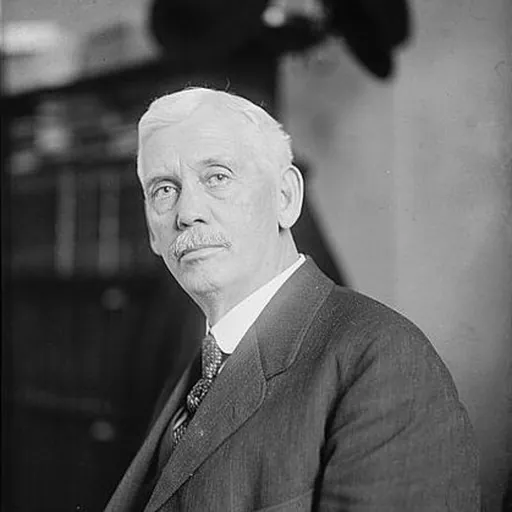
About Frank Park
Lived 1864 – 1925 (aged 61). Frank Park was an American politician, lawyer and judge.
Frank Park (March 3, 1864 – November 20, 1925) was an American politician, educator, lawyer and jurist from the state of Georgia.
Early years and education Park was born in Tuskegee, Alabama, in 1864 to James Fletcher Park and Emma Augusta Park (née Bailey). His father was the principal and founder of Park High School (later known as Tuskegee Military Institute for Boys), and later served as mayor of Lagrange, Georgia. The younger Park graduated from local public schools before attending the University of Georgia in Athens (UGA), where he was a member of the Phi Kappa Literary Society. He taught from 1882 through 1885 then worked as a railway civil engineer from 1885 until 1889. Park then attended the Atlanta Medical College and graduated in 1891. He studied law and was admitted to the state bar in 1891, at which time he started a private law practice. The dinner, for 500, was held at the newly constructed Armory-Auditorium (now the Atlanta Municipal Auditorium). The feast was prepared by the head chef of the Piedmont Hotel, with the assistance of three cooks from Park's plantation. The chief chef of the Piedmont Hotel created a special opossum basting sauce for the occasion.
The opossum was brought to President-elect Taft in a chafing dish. It was reported that "Five hundred eyes were on the President-elect as he lifted the top of the dish and gazed at the boast of Georgia." Taft is said to have remarked that it was "The best dish I have toasted in weeks". After the dinner, boosters presented Taft with a small plush marsupial they dubbed "Billy Possum". Their expectation was that Billy Possum would soon outshine Taft's predecessor's famous plush toy, the Teddy Bear. The vacancy was the result of incumbent Seaborn Roddenbery's death earlier in the year. Like all members of the Georgia Congressional delegation at that time, Park was a Democrat. After finishing the partial term of his predecessor, he was reelected to four additional full terms in that seat. During his tenure in office, Park resided in Sylvester, Georgia, the county seat of Worth County.
Controversial acts In December 1913, shortly after taking office, Park introduced legislation to make changes to the Second Amendment of the Constitution of the United States to allow state and federal authorities to regulate the practice of "pistol toting". Park stated that his experience as a judge had taught him that the "evil practice of pistol toting" was responsible for a large percentage of homicides in the United States. The freshman congressman wrongly predicted that his measure would receive the "overwhelming support of congress and the states."
In 1914, Park introduced a bill that would ban all African-Americans from being commissioned as military or naval officers.
Fighting political corruption In 1914, Park introduced a resolution of impeachment against Daniel Thew Wright, Associate Justice of the Supreme Court of the District of Columbia for corruption. Wright resigned from the Court ahead of the threatened impeachment proceedings.
1916 election In 1916 Park was challenged in the Democratic primary by Edward Eugene Cox, who had succeeded Park as judge of the Albany judicial circuit when Park stepped down. Cox did what he could to stir up public interest in his campaign, even sending Congressman Park a telegram challenging him to a debate at the July 4 festivities in Thomasville, Georgia. Cox continued pressing. On August 10. 1916 he held a large barbecue rally in Lucile, Georgia which attracted voters from Early County and surround areas. It was reported that "several hundred" voters attended. Park was able to best Cox in the 1916 congressional race, and would not see another challenge to his seat until 1924.
Park was also mindful of representing the farmers of his district in Georgia who counted agriculture, particularly the harvesting of pecans and peanuts, as a primary concern. His congressional district produced a large percentage of the pecans grown in Georgia. Park pushed through a more than 50% increase in funding for pecan growers, in the annual Agriculture Appropriations Act of 1917. In addition to nuts and legumes, farmers in Park's 2nd Congressional District harvested a large quantity of "yellow yams" (actually sweet potatoes). With the help of President Woodrow Wilson (who had strong ties to Georgia) Park persuaded the Army's Quartermaster General to add "yellow yams" to the army's menu, increasing both sales and consumer awareness of the vegetable.
In a consumer protection measure Park introduced legislation requiring that manufacturers of clothing and shoes disclose the nature of "the material entering the composition of the article manufactured".
1924 election defeat Park faced another contested election in 1924. On July 19, 1923 a front-page article in the Early County News reported that a mass meeting of Tift County voters had taken place, with the express purpose of placing the name of Judge Raleigh Eve in nomination for the Second Congressional District, to replace Frank Park. Eve was the presiding judge of the Tift Judicial Circuit, and a former judicial colleague of Park. The paper reported that "The auditorium was packed and enthusiasm marked the reception of five or six speeches preceding the formal nomination. The nomination was unanimous." Out of roughly 13,000 votes cast, Park lost decisively by a margin of nearly 3,000 vote.
Death and legacy On November 20, 1925, a few months after leaving office, Park died in Fort Lauderdale, Florida. He was buried in White Springs Cemetery in White Springs, Florida, next to his wife Emma Augusta Bridges Park, who had died the previous year.
The WWII liberty ship, the SS Frank Park, laid down on June 10, 1944 in Brunswick, Georgia, was named after the late congressman. The SS Frank Park was scrapped in 1962.
Don’t just read it —
keep it.
Full-length biographies made to live with: read them, listen on the way to work, watch them tonight.
- E-book
- Audio
- Video
Instant download · yours to keep · every purchase keeps this site free
Important facts
People in Frank Park's life
Named in this biography and alive at the same time



Related people
Same field, nearest in time




Contemporaries
People whose lives overlapped Frank Park's



Frequently asked questions
Who was Frank Park?
American politician (1864-1925)
When was Frank Park born?
Frank Park was born on 3 March 1864 in Tuskegee.
When did Frank Park die?
Frank Park died on 20 November 1925 in Fort Lauderdale.
What was Frank Park's occupation?
Frank Park was a politician, lawyer and judge.
What nationality was Frank Park?
Frank Park was American.
Sources & further reading
Cite this page
APA: Biography.guide. (2026). Frank Park. https://biography.guide/frank-park/
MLA: "Frank Park." Biography.guide, https://biography.guide/frank-park/.
Chicago: "Frank Park." Biography.guide. https://biography.guide/frank-park/.
Data last updated: 2026-09-21 · Spot an error? Report a correction.
Portrait: Wikimedia Commons · author & licence
Page generated 2026-09-27 04:59 UTC