
About Frank Morgan
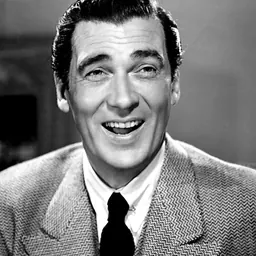
Lived 1890 – 1949 (aged 59). Frank Morgan was an American character actor, stage actor, film actor, actor and musician.
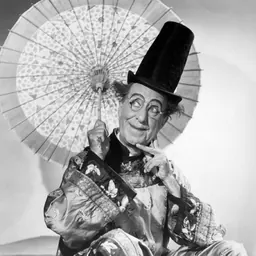
Francis Phillip Wuppermann (June 1, 1890 – September 18, 1949), known professionally as Frank Morgan, was an American character actor. He was best known for his appearances in films starting in the silent era in 1916, and then numerous sound films throughout the 1930s and 1940s, with a career spanning 35 years mostly as a contract player at Metro-Goldwyn-Mayer. He was also briefly billed early in his career as Frank Wupperman and Francis Morgan.
He is best-known for his multiple roles, including Professor Marvel and the title role of The Wizard, in the 1939 Metro-Goldwyn-Mayer classic The Wizard of Oz.
Early life Morgan was born on June 1, 1890, in New York City, to Josephine Wright (née Hancox) and George Diogracia Wuppermann. He was the youngest of 11 children and had five brothers and five sisters. The elder Mr. Wuppermann was born in Venezuela but was brought up in Hamburg, Germany, and was of German and Spanish ancestry.
Career Theater Morgan began his acting career in theater. An aspiring vaudevillian following in his brother's footsteps, he changed his name from Wuppermann to Morgan. He made his acting debut in the show Mr. Wu on October 14, 1914. After many years of starring in theater productions, he finally caught the attention of critics with his role as Count Carlo Boretti in The Lullaby alongside Florence Reed. In 1927, he played Henry Spoffard in Gentlemen Prefer Blondes. Following that, he starred in Raffles, the Amateur Cracksman (1917) as Bunny Manders, alongside costar John Barrymore. In 1934, Morgan received an Academy Award nomination for Best Leading Actor for his performance as Alessandro, Duke of Florence in The Affairs of Cellini. In the next year, he starred as a multimillionaire wooing Margaret Sullavan in The Good Fairy and as Jack Billings in The Great Ziegfeld. In 1936, Morgan played alongside Shirley Temple as Professor Appleby in Dimples. Speaking about Morgan, Temple wrote, "…Dimples pitted me against an accomplished veteran of the legitimate stage who was not about to let any little curly headed kid steal his scenes. Competition for camera attention had always been a fact of life for me. The kid and the expert could not help but collide."
In The Wizard of Oz (1939), Morgan played five roles: the Wizard, the carnival huckster "Professor Marvel", the "bust my buttons" Gatekeeper who initially refuses to let Dorothy and her friends into the city, the "horse of a different color" carriage driver of Emerald City, and the Palace Guard who refuses to let Dorothy and her friends in to see the Wizard. Morgan was cast in the role on September 22, 1938. W. C. Fields was originally chosen for the part of the Wizard, but the studio ran out of patience after protracted haggling over his fee.
An actor with a wide range, Morgan was equally effective playing comical, befuddled men such as Jesse Kiffmeyer in Saratoga (1937) and Mr. Ferris in Casanova Brown (1944), as he was with romantic leads and more serious, troubled characters such as Hugo Matuschek in The Shop Around the Corner (1940), Professor Roth in The Mortal Storm (1940) and Willie Grogan in The Human Comedy (1943). MGM's musical comedy film The Great Morgan (1946) is a compilation film featuring Frank Morgan supposedly as himself but playing the familiar bumbler. Occasionally a co-star (as in The Human Comedy, and, once established, invariably a featured player), he also saw the occasional lead deep in his Hollywood career, as the philanthropic tycoon falsely accused of murder in 1941's Washington Melodrama and The Great Morgan (in which he is the Morgan of the title, the picture's central player).
During the 1940s, Morgan appeared in such diverse genres and roles as an oil wildcatter in Boom Town (supporting Clark Gable, Spencer Tracy, and Claudette Colbert); Tortilla Flat in 1942 (based on the John Steinbeck book, again supporting Tracy); a jungle doctor in White Cargo (supporting Walter Pidgeon and Hedy Lamarr); a shepherd in the Courage of Lassie in 1946; a doctor again in Green Dolphin Street in 1948 in support of Lana Turner, Van Heflin, and Donna Reed; King Louis XIII in The Three Musketeers in 1948, supporting Gene Kelly and Turner again; and as Jimmy Stewart’s boss in The Stratton Story in 1949. He played a fire chief in his final picture, Key to the City, filmed in 1949 but released posthumously in 1950.
Radio Morgan also had a career in radio. In the 1940s, Morgan co-starred with Fanny Brice in one version (of several different series) of the radio program Maxwell House Coffee Time, aka The Frank Morgan-Fanny Brice Show. During the first half of the show Morgan would tell increasingly outlandish tall tales about his life adventures, much to the dismay of his fellow cast members. After the Morgan segment there was a song, followed by Brice as 'Baby Snooks' for the last half of the show. When Brice left to star in her own program in 1944, Morgan continued solo for a year with The Frank Morgan Show. In 1947, Morgan starred as the title character in the radio series The Fabulous Dr. Tweedy. He also recorded a number of children's records, including the popular Gossamer Wump, released in 1949 by Capitol Records.
Personal life and death Morgan married Alma Muller in 1914; they had one son, George. They were married until his death in 1949.
Morgan was widely known to be an alcoholic, according to several people who worked with him, including Margaret Hamilton and Aljean Harmetz. Morgan sometimes carried a black briefcase to work, fully equipped with a small mini-bar.
Morgan's niece Claudia Morgan (née Wuppermann) was a stage and film actress, and his brother was playwright Carlos Wuppermann.
Morgan had filmed a few scenes as Buffalo Bill in the musical Annie Get Your Gun (1950) when he died in his sleep of a heart attack on September 18, 1949, at the age of 59, at his home in Beverly Hills, California. Louis Calhern replaced him for that film. His funeral service was at All Saints Protestant Episcopal Church in Beverly Hills. Morgan is buried in Green-Wood Cemetery in Brooklyn. His tombstone carries his real name, Wuppermann, as well as his stage name.
Awards and honors
Morgan was nominated for two Academy Awards, one for Best Actor in The Affairs of Cellini (1934) and one for Best Supporting Actor in Tortilla Flat (1942). He has two stars dedicated to him on the Hollywood Walk of Fame in Hollywood, California: one for his films at 1708 Vine Street and one for his work in radio at 6700 Hollywood Boulevard. Both were dedicated on February 8, 1960.
Filmography
Radio appearances Year Program Episode/source 1937 Amos & Andy Amos and Andy with Frank Morgan 1940 Screen Guild Players The Shop Around the Corner 1941 Art Museum January 9, 1941 1942 Pat O'Brien April 23, 1942 Command Performances October 27, 1942 The Pied Piper December 21, 1942 1943 Nothing But The Truth May 3, 1943 The Human Comedy July 12, 1943 Holy Matrimoney December 13, 1943 1944 Wallpapering September 23, 1944 The Frank Morgan Show NBC August 31, 1944 - May 31, 1945 1945 The Devil and Miss Jones March 12, 1945 Birdseye Open House September 13, 1945, host Dinah Shore Huckleberry Finn October 14, 1945 Names On The Land December 24, 1945 1946 The Bickersons 60 episodes 1947 The Fabulous Dr. Tweedy 5 episodes 1948 The Jimmy Durante Show January 14, 1948 1949 Kraft Music Hall 35 episodes
Don’t just read it —
keep it.
Full-length biographies made to live with: read them, listen on the way to work, watch them tonight.
- E-book
- Audio
- Video
Instant download · yours to keep · every purchase keeps this site free
Important facts
People in Frank Morgan's life
Named in this biography and alive at the same time



Related people
Same field, nearest in time


Contemporaries
People whose lives overlapped Frank Morgan's





Frequently asked questions
Who was Frank Morgan?
actor (1890-1949)
When was Frank Morgan born?
Frank Morgan was born on 1 June 1890 in New York City.
When did Frank Morgan die?
Frank Morgan died on 18 September 1949 in Beverly Hills.
What was Frank Morgan's occupation?
Frank Morgan was a character actor, stage actor, film actor, actor and musician.
What nationality was Frank Morgan?
Frank Morgan was American.
Sources & further reading
Cite this page
APA: Biography.guide. (2026). Frank Morgan. https://biography.guide/frank-morgan-character-actor/
MLA: "Frank Morgan." Biography.guide, https://biography.guide/frank-morgan-character-actor/.
Chicago: "Frank Morgan." Biography.guide. https://biography.guide/frank-morgan-character-actor/.
Data last updated: 2026-09-27 · Spot an error? Report a correction.
Page generated 2026-09-27 05:17 UTC