
About Frank George Woollard
Lived 1883 – 1957 (aged 74). Frank George Woollard was an engineer.
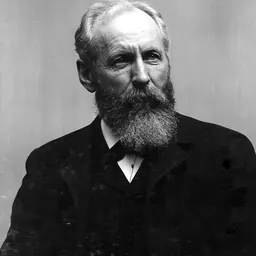
Frank George Woollard (22 September 1883 – 22 December 1957) was a British mechanical engineer who worked for nearly three decades in the British motor industry in various roles in design, production, and management. He was a pioneer in flow production, what is better known as the "Toyota Production System" (popularly -- but incorrectly -- referred to as "Lean management"), but whose work has been forgotten. thumb Frank George Woollard, ca. 1954. Source: David Bramley Archive. Used with permission.
Biography Woollard is regarded as one of the fathers of the British motor industry for his major contributions to flow production, progressive management practices, and industrial automation. In 1918, Woollard was awarded Member of Order of the British Empire (MBE) for his work on in improving the design and production of tank gearboxes, which had been the bottleneck in tank production during World War I. Woollard's innovative work at Morris Engines Limited, later known as Morris engines branch, beginning in 1923, enabled Morris Motors Limited to grow rapidly and achieve a commanding 34 percent domestic market share by 1930.
Born in London, England, his father George was a butler and his mother Emily (Powell) was a kitchen maid, Woollard was educated at City of London School where he excelled in mathematics and science. In 1914, Woollard married Catherine Elizabeth Richards, and they gave birth to a son who died in infancy and daughter Joan Elizabeth on 20 September 1916. Miss Joan Woollard died on 30 January 2008.
Professional career Upon completing his education at City of London School, Woollard apprenticed for five years as a mechanical engineer at the London and South Western Railway starting in 1899. His first experience with a basic form of flow production was in the manufacture of railway coaches in 1904. Around 1905 he entered the British automotive industry as an auto parts designer. In 1910 he joined E G Wrigley & Co Limited, Birmingham, a maker of gearboxes, axles, and steering components for various British automobile companies, as chief draughtsman in a department with a professional staff of 18, then in 1914 Woollard assumed responsibilities as production engineer. He re-organized production from batch to a simple form of flow to meet increased orders for vehicle components. In January 1918 he was appointed assistant managing director of Wrigley's.
William Morris, later Lord Nuffield, founder and owner of Morris Motors, became acquainted with Woollard as a customer of E G Wrigley & Co. Morris recognised Woollard's talents in automobile parts design and production and when Morris purchased the E G Wrigley business in January 1923 he appointed Woollard general manager of Morris Engines Limited. Woollard, with William Morris's encouragement and financial backing, immediately led the re-organization of engine production from batch to flow, increasing output from less than 300 units per week in January 1923, to 600 units per week by December 1923, and to 1200 units by December 1924. To achieve this remarkable increase in output, Woollard developed an advanced flow production system for low volume production.
The major changes in production system design took place quickly, over a period of less than two years. In comparison, reorganisation of Toyota's engine shop, some 25 years later in the 1950s, took six years – and at half the production volume of Morris Motors. In 1926 Woollard joined the main board of Morris Motors but following disagreements with W R Morris who kept a firm grip on policy he moved on to managing director of Rudge-Whitworth in 1932. From 1936 he seemed unable to find employment with the major vehicle manufacturers but he returned to writing, took up some industry directorships and became active at the University of Birmingham and Birmingham College of Technology. He chaired the College of Technology's industrial administration group from 1951 to 1957.
His innovative methods seemed little appreciated by the industry though he was active and it would seem respected in his professional associations which included: IAE President 1945–1947 of the Institution of Automobile Engineers – which he had joined in 1915 IME first chairman, automobile division of the Institution of Mechanical Engineers – he arranged the merger of IAE and IME in 1947 Member of the Institution of Production Engineers Chairman executive committee of the Aluminium Development Association 1949–1952 Chairman Zinc Alloy Diecasting Association 1952–1956 founding member of British Institute of Management Member of the American Society of Automotive Engineers . His work is completely missing from the Lean management literature and highlights a significant failure on the part of both Lean management researchers and production and operations management researchers.
Woollard died in late 1957, and so did his life's work. His daughter Joan was an accomplished artist and apparently did not have the capability to keep her father's work alive. Woollard's colleagues had tremendous admiration for him and his accomplishments, but they would eventually pass away and nobody carried his work forward until recently.
Woollard's work has been revived by management historian and author Professor Bob Emiliani. In January 2009 he published a 55th Anniversary Special Edition of Woollard's 1954 book, Principles of Mass and Flow Production, which also includes his 1925 paper "Some Notes on British Methods of Continuous Production" and commentary and analysis of Woollard's work by Dr. Emiliani.
Professor Bob Emiliani and his research collaborator, Peter J. Seymour wrote the peer-reviewed paper "Frank George Woollard: Forgotten Pioneer of Flow Production," published in the Journal of Management History, (2011) 17 (1): 66–87.
Morris Motors Ltd. ceased to exist in 1952 when it merged with Austin Motor Company to form British Motor Corporation. Unfortunately, innovations in production methods and machinery are not sufficient to ensure long-term company success. Managers and employees must excel at many other business processes including responding to the voice of the customer with new designs, short cycle-time product development, introducing new automotive technologies, aftermarket service, and so on. An advanced production system alone will not make a company successful long-term.
Don’t just read it —
keep it.
Full-length biographies made to live with: read them, listen on the way to work, watch them tonight.
- E-book
- Audio
- Video
Instant download · yours to keep · every purchase keeps this site free
Important facts
People in Frank George Woollard's life
Named in this biography and alive at the same time

Related people
Same field, nearest in time



Contemporaries
People whose lives overlapped Frank George Woollard's



Frequently asked questions
Who was Frank George Woollard?
British mechanical engineer
When was Frank George Woollard born?
Frank George Woollard was born on 22 September 1883.
When did Frank George Woollard die?
Frank George Woollard died on 22 December 1957.
What was Frank George Woollard's occupation?
Frank George Woollard was an engineer.
Sources & further reading
· Wikipedia: Frank George Woollard
· DBpedia: Frank George Woollard
Cite this page
APA: Biography.guide. (2026). Frank George Woollard. https://biography.guide/frank-george-woollard/
MLA: "Frank George Woollard." Biography.guide, https://biography.guide/frank-george-woollard/.
Chicago: "Frank George Woollard." Biography.guide. https://biography.guide/frank-george-woollard/.
Data last updated: 2026-09-20 · Spot an error? Report a correction.
Page generated 2026-09-27 05:16 UTC