
About Frank Evers Beddard
Lived 1858 – 1925 (aged 67). Frank Evers Beddard was a British zoologist, naturalist and carcinologist, known for Animal coloration and Annelids.
Frank Evers Beddard FRS FRSE (19 June 1858 – 14 July 1925) was an English zoologist. He became a leading authority on annelids, including earthworms. He won the Linnean Medal in 1916 for his book on oligochaetes.
Life Beddard was born in Dudley, Worcestershire the son of John Beddard. He was educated at Harrow and New College, Oxford. He died at West Hampstead in London. In 1881, aged 22, he lodged at 81a Princes Street, Edinburgh at Anna Campbell's lodging house. His fellow lodger was the Scottish biologist and town planner Patrick Geddes.
Career Beddard was naturalist to the Challenger Expedition Commission from 1882 to 1884. In 1884 he was appointed prosector, responsible for preparing dissections of animals that had died, at the Zoological Society of London, following the death of William Alexander Forbes.
Beddard became lecturer in biology at Guy's Hospital, examiner in zoology and comparative anatomy at the University of London, and lecturer in morphology at Oxford University.
Apart from his publications on wide-ranging topics in zoology, such as Isopoda, Mammalia, ornithology, zoogeography and animal coloration, Beddard became particularly noted as an authority on the annelids, publishing two books on the group and contributing articles on earthworms, leeches and also on another phylum of worms, the Nematoda for the 1911 Encyclopædia Britannica, where he used the initials "F.E.B.". Coles cites W.H. Hudson's 1919 The book of a naturalist, page 347:
Beddard contributed biographies of zoologists William Henry Flower and John Anderson for the Dictionary of National Biography. He was the author of volume 10 (Mammalia) of the Cambridge Natural History.
Legacy Beddard's olingo (Pocock, 1921) is named after him.
Works
Books Report on the Isopoda collected by H. M. S. Challenger during the years 1873–76 HMSO, 1884. Animal Coloration: an account of the principal facts and theories relating to the colours and markings of animals Swan Sonnenschein, 1892. A Text-book of Zoogeography. Cambridge University Press, 1895. A Monograph of the Order of Oligochaeta. Oxford at the Clarendon Press, 1895. A Book of Whales. John Murray, 1895. The Cambridge natural history. Vol 10 Mammalia. Macmillan, 1895. Elementary Zoology. Longmans, Green, 1898. The Structure and Classification of Birds Longmans, Green, 1898. Mammalia, Macmillan, 1902. Natural History in Zoological Gardens: Being Some Account of Vertebrated Animals, Archibald Constable, 1905. Earthworms and Their Allies. Cambridge University Press, 1912.
Chapters
Hudson, W.H. and Beddard, Frank E. British Birds. Chapter on structure and classification. First edition 1898. Longmans, Green, 1921.
Don’t just read it —
keep it.
Full-length biographies made to live with: read them, listen on the way to work, watch them tonight.
- E-book
- Audio
- Video
Instant download · yours to keep · every purchase keeps this site free
Important facts
People in Frank Evers Beddard's life
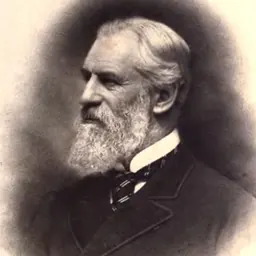
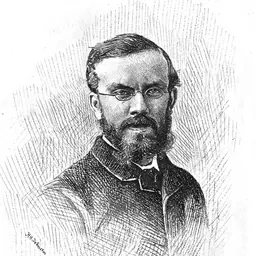
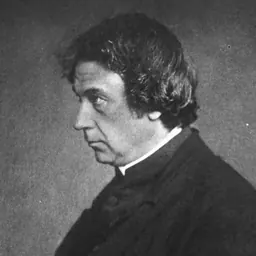
Named in this biography and alive at the same time




Related people
Same field, nearest in time




Contemporaries
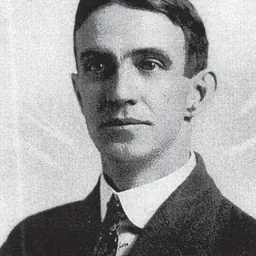
People whose lives overlapped Frank Evers Beddard's
Frequently asked questions
Who was Frank Evers Beddard?
English zoologist (1858-1925)
When was Frank Evers Beddard born?
Frank Evers Beddard was born on 19 June 1858 in Dudley.
When did Frank Evers Beddard die?
Frank Evers Beddard died on 14 July 1925 in Hampstead.
What was Frank Evers Beddard's occupation?
Frank Evers Beddard was a zoologist, naturalist and carcinologist.
What was Frank Evers Beddard known for?
Frank Evers Beddard was known for Animal coloration and Annelids.
What nationality was Frank Evers Beddard?
Frank Evers Beddard was British.
Sources & further reading
· Wikipedia: Frank Evers Beddard
· DBpedia: Frank Evers Beddard
Cite this page
APA: Biography.guide. (2026). Frank Evers Beddard. https://biography.guide/frank-evers-beddard/
MLA: "Frank Evers Beddard." Biography.guide, https://biography.guide/frank-evers-beddard/.
Chicago: "Frank Evers Beddard." Biography.guide. https://biography.guide/frank-evers-beddard/.
Data last updated: 2026-09-20 · Spot an error? Report a correction.
Page generated 2026-09-27 05:33 UTC