
About Frank Dineen
Lived 1862 – 1916 (aged 53–54). Frank Dineen was an athlete.
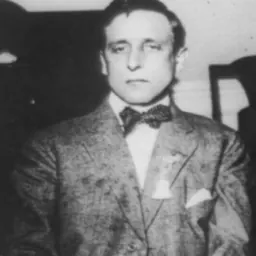
Frank Brazil Dineen (1862 – 18 April 1916) was a Gaelic games administrator and the fourth president of the Gaelic Athletic Association. From Ballylanders in County Limerick, he was elected General Secretary of the GAA in 1898 and is the only man to have ever held the two top positions within the Association. An athlete in the 1880s, Dineen was the fastest Irish sprinter of his day. He was also a founder of Ballylanders Shamrocks. He is also noted as the man who purchased a site on Jones Road in 1908 before donating it to the GAA for free in 1913, the site now of Croke Park. Dineen held the ground in trust for the GAA, which at the time was not able to purchase the land itself. Between 1908 and 1910 he oversaw development of the ground, paying for the improvements himself.
Introduction Frank Brazil Dineen, a GAA activist, was born in Ballylanders, County Limerick, 1862. Dineen is known for purchasing a site on Jones Road in 1908 and giving it to the GAA free of charge in 1913. He developed all 14 acres of the grounds of this property for five years and funded it himself. He was the only man who saw the possibilities for this land and without Dineen's vision and belief, Croke Park would not be the main headquarters for this organization and one of the finest stadiums worldwide.
Dineen is an emblematic figure in the early part of the GAA. He became President of the GAA in 1895 and filled the position until 1898 when he progressed to become the General Secretary of the association, a position he occupied until 1901. He was also a leading member of both the Fenian movement and the Land League. It was built after the 1916 Rising and because Dineen died on 18 April 1916, this was an appropriate time. He came from a large family of 28 as his father remarried twice, having children with all three wives. This was a result of Dineen's father, Nicholas Dineen's His relatives also played a significant role in Irish Politics. Dineen's great grandnephew Frank Dineen, records in his Journal Article entitled The Complexities of Life: a Personal and Historical, his relations to his great grand uncle, and his family's involvement in Irish politics. Frank Dineen refers to Frank B. Dineen as an all-Ireland champion athlete, and his parents active involvement in the IRA, and Cumann na mBan activities. Dineen's relatives were caught and punished by the Irish state for their political opinions, and actions. One of his relatives was imprisoned in Limerick Prison as a result of his activities linked to the IRA in 1920. Another one of his relatives expressed her support for a free Ireland by removing an Irish flag from a British soldier's possession, which she was then fined for. As a result of Dineen's relatives' migration to England his grand-nephew served in the RAF from 1945 to 1948. O'Neill made a speech for the 100th anniversary of Dineen's establishment, and donation of Croke Park to the GAA Committee, referring to Dineen's family members contributing participation in making Croke Park an emblematic symbol in GAA history. Despite maybe not having been aware at the time, O'Neill highlights how Dineen's decision to donate what was before the 14 acre city and suburban Racecourse to the GAA committee influenced his family's history.
Frank Dineen's sporting career began in athletics in the 1880s. He had a keen passion for the sport and excelled in sprinting. In the time he competed, Dineen was known as one of the best athletes in Munster and was thought to be the fastest sprinter in the province. In 1882 Dineen ran the 100-yard sprint in 10.2 seconds, which at the time was the Irish record.
Dineen began his career in the GAA in 1895. He began his role in the GAA when he took over as president from Peter J. He served as president for three years until 1898, and after that he began his role as general secretary of the association from 1898-1901. He became the first man to ever serve as both general secretary of the association and president of the GAA. and to this day he is still the only person to hold both positions. After his retirement from the GAA, Dineen went on to become a sportswriter and journalist for the Gaelic section of the Sport newspaper.
After serving his role as President and General Secretary of the Association, Dineen went on to purchase the Jones' Road Sports Ground for £3,250 on 17 December 1908. He bought the grounds in trust for the GAA as at the time, the GAA was unable to purchase the land itself. Dineen held the ground in trust for five years until the GAA was able to afford the grounds, and they purchased it in 1913. For the years in between 1908 and 1913, Frank Dineen oversaw the developments of the grounds, and paid for the renovations and upkeep of the property. Dineen remained involved in the development of Croke Park until his death in 1916.
Later life and death
Dineen's athletic career came to a sudden end due to ill health. However, this did not stop him from pursuing his love for GAA and sport. Upon Dineen's retirement, his passion for sport led him to become more involved in GAA, becoming an athletic referee. He refereed many important matches in Irish athletics and at that time many individuals considered him to be the most capable official in the country. Dineen had a keen interest in all aspects of the GAA, however, he had a particular interest in juvenile athletics. He is believed to have given all his well-deserved awards away at the local sports. Dineen's grave can be located specifically in the St. Paul's section of Glasnevin Cemetery across the Finglas Road. His headstone is written through the Irish language and states the years he served as President and Secretary of the GAA. In February 1970, a headstone over the grave of Dineen, in Glasnevin Cemetery, in Dublin, was unveiled by the then president of the GAA, Seamus O'Riain, with the presence of Dineen's family members and representatives from the GAA executive committee.
In April 2006, along with other sections of the stadium dedicated to prominent figures of the GAA, the terrace firstly built in 1917 and previously known as Hill 16, was officially re-named Dineen Hill 16 in Frank Dineen's honour.
In 2009, the Shamrocks Ballylanders GAA Club honoured Frank Dineen, its founding member, with a two days long event, named "The Birth of Croke Park in the Ballyhoura Mountains", held in South East Limerick. RTÉ broadcaster and commentator Micheál Ó Muircheartaigh, Martinstown Historical Society and historians Larry Ryder, Tony O'Donoghue and Dr Cyril White, participated in the opening of the event. The festival consisted in a series of lectures, where historians recalled Dineen contributions to the GAA, followed by the unveiling of the specially commissioned commemorative plaque, dedicated to Dineen, by the president of the GAA Club, Criostóir Ó Cuana, on the gable wall of McDermott's pub and the Ballylanders Club. The deeds of the 14 acres on Jones Road in Northsides Dublin were originally acquired by Dineen in 1908, for £3.250 and consequently acquired by the GAA in 1913.
As today Frank Brazil Dineen is the only man who served as both President, between 1895 and 1898, and Secretary, between 1898 and 1901, of the GAA.
Don’t just read it —
keep it.
Full-length biographies made to live with: read them, listen on the way to work, watch them tonight.
- E-book
- Audio
- Video
Instant download · yours to keep · every purchase keeps this site free
Important facts
People in Frank Dineen's life
Named in this biography and alive at the same time

Related people
Same field, nearest in time




Contemporaries
People whose lives overlapped Frank Dineen's




Frequently asked questions
Who was Frank Dineen?
Gaelic sports administrator
When was Frank Dineen born?
Frank Dineen was born in 1862 in Ballylanders.
When did Frank Dineen die?
Frank Dineen died on 18 April 1916.
What was Frank Dineen's occupation?
Frank Dineen was an athlete.
Sources & further reading
Cite this page
APA: Biography.guide. (2026). Frank Dineen. https://biography.guide/frank-dineen/
MLA: "Frank Dineen." Biography.guide, https://biography.guide/frank-dineen/.
Chicago: "Frank Dineen." Biography.guide. https://biography.guide/frank-dineen/.
Data last updated: 2026-09-20 · Spot an error? Report a correction.
Page generated 2026-09-27 05:19 UTC