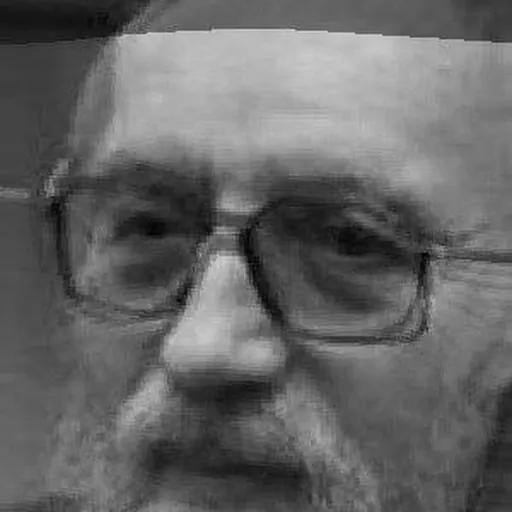
About Frank Cameron Jackson
Born 1943. Frank Cameron Jackson is an Australian philosopher, university teacher and epistemologist.
Frank Cameron Jackson (born 31 August 1943) is an Australian analytic philosopher and Emeritus Professor in the School of Philosophy (Research School of Social Sciences) at Australian National University (ANU) where he had spent most of the latter part of his career. His primary research interests include epistemology, metaphysics, meta-ethics and the philosophy of mind. In the latter field he is best known for the "Mary's room" knowledge argument, a thought experiment that is one of the most discussed challenges to physicalism.
Biography Frank Cameron Jackson was born on 31 August 1943 in Melbourne, Australia. His parents were both philosophers. His mother Ann E. Jackson, who rose to the rank of senior tutor, taught philosophy at the University of Melbourne from 1961 to 1984. had been a student of Ludwig Wittgenstein (having gone to Cambridge in 1946 for Ph.D. studies).
Despite his self-reported enjoyment of the philosophical conversation of his household it was with view to becoming a mathematician that Jackson went to the University of Melbourne to study maths and science. And it was only in his final year of those studies that he chose to also take some philosophy which he found he better enjoyed and proved significantly more able.
Upon graduation from his second degree, Jackson taught at the University of Adelaide for a year in 1967 and then went to La Trobe University for a lectureship appointment. Whilst there, Jackson published his first book (which was also his doctoral thesis) "Perception: A Representative Theory" (1977). The following year he succeeded his father to the chair of Philosophy at Monash University. Latterly (2007–14) he had also been a regular visiting professor of philosophy at Princeton University.
Jackson was awarded the Order of Australia in 2006 for service to philosophy and social sciences as an academic, administrator, and researcher. Jackson delivered the John Locke Lectures at the University of Oxford in 1995. Notably, his father had also delivered the 1957–8 lectures, making them the first father–son pair to have done so. he phrases the thought experiment as follows:Jackson's thought experiment features in the 1996 Channel 4 documentary "Brainspotting" and David Lodge's novel Thinks... (2001).
Jackson used the knowledge argument, as well as other arguments, to establish a sort of dualism, according to which certain mental states, especially qualitative ones, are non-physical. The view that Jackson urged was a modest version of epiphenomenalism—the view that certain mental states are non-physical and, although caused to come into existence by physical events, do not then cause any changes in the physical world.
However, Jackson later rejected the knowledge argument, as well as other arguments against physicalism:
Jackson argues that the intuition-driven arguments against physicalism (such as the knowledge argument and the zombie argument) are ultimately misleading.
Jackson is also known for his defence of the centrality of conceptual analysis to philosophy; his approach, set out in his Locke Lectures and published as his 1998 book, is often referred to as the Canberra Plan.
Honours Jackson was elected Fellow of the Australian Academy of the Humanities (FAHA) in 1981 and of the Academy of the Social Sciences in Australia (FASSA) in 1998.
He was awarded the Centenary Medal in 2001 and appointed an Officer of the Order of Australia (AO) in 2006.
In 2003 he was appointed as Distinguished Professor at the Australian National University and Emeritus Professor in 2014. In November 2018 Jackson received the Peter Baume Award, which recognises substantial and significant achievement and merit.
Publications
Books
Perception: A Representative Theory (1977, CUP) Conditionals (1987, Basil Blackwell) (with David Braddon-Mitchell) Philosophy of Mind and Cognition: An Introduction (1996, Basil Blackwell), 2nd ed. (2007) From Metaphysics to Ethics: A Defence of Conceptual Analysis (1998, OUP) Mind, Method and Conditionals: Selected Essays (1998, Routledge) (with Philip Pettit & Michael Smith) Mind, Morality, and Explanations: Selected Collaborations (2004, OUP) Language, Names and Information (2010, Wiley-Blackwell)
Edited books
Conditionals (1991, OUP) (with Michael Smith) The Oxford Handbook of Contemporary Philosophy (2005, OUP)
Selected articles (1975) 'Grue' Journal of Philosophy, vol. 72, no. 5, pp. 113–131. (1979) 'On Assertion and Indicative Conditionals' The Philosophical Review, vol. 88, no. 4, pp. 565–589. (1980) 'Ontological Commitment and Paraphrase' Philosophy, vol. 55, no. 213, pp. 303–315. (1981) 'Conditionals and Possibilia' Proceedings of the Aristotelian Society, vol. 81, pp. 125–137. (1982) 'Epiphenomenal Qualia' The Philosophical Quarterly, vol. 32, no. 27, pp. 127–136. (1982) 'Functionalism and Type-Type Identity Theories' Philosophical Studies, vol. 42, no. 2, pp. 209–225. (with Robert Pargetter & Elizabeth W. Prior) (1984) 'Weakness of Will' Mind, vol. 93, no. 369, pp. 1–18. (1984) 'Petitio and the Purpose of Arguing' Pacific Philosophical Quarterly, vol. 65, no. 1, pp. 26–36. (1985) 'On the Semantics and Logic of Obligation' Mind, vol. 94, no. 374, pp. 177–196. (1986) 'Oughts, Options, and Actualism' The Philosophical Review, vol. 95, no. 2, 233–255. (with Robert Pargetter) (1986) 'What Mary Didn't Know' The Journal of Philosophy, vol. 83, no. 5, pp. 291–295. (1988) 'Functionalism and Broad Content' Mind, vol. 97, no. 387, pp. 381–400. (with Philip Pettit) (1990) 'Classifying Conditionals' Analysis, vol. 50, no. 2, pp. 134–147. (1990) 'In Defence of Folk Psychology' Philosophical Studies, vol. 59, no. 1, pp. 31–54. (with Philip Pettit) (1991) 'Decision-Theoretic Consequentialism and the Nearest and Dearest Objection' Ethics, vol. 101, no. 3, pp. 461–482. (1994) 'Minimalism and Truth Aptness' Mind, vol. 103, no. 411, pp. 287–302. (with Graham Oppy & Michael Smith) (1996) 'The Primary Quality View of Color' Philosophical Perspectives, vol. 10, pp. 199–219. (1996) 'Mental Causation' Mind, vol. 105, no. 419, pp. 377–413. (1998) 'A Problem for Expressivism' Analysis, vol. 58, no. 4, pp. 239–251. (with Philip Pettit) (1999) 'The Divide and Conquer Path to Analytical Functionalism' Philosophical Topics, vol. 26, no. 1/2, pp. 71–88. (with David Braddon-Mitchell) (2001) 'Conceptual Analysis and Reductive Explanation' The Philosophical Review, vol. 110, no. 3, pp. 315–360. (with David J. Chalmers) (2002) 'Response-Dependence without Tears' Philosophical Issues, vol. 12, pp. 97–117. (with Philip Pettit) (2003a) 'Cognitivism, A Priori Deduction, and Moore' Ethics, vol. 113, no. 3, pp. 557–575. (2003b) 'Mind and Illusion' in Minds and Persons, ed. Anthony O'Hear, Cambridge University Press, pp. 251–272. (2005) 'What Are Cognitivists Doing When They Do Normative Ethics?' Philosophical Issues, vol. 15, pp. 94–106. (2006) 'Absolutist Moral Theories and Uncertainty' The Journal of Philosophy, vol. 103, no. 6, pp. 267–283. (with Michael Smith) (2007) 'Freedom from Fear' Philosophy & Public Affairs, vol. 35, no. 3, pp. 249–265. (with Robert E. Goodin) (2010) 'The Autonomy of Mind' Philosophical Issues, vol. 20, pp. 170–184. (2012) 'Leibniz's Law and the Philosophy of Mind' Proceedings of the Aristotelian Society, vol. 112, pp. 269–283.
Don’t just read it —
keep it.
Full-length biographies made to live with: read them, listen on the way to work, watch them tonight.
- E-book
- Audio
- Video
Instant download · yours to keep · every purchase keeps this site free
Important facts
People in Frank Cameron Jackson's life
Named in this biography and alive at the same time







Related people
Same field, nearest in time

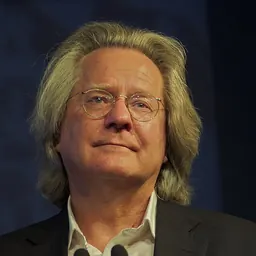
Contemporaries
People whose lives overlapped Frank Cameron Jackson's
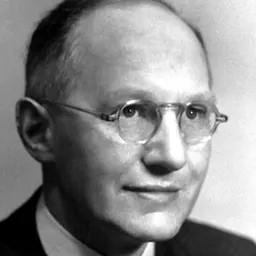
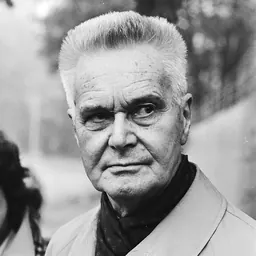
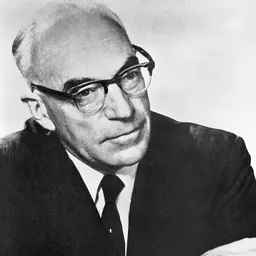

Frequently asked questions
Who is Frank Cameron Jackson?
Australian philosopher
When was Frank Cameron Jackson born?
Frank Cameron Jackson was born on 31 August 1943 in Melbourne.
What is Frank Cameron Jackson's occupation?
Frank Cameron Jackson is a philosopher, university teacher and epistemologist.
What nationality is Frank Cameron Jackson?
Frank Cameron Jackson is Australian.
Sources & further reading
· Wikipedia: Frank Cameron Jackson
· DBpedia: Frank Cameron Jackson
Cite this page
APA: Biography.guide. (2026). Frank Cameron Jackson. https://biography.guide/frank-cameron-jackson/
MLA: "Frank Cameron Jackson." Biography.guide, https://biography.guide/frank-cameron-jackson/.
Chicago: "Frank Cameron Jackson." Biography.guide. https://biography.guide/frank-cameron-jackson/.
Data last updated: 2026-09-20 · Spot an error? Report a correction.
Page generated 2026-09-27 05:09 UTC