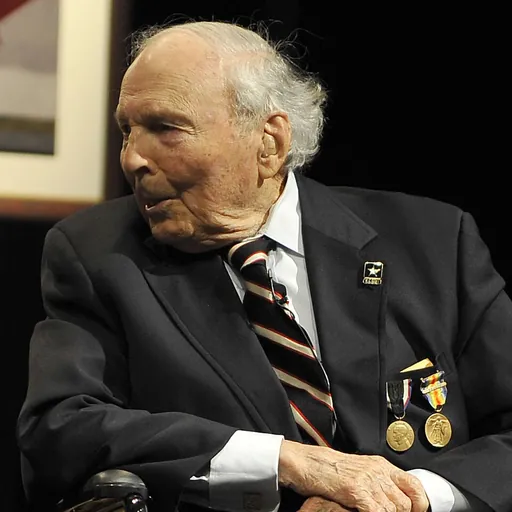
About Frank Buckles
Lived 1901 – 2011 (aged 110). Frank Buckles was an American military personnel.
Frank Woodruff Buckles (born Wood Buckles; February 1, 1901 – February 27, 2011) was a United States Army corporal and the last surviving American veteran of World War I. He enlisted in the U.S. Army in 1917 at age 16 and served with the 1st Fort Riley Casual Detachment in Europe, where he worked as an ambulance driver and later helped escort prisoners of war.
During World War II, Buckles was working as a civilian in the shipping business in the Philippines when Japanese forces captured him. He spent more than three years as a civilian prisoner of war, including captivity at the University of Santo Tomas internment camp and Los Baños.
Early life and education Buckles was born to James Clark Buckles, a farmer, and Theresa J. Buckles (née Keown) in Bethany, Missouri, on February 1, 1901. He had two older brothers, Ashman and Roy, and two older sisters, Grace and Gladys. Several family members lived long lives; he remembered speaking with his grandfather who was born in 1817, and his father lived to be 94. His ancestry included soldiers of the Revolutionary and Civil Wars.
In 1903, Frank—then known as Wood—and his brother Ashman contracted scarlet fever. Between 1911 and 1916, Buckles attended school in Walker, Missouri. He was an amateur wireless operator, and an avid reader of newspapers.
World War I and interwar years Five months after the American entry into World War I, Buckles sought to enlist in the armed forces. He was turned down by the Marine Corps for being too small, and by the Navy, which claimed that he had flat feet. He fared better with the Army, which accepted that he was an adult even though he looked no older than his 16 years. A sergeant advised that a middle initial would be helpful, so he adopted his uncle's name, "Frank Woodruff Buckles".
Buckles saw the war's impact on malnourished children in France, and more than 80 years later he could remember helping to feed them. After the Armistice in 1918, Buckles escorted prisoners of war back to Germany. One German prisoner gave him a belt buckle inscribed "Gott mit uns" , which he kept for the rest of his life. Following an honorable discharge in November 1919, Buckles then attended business school in Oklahoma City, where he also worked in financial services. In the 1930s, German and British passengers expressed fears about the Nazis, and military officers told him that Germany was equipping for war. Buckles witnessed antisemitism and its effects firsthand while ashore in Germany, and he warned acquaintances in Germany that their country would be brought down by Adolf Hitler, whom he encountered at a German hotel. Employed at sea during the Great Depression, he forwarded an $800 Army bonus to his father who was struggling as a farmer in the Oklahoma Dust Bowl (Buckles provided these details many decades later).
During and after World War II alt=A two-story white house with a porch and a balcony over it, flanked by two trees. A car from 1930s is parked at the house. As of 1940, Buckles had been employed by the White Star, American President, and W.R. Grace shipping companies, and in that year shipping business took him to Manila in the Philippines. After the outbreak of the Pacific War and the invasion of the Philippines, he reportedly remained in Manila to help resupply U.S. troops. He was captured in January 1942 by Japanese forces, and spent the next three years and two months as a civilian internee in the Santo Tomas and Los Baños prison camps.
As a prisoner, he battled starvation, receiving only a small meal of mush served in a tin cup—a utensil he kept for the rest of his life. With a weight below , Buckles developed beriberi, and led fellow captives in calisthenics to counter the effects of imprisonment. Before the war he had become fluent in German, Spanish, Portuguese, and French,
After World War II, Buckles moved to San Francisco and married Audrey Mayo in 1946. Ancestors named Buckles had settled near Gap View Farm centuries earlier. He has also stated that, "If your country needs you, you should be right there, that is the way I felt when I was young, and that's the way I feel today."
When asked the secret of long life, Buckles replied that being hopeful and not hurrying were key traits, adding: "When you start to die ... don't". In another interview, the centenarian talked about genetics, exercise, and a healthy diet, but put "the will to survive" above everything else. and that evening his life was featured on NBC Nightly News. With the death of 108-year-old Harry Richard Landis in February 2008, Buckles became the last surviving American veteran of World War I. The following month, he met with United States President George W. Bush at the White House. The same day, he attended the opening of a Pentagon exhibit featuring photos of nine centenarian World War I veterans, with Defense Secretary Robert Gates in attendance. That summer, he visited wounded soldiers at Walter Reed Army Medical Center. which seeks refurbishment of the District of Columbia War Memorial and its establishment as the National World War I Memorial on the National Mall. He was named ABC's World News Tonight's "Person of the Week" on March 22, 2009, in recognition of his efforts to set up the memorial. Those efforts continued, as Buckles appeared before Congress on December 3, 2009, advocating on behalf of such legislation. He did so as the oldest person who ever testified before Congress.
Passage of the legislation remained in doubt because opponents sought relocation of the proposed monument or, alternatively, some benefit for the District of Columbia. As of July 2013, U.S. Senator Pat Toomey was concerned that such a memorial would lead to the National Mall becoming "cluttered". Ultimately, the World War I Memorial was approved for a nearby site, and was opened in 2021.
A Freemason and longtime Shriner, Buckles was a member of the Osiris Shriners of Wheeling, West Virginia, and he became "the oldest Shriner in Shrinedom". Other interests of his included genealogy; he had been a member of the West Virginia Society of the Sons of the American Revolution since 1935, and was active for many years in the Sons of Confederate Veterans. He was a Life Member of the National Rifle Association of America.
On February 1, 2010—Buckles' 109th birthday—his official biographer, David DeJonge, announced a forthcoming documentary about him, titled Pershing's Last Patriot, described as a cumulative work of interviews and vignettes. DeJonge estimated a 2011 release for the documentary,
In late 2010, Buckles was still giving media interviews and became a supercentenarian upon his 110th birthday, on February 1, 2011.
On February 27, 2011, Buckles died of natural causes at his home aged 110 years and 26 days. He was the second-oldest living man in the United States at the time of his death (114-year-old American man Walter Breuning, born in September 1896, died 46 days after Buckles).
Commemoration and funeral
Buckles did not meet the criteria for burial at Arlington National Cemetery as he had never been in combat, but friends and family secured special permission from the federal government in 2008. That was accomplished with the help of Ross Perot, who had met him at a history seminar in 2001, and who intervened in 2008 with the White House regarding a final resting place.
Upon Buckles' death on February 27, 2011, President Barack Obama ordered that the American flag be flown at half-staff on all government buildings, including the White House and U.S. embassies, on the day in March when Buckles would be buried at Arlington. Leading up to the March 15 funeral, the governors of 16 states likewise called for lowering their states' flags to half-staff.
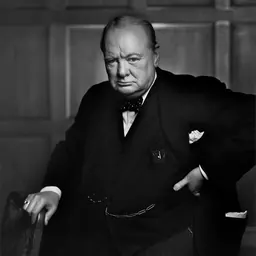
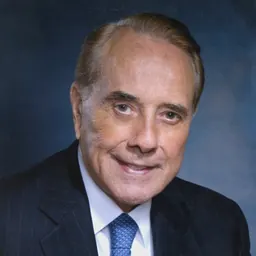
The United States Senate passed a resolution on March 3, 2011, honoring "the last veteran to represent the extraordinary legacy of the World War I veterans". Concurrent resolutions were proposed in both the Senate and the House of Representatives for Buckles to lie in honor in the United States Capitol rotunda. However, that plan was blocked by Speaker of the House John Boehner and Senate Majority Leader Harry Reid. When asked for explanation, their spokesmen would not elaborate on reasons for the decision. Boehner and Reid instead advocated a ceremony in the Amphitheater of Arlington National Cemetery. Various people had supported a rotunda ceremony, including Buckles' daughter, a great-grandson of Sir Winston Churchill, and former Republican Party presidential nominee Bob Dole.
Faculty and students at Buckles' high school in Missouri gathered to honor him on March 8, 2011. His home church in Charles Town held a memorial service, attended by the Episcopal bishop of West Virginia, members of Buckles' family and others. The keynote speaker was former Chairman of the Joint Chiefs of Staff Richard Myers.
A ceremony at Arlington National Cemetery's Memorial Amphitheater Chapel preceded the interment on March 15. During the ceremony prior to burial, President Barack Obama and Vice President Joe Biden paid their respects and met with the family.
Buckles' flag-draped coffin was borne to the burial plot on a horse-drawn caisson, and the folded flag was handed to his daughter by United States Army Vice Chief of Staff General Peter W. Chiarelli. Buckles was buried with full military honors in Section 34, near General of the Armies John J. Pershing. Attendees made donations for a planned statue of him in Charles Town.
In addition to being the last U.S. veteran of World War I, Buckles was the oldest World War I veteran in the world at the time of his death, as well as the last field veteran of the war. Following his death and funeral, there were two surviving World War I veterans, British-born Florence Green and British Australian citizen Claude Choules, both of whom served in the British Armed Forces. Choules died on May 5, 2011; Green died on February 4, 2012.
Honors
For his service during World War I, Buckles received, from the United States government, the World War I Victory Medal and four Overseas Service Bars. He also qualified for the Army of Occupation of Germany Medal due to his postwar service in Europe during the year 1919, and received that medal after it was created in 1941. Buckles did not qualify for the Prisoner of War Medal, because he was a civilian at the time of his imprisonment by the Japanese.
As a resident of Jefferson County, West Virginia, he was involved for many years with the Jefferson County Historical Society (including as president from 1960 to 1964). In 1981, he was named Emeritus Officer by that organization.
In 1999, French president Jacques Chirac awarded him France's Legion of Honour, for his service during World War I.
In 2007, the United States Library of Congress included Buckles in its Veterans History Project (VHP). He conducted three oral history interviews, given when he was 100, 103, and 107 years old. Information about Buckles' experiences in both world wars is available from the VHP, including a 148-minute video interview.
In 2008, a section of West Virginia Route 9, which passes by his Gap View Farm home, was named in his honor by West Virginia Governor Joe Manchin. Buckles received the Scottish Rite of Freemasonry's Knight Commander of the Court of Honour (KCCH) in September 2008.
In April 2021, Buckles's wish to have a memorial for World War I veterans in Washington, D.C., became true. On April 16, 2021, the memorial was officially inaugurated with a flag-raising ceremony as well as military fly-over and remarks from President Joe Biden. It was hosted by actor Gary Sinise.
Don’t just read it —
keep it.
Full-length biographies made to live with: read them, listen on the way to work, watch them tonight.
- E-book
- Audio
- Video
Instant download · yours to keep · every purchase keeps this site free
Important facts
People in Frank Buckles's life
Named in this biography and alive at the same time



Related people
Same field, nearest in time




Contemporaries
People whose lives overlapped Frank Buckles's


Frequently asked questions
Who was Frank Buckles?
United States Army soldier and centenarian
When was Frank Buckles born?
Frank Buckles was born on 1 February 1901 in Bethany.
When did Frank Buckles die?
Frank Buckles died on 27 February 2011 in Charles Town.
What was Frank Buckles's occupation?
Frank Buckles was a military personnel.
What nationality was Frank Buckles?
Frank Buckles was American.
Sources & further reading
Cite this page
APA: Biography.guide. (2026). Frank Buckles. https://biography.guide/frank-buckles/
MLA: "Frank Buckles." Biography.guide, https://biography.guide/frank-buckles/.
Chicago: "Frank Buckles." Biography.guide. https://biography.guide/frank-buckles/.
Data last updated: 2026-09-24 · Spot an error? Report a correction.
Portrait: Wikimedia Commons · author & licence
Page generated 2026-09-27 05:09 UTC