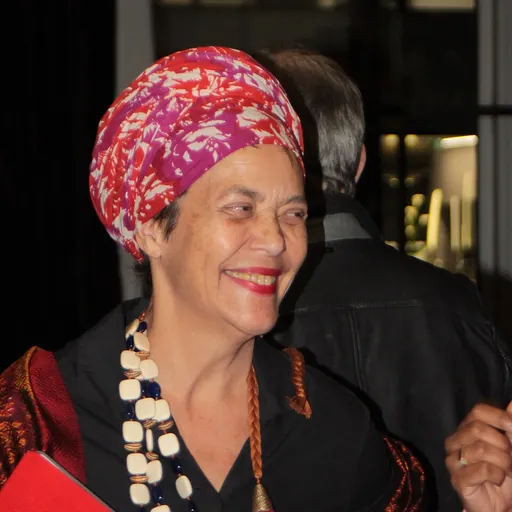
Françoise Vergès
French political scientist, historian and feminist
About Françoise Vergès
Born 1952. Françoise Vergès is a French political scientist, women's rights activist, university teacher and historian.
Françoise Vergès (born 23 January 1952) is a French political scientist, historian, film producer, independent curator, activist and public educator. Her work focuses on postcolonial studies and decolonial feminism.
Her book A Decolonial Feminism was published in English in 2021, translated by Ashley J. Bohrer along with Vergès, with the support of an English PEN Translates award.
Family Vergès was born in Paris, France, grew up in Réunion and Algeria before returning to Paris to study and become a journalist.
Vergès is the second daughter of Laurence Deroin and of the communist politician Paul Vergès. She is also the niece of Jacques Vergès, lawyer and anti-colonial activist famous in France for his defense of FLN militants during the Algerian War of Independence.
Her father, the son of a doctor and consul during the colonial era, has been a French deputy, member of the European Parliament, senator, president of the Regional Council of Réunion and mayor of Le Port. Her paternal grandmother was Vietnamese. Her great-great-grandmother, Marie Hermelinde Million des Marquets is from a slave-owning family in La Réunion. They owned a 49 acres plantation and, according to the 1848 act, "121 slaves, from which 66 were Creoles, 12 Malagasies, 39 Mozambicans and 4 Indians or Malays".
Her mother, Laurence Deroin, was a Zoreille born on 22 September 1924 in Ivry-sur-Seine and died on 3 November 2012 at her home in La Possession. An activist and employee of the French Communist Party (PCF), she worked for the Ministry of Reconstruction and Urban Planning, which was headed by Raymond Aubrac until the departure of the Communists from the government, and for Laurent Casanova. The Deroin-Vergès couple met in 1947 at the colonial section of the French Communist Party in Paris and got married in 1949. Laurence Deroin first came to Reunion Island at the age of 30 in 1954, when her father-in-law Raymond Vergès wanted her husband Paul to take over the PCF federation in Reunion. She was an activist in the Union of French Women, and was one of the founders of the (UFR) in 1958. After running a bookshop in Saint-Denis (La Librairie des Mascareignes) for a few years, Laurence Deroin worked for the newspaper Témoignages, where she ran a column on the status of women. She was also a candidate in various elections for the PCR.
Vergès's older sister Claude is a doctor, born on 1 August 1949, married to Dr Edmundo Lopez Caizadilla; she has lived in Panama since 1974, and has a daughter, Sandra Lopez. Vergès also has two brothers who are leading figures in the PCR: Pierre and Laurent.
Vergès moved to the US in 1983, studying at the University of California, San Diego, and Berkeley. She took as a plot the political history of Réunion from its origins to the present day, to trace the journey of her family engaged in politics since 1930.
In 1996, she taught at the University of Sussex, and was a member of the political science department at the Center for Cultural Studies at Goldsmiths, University of London. She studied the problem of colonial slavery and the phenomena of creolization using political theories incorporating postcolonial logic.
In 2008, Vergès became the president of the National Committee for the Memory and History of Slavery after serving as vice-president. She was appointed chairperson of the committee in 2009. The possible renewal of her mandate led to controversy in 2012–2013.
In 2009, she served as an expert transversale within the framework of the Overseas Estates General.
For several years, she served as the scientific director of the Maison des Civilisation set de l'Unité Réunionnaise (MCUR). Her appointment to the project by her father, as well as the project itself, were subject to debate in Réunion. The journalist Pierrot Dupuy filed an unsuccessful civil suit against Paul Vergès for conflict of interest in appointing his daughter to the position. In February 2010 the Commission of Public Inquiry reported favorably on MCUR's scientific work to the prefect . MCUR's scientific project was subsequently terminated after strong opposition expressed at the polls and the election victory of Didier Robert to the Regional Council of Réunion.
In 2017, Vergès was appointed to the "Mission of the memory of slavery, treaties and their abolitions" public interest group.
Vergès is also an Honorary Senior Research Fellow at the Sarah Parker Remond Centre for the Study of Racism and Racialisation at University College London.
Feminism A feminist activist, Vergès collaborated with the journal Women in Motion, a monthly and weekly, published between 1978 and 1982, and with the collection "Women in struggle of all countries", at Éditions des Femmes, from 1981 to 1983. Leading her feminist and anti-racist struggles, Vergès has collaborated with the association Rualité created by the hip-hop artist Bintou Dembélé.
Vergès is a member of the MAFED (Collective of the March of Women for Dignity), a group that the political scientist Laurent de Boissieu located in the political field of racialism and defines as close to the Indigenous Party of the Republic. She is also a member of the College of Diversity at the Ministry of Culture and a founding member of the Decolonizing the Arts collective.
Vergès signed the calls to the Marches for Justice and Dignity, as well as a large number of petitions defending differentialist and "decolonial" positions, including "Stop the Cyberbullying Against the Controversial Lallab Association"; "Against media lynching and slanderous anti-racists; an intolerable persecution against the Traore family"; "We can disagree with the ideas of Houria Bouteldja, so let's debate"; "For the continuation of the Fight against Islamophobia conference", the petition of support to Sonia Nour following her statements relating a terrorist to a martyr, the petition of support to Tariq Ramadan indicted for rape, accusing the French justice of unequal treatment and / or racism, along with Houria Bouteldja, Sihame Assbague, Marwan Muhammad, Alain Gresh, Nabil Ennasri and François Burgat.
Works
De l'Esclave au citoyen, with Philippe Haudrère, Paris: Gallimard, 1998, coll. "Découvertes Gallimard Texto" , (translated in chinois simplifié, 2006) Monsters and revolutionaries. Colonial family romance and "métissage", Duke University Press, 1999 Abolir l'esclavage. Une utopie coloniale, les ambiguïtés d'une politique humanitaire, Paris: Albin Michel, 2001 Racines et itinéraires de l'unité réunionnaise. La Réunion: Graphica-Région Réunion, 2003 Amarres. Créolisations india-océanes, with Jean-Claude Carpanin Marimoutou, Paris: Ka, 2003; Paris: L'Harmattan, 2005 La Mémoire enchaînée. Questions sur l'esclavage, Paris: Albin Michel, 2006 La République coloniale. Essai sur une utopie, with Pascal Blanchard et Nicolas Bancel, Paris: Hachette, 2006, coll. " Pluriel » Nègre, je suis, Nègre je resterai. Entretiens avec Aimé Césaire, Paris: Albin Michel, 2007 La Colonisation française, avec Nicolas Bancel et Pascal Blanchard, Toulouse, Éditions Milan, coll. " Les Esentiels ", 2007 Nègre. Nègrier. Traite des nègres. Three articles in the Grand Dictionnaire universel, Pierre Larousse, Saint-Pourçain, Bleu autour, 2007 Fractures postcoloniales, with Nicolas Bancel, Pascal Blanchard and Achille Mbembe, Paris: La Découverte, 2010 L'Homme prédateur, ce que nous enseigne l'esclavage sur notre temps, Paris: Albin Michel, 2011, coll. " Bibliothèque Idées » Le ventre des femmes, Capitalisme, racialisation, féminisme, Paris: La fabrique éditions, 2017 Un féminisme décolonial, Paris: La fabrique éditions, 2019
Works in English Monsters and Revolutionaries: Colonial Family Romance and Métissage, Duke University Press, 1999, Rod Edmond, Vanessa Smith {eds} "The Island of Wandering Souls : Processes of Creolization, Politics of Emancipation and the Problematic of Absence on Reunion Island", Islands in History and Representation, Routledge, 2003. The Wombs of Women: Race, Capital, Feminism, Duke University Press, 2020, translated and with an introduction by Kaiama L. Glover, A Decolonial Feminism, Pluto Books, 2021, translated by Ashley J. Bohrer
Don’t just read it —
keep it.
Full-length biographies made to live with: read them, listen on the way to work, watch them tonight.
- E-book
- Audio
- Video
Instant download · yours to keep · every purchase keeps this site free
Important facts
Family & relationships
People in Françoise Vergès's life
Named in this biography and alive at the same time


Related people
Same field, nearest in time


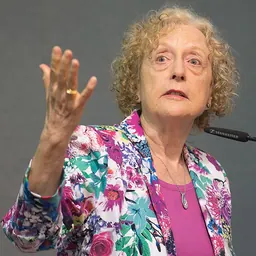
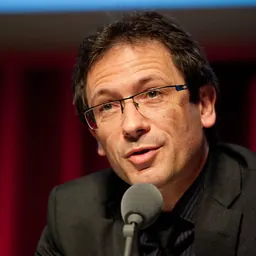
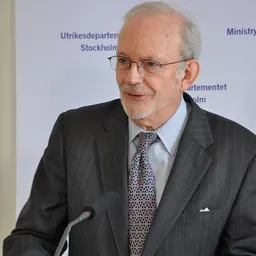
Contemporaries
People whose lives overlapped Françoise Vergès's
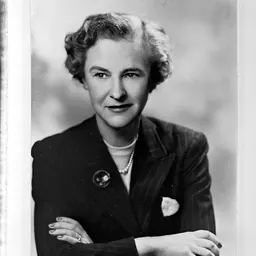


Frequently asked questions
Who is Françoise Vergès?
French political scientist, historian and feminist
When was Françoise Vergès born?
Françoise Vergès was born on 23 January 1952 in 11th arrondissement of Paris.
What is Françoise Vergès's occupation?
Françoise Vergès is a political scientist, women's rights activist, university teacher and historian.
What nationality is Françoise Vergès?
Françoise Vergès is French.
Sources & further reading
Cite this page
APA: Biography.guide. (2026). Françoise Vergès. https://biography.guide/francoise-verges/
MLA: "Françoise Vergès." Biography.guide, https://biography.guide/francoise-verges/.
Chicago: "Françoise Vergès." Biography.guide. https://biography.guide/francoise-verges/.
Data last updated: 2026-09-23 · Spot an error? Report a correction.
Portrait: Wikimedia Commons · author & licence
Page generated 2026-09-27 05:05 UTC