
About François Noe͏̈l
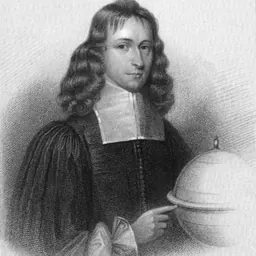
Lived 1651 – 1729 (aged 78). François Noe͏̈l was a Belgian regular priest, writer, translator, cartographer, teacher and sinologist.
François Noël, SJ (18 August 1651 – 17 September 1729) was a Flemish Jesuit, poet, dramatist, and missionary to the Qing Empire. Nöel unsuccessfully testified in support of Chinese converts to Catholicism retaining ancestral veneration during the Chinese Rites controversy but also opposed incorporating other elements of Confucianism into Catholic practice. He also achieved notability for translating several Chinese texts for European audiences.
Name
Noël wrote his translations in Latin, in which his name appears as Franciscus Noel. He is also known by its anglicization as Francis Noel. He was known to the Chinese as Wei Fangji.
Life Early life François Noël was a Fleming He studied theology, mathematics, and astronomy at the University of Douai.
In China The tomb of Xu Guangqi (d. 1633) in Shanghai's Xujiahui neighborhood
He wanted to join the Japan mission but by this point Christianity (and European visitors generally) had been banned within the Tokugawa shogunate for many years. He nonetheless traveled to Lisbon, Portugal, and left for East Asia in January 1684. His journey was funded by Maria, the duchess of Aveiro. He hoped to get passage to Japan on a Dutch East India Company mission, but in Malacca he was assured by "Belgian Catholics from our cities" that this was impossible. He made his vows of poverty, chastity, obedience, and the fourth vow of "special obedience" to the pope on 2 February the next year and, after a final failed attempt to reach Japan,
From there, he travelled to Huai'an and Nanjing in Jiangsu; Wuhe in Anhui; Nanchang, (Shortly after leaving China, Noël reported to his patron the Duchess of Aveiro that Nanchang averaged 400 converts a year during this period.)
First Roman embassy
On 9 November 1701, he was selected—probably through the influence of his compatriot, the Vice Provincial Superior Antoine Thomas—to act as the procurator for the China mission in an embassy concerning the Chinese Rites Controversy. He was to argue on behalf of the Jesuits and four Chinese bishops that the Catholic Church should continue to permit the Chinese practice with Confucian and ancestral veneration after their conversion to Christianity.
Thomas's letter reached him in Nanchang on the 25th; he left on 6 December and reached Guangzhou on 1 January. with the Bavarian mathematician Caspar Castner, who was already working nearby.
The English ship departed on 14 January 1702 for Macau, which it reached on the 21st and left on the 24th. They met Cardinal Fabroni, the secretary of the Congregation for the Propagation of the Faith on 10 January 1703 and two days later. there is no evidence that the Roman court ever weighed any of the Jesuit evidence. he was given papal-like supremacy over the clerics there and, on the 27th, consecrated as the titular patriarch of Antioch, making him the notional head of the churches across most of Asia. He left for the Qing Empire aboard the French ship Maurepas on 9 February 1703, only weeks after Noël's arrival, and disallowed the Jesuit leniency towards to the Malabar rites while he waited out the monsoon season in Pondicherry. By 1704, Noël and Castner were forbidden from publishing their arguments, although their opponents were printing their treatises in great volume, and correspondence and treatises shipped from China were confiscated at Livorno. Castner continued his lobbying, assisted after 26 February 1704 by Jean-François de Pélisson, who arrived with further documentation from the Jesuits in China. formalizing a ban on both the rites and further discussion of the topic. Christians could not refer to God as (tiān, "Heaven" or "the sky") and their churches could not display the imperial plaque ordering parishioners to "Revere Heaven" (, Jìng Tiān).
Noël returned east in 1706, traveling—at Castner's insistence—not via Goa and through the Straits of Malacca but around Timor; this route proved faster and subsequently became standard for journeys between Europe and Macau. They arrived on 22 July 1707, finding the legate Tournon under arrest in Macau and the entire mission in chaos. The sickly Tournon had arrived at Macau in April 1705 and Beijing on 4 December, insisting on the incompatibility of Confucianism and Roman Catholicism. His first imperial audience the same month had been diplomatic and held out hope for permanent relations between China and the Papal States; Tournon—still generally uninformed on the details of the situation Maigrot had already been summoned from Fujian and required Dominique Parrenin to translate the emperor's questions. —and stubborn that he had finally been expelled from the country on 17 December and Christian missionaries required to receive an imperial permit (, piào) attesting to their support of "the method of Matteo Ricci" and their willingness to remain in China for the rest of their lives. Finally receiving notice of , with the Portuguese then holding him under house arrest for their own reasons.
Second Roman Embassy
About half of the missionaries then in China joined Maigrot and Tournon in exile. At the emperor's insistence, a second embassy was dispatched to Rome to overturn and Maigrot and Tournon's various rulings in 1706; this was apparently lost at sea.
Clement supported Tournon completely. A decree from the Holy Office was issued on 25 September 1710 upholding all of his rules and condemnations. They were difficult to acquire in France and western Europe but were among the most influential Jesuit works in Germany and eastern Europe, where they inspired works by Johann Benedikt Carpzov, He died on 17 September 1729 in Lille, France.
Works The engraving of Confucius in the 1687 Confucius, Philosopher of the Chinese. Noël's own translations had no illustrations, apart from their floral tailpieces. Noël published his Mathematical and Physical Observations Made in India and China at the Charles-Ferdinand University's press in Prague, Bohemia (now the Czech Republic), in 1710.
Noël's effort to translate the Chinese classics was a generally scholarly one, aiming to present it more correctly on its own terms than previous Jesuit editions like the Confucius Sinarum Philosophus had, Each of the last three were the first European translations of the works. All were rather fairly freely translated from the editions established by Zhu Xi; his preface states the works are "not, so to speak, what the Chinese wrote but, I hope, what they really meant". For example, the first lines of the Doctrine of the Mean were rendered "The Law of Heaven is nature itself; the tendency of this nature is the way of acting correctly; the direction of this life is a right discipline of life, or the right precepts for living."
At the same time, he published his Three Treatises on Chinese Philosophy . Its three sections deal with "On Knowledge of the First Being or God among the Chinese" , "On the Ceremonies of the Chinese for the Dead" , and "On Chinese Ethics" . Unlike earlier Jesuit works, it does not claim that the Neo-Confucianism of Zhu Xi and others was a Buddhist corruption of Confucianism; it treats it as an organic development although still cautioning that its vague terms should not be used in reference to the Christian God.
Finally, in the same year, he also published Historical Notices of Chinese Rituals and Ceremonies in the Veneration of Deceased Parents and Benefactors. It expands on the topic of the second his Three Treatises, with many more citations from Chinese works. Combatively polemical in describing an understanding of Chinese ancestral veneration that is compatible with Catholicism, it claimed a papal imprimatur for its publishing but was almost immediately suppressed.
He published his Little Poetic Works at Frankfurt in 1717. Its four parts comprise a Life of Jesus Christ under the Name of Divine Love ; Marian Letters ; a Life of St Ignatius of Loyola, Founder of the Jesuits ; and several tragedies , including Philotas, Herod , Love , Lucifer, Accianus, and Henry . An appendix includes the comedy Blind Sight .
He also published a popular theology textbook.
Don’t just read it —
keep it.
Full-length biographies made to live with: read them, listen on the way to work, watch them tonight.
- E-book
- Audio
- Video
Instant download · yours to keep · every purchase keeps this site free
Important facts
People in François Noe͏̈l's life
Named in this biography and alive at the same time



Related people
Same field, nearest in time

Contemporaries
People whose lives overlapped François Noe͏̈l's





Frequently asked questions
Who was François Noe͏̈l?
Flemish Christian missionary to China (1651–1729)
When was François Noe͏̈l born?
François Noe͏̈l was born on 18 August 1651 in Hestrud.
When did François Noe͏̈l die?
François Noe͏̈l died on 17 September 1729 in Lille.
What was François Noe͏̈l's occupation?
François Noe͏̈l was a regular priest, writer, translator, cartographer, teacher and sinologist.
What nationality was François Noe͏̈l?
François Noe͏̈l was Belgian.
Sources & further reading
· DBpedia: François Noël (missionary)
Cite this page
APA: Biography.guide. (2026). François Noe͏̈l. https://biography.guide/francois-noe-l/
MLA: "François Noe͏̈l." Biography.guide, https://biography.guide/francois-noe-l/.
Chicago: "François Noe͏̈l." Biography.guide. https://biography.guide/francois-noe-l/.
Data last updated: 2026-09-20 · Spot an error? Report a correction.
Page generated 2026-09-27 05:05 UTC