
François Frézeau de La Frézelière
French lieutenant general of the Artillery during the late 17th century
About François Frézeau de La Frézelière
Lived 1623 – 1702 (aged 78). François Frézeau de La Frézelière was a French military officer.
François Frézeau de La Frézelière (10 June 1623 – 3 May 1702) designed a new system of artillery in the late 1600s where the cannons were of considerably lighter weight than contemporary guns. Frézelière's Artillerie de Nouvelle Invention (Artillery of the New Invention) was ahead of its time but suffered from unresolved recoil and other problems. His effort to introduce light field artillery into the French Royal Army was strenuously opposed by conservative artillery officers. The system was suppressed in 1720 and eventually replaced by the Vallière system of heavier cannons.
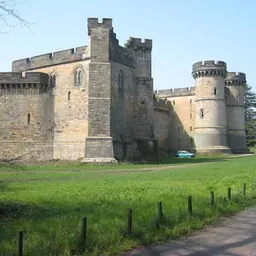
Family François Frézeau de La Frézelière was born into the noble Frézeau de La Frézelière family. From 1651, the family's residence was the chateau at Monts-sur-Guesnes. The family produced many soldiers during the wars of the 16th century and 17th century. Many of these soldiers were especially proficient in the handling of artillery, including François Frézeau de La Frézelière who was promoted to Lieutenant General. Frézelière's son Charles-Madeleine Frézeau de la Frézelière (4 September 1654 – 4 November 1702) became the colonel of the Frézelière Dragoon Regiment and resigned from the army in 1679. He studied at the College of Sorbonne, became a Jesuit, and ultimately became the Bishop of La Rochelle on 27 June 1694.
Old French cannons By the 1690s, French cannons were produced in the following classes according to the weight of the round shot they fired: 33-pounder, 24-pounder, 16-pounder, 12-pounder, 8-pounder, and 4-pounder. Each of these were produced in three types. Doubly-fortified used the thickest metal and fired a gunpowder charge equal in weight to the round shot. Legitimate used metal of middling thickness and fired a charge four-fifths the weight of the shot. Bastard used the thinnest metal and fired a charge two-thirds the weight of the shot. Gun barrels were designed to protrude from a fortified embrasure, so that they were all long. A shorter gun barrel could cause damage to the fortification when the cannon fired. The problem was that the long gun barrels made even the smaller caliber cannons very heavy, making them difficult to use as field artillery.
Artillerie de Nouvelle Invention A 12-pounder cannon of the Nouvelle Invention shown mounted on its gun carriage.
The Spanish gunner Antonio Gonzales developed a light artillery system in 1679. Gonzales did this by producing cannons with a spherical powder chamber. The spherical chamber allowed the gunpowder charge to burn faster and detonate more violently. The new configuration allowed the gunpowder charge to be reduced from two-thirds of the weight of the round shot to one-third of the weight. Because the charge was reduced, the cannon's weight could be significantly decreased without causing the gun to burst. Though the charge was reduced, it was found that the round shot retained the same penetrating power as the shot fired with the heavier charge. The new 4-pounder was almost the same weight as Lennart Torstensson's Swedish cast iron guns from the Thirty Years' War. Frézelière liked the idea and incorporated Gonzales' lighter cannons into the Artillerie de Nouvelle Invention, though the system was never officially accepted.
The cannons of the Nouvelle Invention were lighter but they suffered from a recoil problem. The more powerful explosion of the gunpowder charge caused severe damage to the existing gun carriages. Another problem was that the larger gun chamber could not be properly swabbed out with a wet rammer. This meant that still-burning material might still be inside the chamber. Any attempt to load more gunpowder could cause a premature detonation, causing severe injury or death to the man loading the gun. Finally, the shorter gun barrels meant that firing the cannons caused damage to the fortifications.
Frézelière tried to overcome all these problems. He experimented with a pear-shaped chamber, but this did not solve the problem. He produced cannons with slightly longer gun barrels. He built sturdier gun carriages and better gun trails, but they were still not satisfactory. He melted down the old culverins in the fortresses on the eastern frontier of France and founded new cannons of the Nouvelle Invention. The conservative artillery officers strenuously opposed these reforms and after Frézelière's death all the Nouvelle Invention cannons were recast as longer and heavier artillery pieces.
In 1720, the Artillerie de Nouvelle Invention was suppressed. In 1732, the Vallière system was introduced by Jean-Florent de Vallière. It standardized the calibers of all French cannons into 24-pounders, 16-pounders, 12-pounders, 8-pounders, and 4-pounders. Unfortunately, the smaller calibers were too heavy to be efficiently used as field artillery.
Specifications +Characteristics: Nouvelle Invention vs. Vallière system artillery pieces System Caliber Tube Weight kg (lb) Tube Length m (ft) Shot Weight kg (lb) Nouvelle Invention 4-pounder Nouvelle Invention 8-pounder Nouvelle Invention 12-pounder Nouvelle Invention 16-pounder Nouvelle Invention 24-pounder Vallière 4-pounder Vallière 8-pounder Vallière 12-pounder Vallière 16-pounder Vallière 24-pounder
Don’t just read it —
keep it.
Full-length biographies made to live with: read them, listen on the way to work, watch them tonight.
- E-book
- Audio
- Video
Instant download · yours to keep · every purchase keeps this site free
Important facts
People in François Frézeau de La Frézelière's life
Named in this biography and alive at the same time
Related people
Same field, nearest in time


Contemporaries
People whose lives overlapped François Frézeau de La Frézelière's





Frequently asked questions
Who was François Frézeau de La Frézelière?
French lieutenant general of the Artillery during the late 17th century (1623–1702)
When was François Frézeau de La Frézelière born?
François Frézeau de La Frézelière was born on 10 June 1623.
When did François Frézeau de La Frézelière die?
François Frézeau de La Frézelière died on 3 May 1702.
What was François Frézeau de La Frézelière's occupation?
François Frézeau de La Frézelière was a military officer.
What nationality was François Frézeau de La Frézelière?
François Frézeau de La Frézelière was French.
Sources & further reading
· Wikipedia: François Frézeau de La Frézelière
· DBpedia: François Frézeau de La Frézelière
Cite this page
APA: Biography.guide. (2026). François Frézeau de La Frézelière. https://biography.guide/francois-frezeau-de-la-frezeliere/
MLA: "François Frézeau de La Frézelière." Biography.guide, https://biography.guide/francois-frezeau-de-la-frezeliere/.
Chicago: "François Frézeau de La Frézelière." Biography.guide. https://biography.guide/francois-frezeau-de-la-frezeliere/.
Data last updated: 2026-09-20 · Spot an error? Report a correction.
Page generated 2026-09-27 05:02 UTC