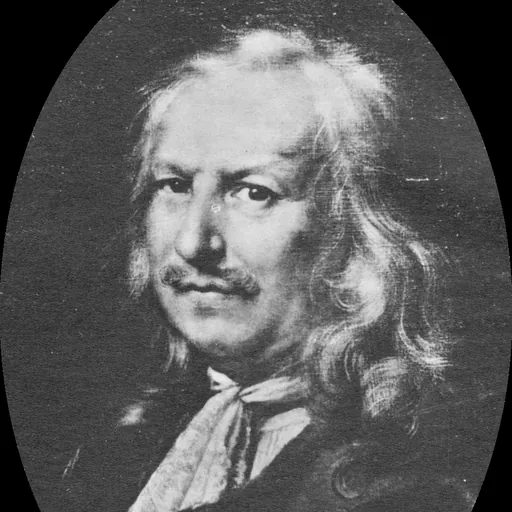
About François d'Orbay
Lived 1634 – 1697 (aged 62–63). François d'Orbay was a French architect.
François d'Orbay (; 1634–1697) was a French architectural draughtsman and architect who worked closely with Louis Le Vau and Jules Hardouin Mansart. In 1671 d'Orbay became a founding member of the Académie Royale d'Architecture.
Early training and career D'Orbay was born in Paris and likely received his early training as an architect from his father, who was a master mason and entrepreneur. In the late 1650s he became an assistant to the architect Louis Le Vau, when the latter was working on the Château de Vincennes.
In 1660 Le Vau sent d'Orbay to Rome for further study. While in Rome, d'Orbay created an ambitious but unexecuted design for a stair in front of the Trinità dei Monti, as well as three buildings adjacent to the church. He probably returned to Paris before the end of 1660.
In 1663 d'Orbay received an official post with the Bâtiments du Roi, working mainly as a draughtsman under Le Vau, the Premier Architecte du Roi. D'Orbay produced numerous drawings for the Louvre, Versailles, and the Collège des Quatre-Nations. After Le Vau's death in 1670, d'Orbay was left in charge of completing much of the ongoing work, sometimes introducing significant changes to Le Vau's original designs. )
At Versailles he is thought to have been primarily responsible for the design of the (decorated by Charles Le Brun), although d'Orbay apparently relied very heavily on an earlier design by Claude Perrault for a stairway at the Louvre.
In 1960 the French architect Albert Laprade brought d'Orbay from relative obscurity into the limelight by publishing a monograph in which he proposed that d'Orbay was the actual designer of most of the important French architecture projects carried out from 1660 to 1697, including the Louvre Colonnade and the Envelope of Versailles. However, several architectural historians have subsequently disputed most of Laprade's arguments. For instance, many of the drawings used as evidence are by other hands. It has also been noted that after Le Vau's death, d'Orbay was passed over and not promoted into Le Vau's post, which remained vacant. Jules Hardouin Mansart was made principal architect of Versailles in 1678, after which d'Orbay resumed his former job as draughtsman (now under Mansart).
Late career D'Orbay did however execute some independent work in the latter part of his career: Carmelite Church in Lyon (1680–1682; destroyed) Theatre of the Comédie-Française on the rue des Fossés-Saint-Germain-des-Prés (now the rue de l'Ancienne Comédie) in Paris (1688–1689; destroyed) Arc de Triomphe du Peyrou in Montpellier (designed in 1690; built by Augustin-Charles d'Aviler) Montauban Cathedral (designed 1692; built 1692–1739, after 1697 by Hardouin-Mansart and Robert de Cotte, with modifications)
D'Orbay died in Paris.
Don’t just read it —
keep it.
Full-length biographies made to live with: read them, listen on the way to work, watch them tonight.
- E-book
- Audio
- Video
Instant download · yours to keep · every purchase keeps this site free
Important facts
more
François Dorbay, François d' Orbay, François II Dorbay, François D'Orbay II, Francois II DorbayPeople in François d'Orbay's life
Named in this biography and alive at the same time


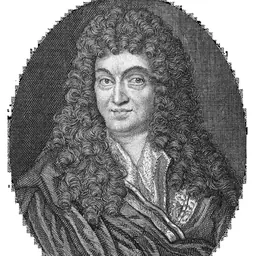
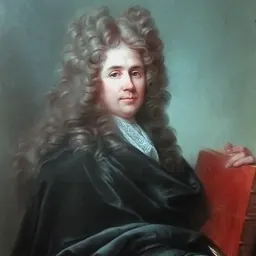
Related people
Same field, nearest in time



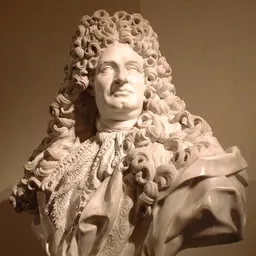

Contemporaries
People whose lives overlapped François d'Orbay's



Frequently asked questions
Who was François d'Orbay?
French architect (1634–1697)
When was François d'Orbay born?
François d'Orbay was born in 1634 in Paris.
When did François d'Orbay die?
François d'Orbay died on 4 September 1697 in Roubaix.
What was François d'Orbay's occupation?
François d'Orbay was an architect.
What nationality was François d'Orbay?
François d'Orbay was French.
Sources & further reading
Cite this page
APA: Biography.guide. (2026). François d'Orbay. https://biography.guide/francois-d-orbay/
MLA: "François d'Orbay." Biography.guide, https://biography.guide/francois-d-orbay/.
Chicago: "François d'Orbay." Biography.guide. https://biography.guide/francois-d-orbay/.
Data last updated: 2026-09-23 · Spot an error? Report a correction.
Portrait: Wikimedia Commons · author & licence
Page generated 2026-09-27 05:08 UTC