
Franciscus Sylvius
Dutch physician and chemist of Leyden, Netherlands
About Franciscus Sylvius
Lived 1614 – 1672 (aged 58). Franciscus Sylvius was a Dutch art collector, physician, anatomist, chemist, university teacher and naturalist, known for Lateral sulcus.
Franciscus Sylvius (, ; born Franz de le Boë; 15 March 1614 – 19 November 1672) was a Dutch physician and scientist (chemist, physiologist and anatomist) who was an early champion of Descartes', Van Helmont's and William Harvey's work and theories. He was one of the earliest defenders of the theory of circulation of the blood in the Netherlands, and commonly falsely cited as the inventor of gin – others pinpoint the origin of gin to Italy.
Life
Sylvius, a Latinization of "de le Boë" translated as "of the woods", was born in Hanau to an affluent family originally from Cambrai, but worked and died in the Netherlands.
He studied medicine at the Protestant Academy of Sedan, and from 1632 to 1634 at Leiden University under Adolph Vorstius and Otto Heurnius. In 1634 he held a dissertation titled Positiones variae medicae (Various Medical Positions) under the direction of Vorstius, After practicing medicine in his hometown Hanau he returned to Leiden in 1639 to lecture. In this period he became famous for his demonstrations on circulation. From 1641 on he had a lucrative medical practice in Amsterdam. While in Amsterdam he met Glauber, who introduced him to chemistry. In 1658 he was appointed the professor of medicine at Leiden University and was paid 1800 guilders which was twice the usual salary. He was the university's Vice-Chancellor in 1669–70.
Work In 1669 Sylvius founded the first academic chemical laboratory. For this reason, the building in which the Institute of Biology of Leiden University is housed has the name Sylvius Laboratory. His most famous students were Jan Swammerdam, Reinier de Graaf, Niels Stensen and Burchard de Volder.
He founded the Iatrochemical School of Medicine, according to which all life and disease processes are based on chemical actions. That school of thought attempted to understand medicine in terms of universal rules of physics and chemistry. Sylvius also introduced the concept of chemical affinity as a way to understand the way the human body uses salts and contributed greatly to the understanding of digestion and of bodily fluids. The most important work he published was Praxeos medicae idea nova (New Idea in Medical Practice, 1671). Specifically, he explained that digestion is a result of the chemical reactions of acids and bases coming from pancreatic, stomach, and saliva secretions.
The engraving by J. Voort Kamp published in 1641 that led to the lateral sulcus being named after Franciscus SylviusHe researched the structure of the brain and was credited as the discoverer of the cleft in the brain known as Sylvian fissure by Caspar Bartholin in his 1641 book Casp. Bartolini Institutiones Anatomicae In this book, it is noted that in the preface that "We can all measure the nobility of Sylvius’s brain and talent by the marvelous, new structure of the brain". And also, "In the new images of the brain, the engraver followed the design and scalpel of the most thorough Franciscus Sylvius, to whom we owe, in this part, everything that the brain has the most, or the most wonderful of".
His book Opera Medica, published posthumously in 1679, recognizes scrofula and phthisis as forms of tuberculosis.
He owned a collection of 190 paintings, nine by Frans van Mieris and eleven by Gerard Dou, in the 17th century highly valued and pricey painters.
Don’t just read it —
keep it.
Full-length biographies made to live with: read them, listen on the way to work, watch them tonight.
- E-book
- Audio
- Video
Instant download · yours to keep · every purchase keeps this site free
Important facts
People in Franciscus Sylvius's life
Named in this biography and alive at the same time

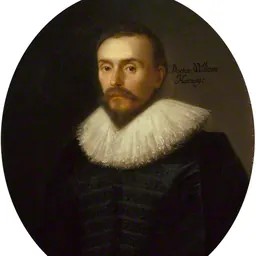

Related people
Same field, nearest in time
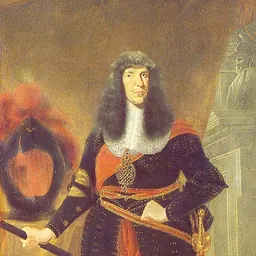




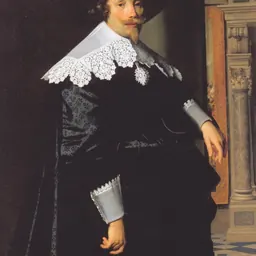
Contemporaries
People whose lives overlapped Franciscus Sylvius's





Frequently asked questions
Who was Franciscus Sylvius?
Dutch physician and chemist of Leyden, Netherlands
When was Franciscus Sylvius born?
Franciscus Sylvius was born on 15 March 1614 in Hanau.
When did Franciscus Sylvius die?
Franciscus Sylvius died on 16 November 1672 in Leiden.
What was Franciscus Sylvius's occupation?
Franciscus Sylvius was an art collector, physician, anatomist, chemist, university teacher and naturalist.
What was Franciscus Sylvius known for?
Franciscus Sylvius was known for Lateral sulcus.
What nationality was Franciscus Sylvius?
Franciscus Sylvius was Dutch.
Sources & further reading
· Wikipedia: Franciscus Sylvius
Cite this page
APA: Biography.guide. (2026). Franciscus Sylvius. https://biography.guide/franciscus-sylvius/
MLA: "Franciscus Sylvius." Biography.guide, https://biography.guide/franciscus-sylvius/.
Chicago: "Franciscus Sylvius." Biography.guide. https://biography.guide/franciscus-sylvius/.
Data last updated: 2026-09-20 · Spot an error? Report a correction.
Page generated 2026-09-27 05:33 UTC