
Francisco Hernández de Toledo
Spanish naturalists and physician
About Francisco Hernández de Toledo
Lived 1515 – 1587 (aged 71–72). Francisco Hernández de Toledo was a Spanish physician, naturalist, botanist, ornithologist and translator.
Francisco Hernández de Toledo (c. 1515 – 28 January 1587) was a naturalist and court physician to Philip II of Spain. He was among the first wave of Spanish Renaissance physicians practicing according to the revived principles formulated by Hippocrates, Galen and Avicenna.
Francisco Hernández was born at La Puebla de Montalbán in the Province of Toledo, probably around 1515. Nothing is known of his parents or other family. His original surname was Fernando which he changed to Hernando in 1570 and then changed again to Hernández, the name he used until his death in 1587.
In 1530 he began to study medicine at the University of Alcalá and received a bachelor's degree in 1536. After graduation, Hernández served as physician to the Duke of Maqueda in Toledo and later practiced medicine in Seville where he married Juana Díaz with whom he had two children, Juan Hernández and María of Sotomayor.
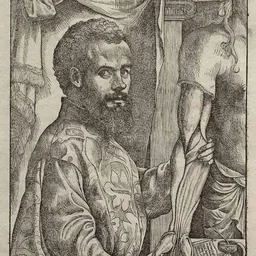
From 1556 to 1560 Hernández served as a physician at the Hospital y Monasterio de Guadalupe in Extremadura, where he managed the botanical garden and took part in the anatomical dissections with Francisco Miró. In 1560 he moved to Toledo and for a short time practiced medicine at the Hospital de la Santa Cruz. While in Toledo, he travelled frequently to the royal court in Madrid where he became acquainted with the noted anatomist, Andreas Vesalius. During this time, Hernández also became a prolific writer, penning commentaries on Galen and Hippocrates, and undertaking an ambitious translation of Pliny's Natural History.
In 1567 Hernández became a personal physician to King Philip II.
Scientific expedition to the New World
In 1570, Hernández was ordered to embark on the first scientific mission in the New World, a study of the region's medicinal plants and animals. Accompanied by his son Juan, he traveled for 7 years collecting and classifying specimens. Hernández collected an estimated 3,000 species on this expedition. Along the way, he also interviewed the indigenous people through translators and conducted medical studies in Mexico. He was assisted with his illustrations by three indigenous painters - Baptized Antón, Baltazar Elías, and Pedro Vázquez. During the colonial-period population decline of the Aztecs in 1576, Hernández performed autopsies in the Hospital Real de San José de los Naturales in collaboration with surgeon Alonso López de Hinojosos and physician Juan de la Fuente. Hernández described the gruesome symptoms of the epidemic (referred to as cocoliztli, Nahuatl for "pest") with clinical accuracy.
Hernández's describes over 3,000 Mexican plants, a feat that was significant because classical texts did not amass so much plant biodiversity. His dedication to helping generate an early taxonomy for New World plants allowed for European use. Since the pre-existing botanical terminology was so limited, he used native names (mostly Nahuatl) when classifying the plants. He also used categories of native names, comparison to Old World plants, or a combination of those two instead of the traditional categories of trees, shrubs, and herbs. Other notable Italian scientists who made translations of his work include: Peter Martyr, Fernández de Oviedo, Cieza de León, Francisco López de Gomara, Agustín de Zárate, and José Acosta. In the winter of 1565 through 1576, Hernández made a copy of his work, due to numerous commands by King Philip II. This would later be considered the second version of Natural History due to Hernández's meticulous revisions and edits per the king's request. This revised version of his manuscript contained 893 pages of text along with 2,071 pages of paintings of plants so as to relay the New World plants back to Europe. This was the version of text that was destroyed in the fire at the Escorial library. Later, several copies of the artwork were found after the fire from the Codex Pomar, which had titles in Nahuatl and various other American Indian languages. Some of the images that Hernández included were "tobacco (Nicotiana tabacum I.), the mamey or Hitian zaptote (Lucma domingenis Gaertner), the quauhchchioalli or breast tree (Rhus terebinthifolia Schlecht and Ham.), the tozcuitlapilxochitl or cana de cuentas (C. anna indica C.), the armadillo (Dasypus novemcuinctus), the coyote (Canis latrans), and the bird of paradise (Paradisa apoda)." However, the primary reason that Recchi was appointed was due to Hernández's rapidly deteriorating health.
Plumier (1703) dedicated him the plant genus Hernandia, which was later accepted by Linnaeus (1753), in the family Hernandiaceae.
Don’t just read it —
keep it.
Full-length biographies made to live with: read them, listen on the way to work, watch them tonight.
- E-book
- Audio
- Video
Instant download · yours to keep · every purchase keeps this site free
Important facts
People in Francisco Hernández de Toledo's life
Named in this biography and alive at the same time


Related people
Same field, nearest in time


Contemporaries
People whose lives overlapped Francisco Hernández de Toledo's






Frequently asked questions
Who was Francisco Hernández de Toledo?
Spanish naturalists and physician (1515-1587)
When was Francisco Hernández de Toledo born?
Francisco Hernández de Toledo was born in 1515 in La Puebla de Montalbán.
When did Francisco Hernández de Toledo die?
Francisco Hernández de Toledo died on 28 January 1587 in Madrid.
What was Francisco Hernández de Toledo's occupation?
Francisco Hernández de Toledo was a physician, naturalist, botanist, ornithologist and translator.
What nationality was Francisco Hernández de Toledo?
Francisco Hernández de Toledo was Spanish.
Sources & further reading
· Wikipedia: Francisco Hernández de Toledo
· DBpedia: Francisco Hernández de Toledo
Cite this page
APA: Biography.guide. (2026). Francisco Hernández de Toledo. https://biography.guide/francisco-hernandez-de-toledo/
MLA: "Francisco Hernández de Toledo." Biography.guide, https://biography.guide/francisco-hernandez-de-toledo/.
Chicago: "Francisco Hernández de Toledo." Biography.guide. https://biography.guide/francisco-hernandez-de-toledo/.
Data last updated: 2026-09-20 · Spot an error? Report a correction.
Page generated 2026-09-27 05:24 UTC