
About Francisco de Cuellar
Lived 1562 – 1607 (aged 44–45). Francisco de Cuellar was a Spanish military personnel and sailor.
Francisco de Cuéllar (born c. 1562) was a Spanish sea captain who sailed with the Spanish Armada in 1588 and was wrecked on the coast of Ireland. He gave a remarkable account of his experiences in the fleet and on the run in Ireland.
Life before the Spanish Armada Cuéllar's place and date of birth are uncertain, but undoubtedly he was of Castilian origin. The surname refers to a village in the province of Segovia called Cuéllar, and is a common Castilian family name. According to recent research ("El capitán Francisco de Cuéllar antes y después de la jornada de Inglaterra", by Rafael M. Girón Pascual), there was a captain named Francisco de Cuéllar, perhaps our man, born in the city of Valladolid, who was baptized on 12 March 1562 in the parish of San Miguel.
Cuéllar was a member of the army that conquered Portugal during the War of the Portuguese Succession in 1581. Following Rafael Giron, he served in the Diego Flores Valdés navy, which sailed to the Strait of Magellan, aboard the frigate Santa Catalina. He was later in Paraiba, Brazil, where he participated in expelling French settlers from the area. After that he served under the Marquis of Santa Cruz in the Azores islands.
Spanish Armada
In 1588, Cuéllar participated in the Spanish Armada, a 130-strong fleet sent by Philip II of Spain to invade England: he was the captain of the San Pedro, a galleon of the squadron of Castille, one of the front-line squadrons of the Spanish Armada. The Armada suffered heavy losses during an extraordinary season of storms in the autumn of 1588. While in the North Sea, the ship left its position in the Armada formation in order to make repairs. Cuéllar was accused of disobedience and was sentenced to death by hanging by the Major General of the fleet, Francisco Arias de Bobadilla. Cuéllar was sent to the merchantman, La Lavia, for execution of sentence by the Auditor General, Martin de Aranda.
Cuéllar observed the society, noting that the people lived in a savage manner but that they were friendly and followed the usages of the church. The people constantly engaged in nightly raids and were harried by English garrisons. He reckoned that, were it not for their hospitality, he and his fellows would not have lived: "As to ourselves, these savages liked us well because they knew we came against (to oppose) the heretics, and were such great enemies of theirs; and if it had not been for those who guarded us as their own persons, not one of us would have been left alive. We had goodwill to them for this, although they were the first to rob us and strip to the skin those who came alive to land". He concluded: "In this country there is neither justice or right, and everybody does what he likes" (Kilfeather, p. 83).
Siege at Rosclogher
In November 1588 Cuéllar moved on to the territory of the MacClancy with eight other Spaniards, staying at one of the lord's castles, probably at Rosclogher, on the south of Loch Melvin. News arrived that the English had sent 1,700 troops to MacClancy's country. In response, the lord opted to take to the mountains while the Spaniards resolved to defend the castle. They had 18 firearms (muskets and arquebuses) and considered the castle impregnable because of its location in bogland, which precluded the use of artillery.
The English arrived under the command of the brother of Richard Bingham, governor of Connacht, and the siege lasted 17 days. During that time they were unable to cross the boggy terrain and, having had their offer of safe passage to Spain turned down, they hanged two Spaniards in full view of the castle so as to terrorise the defenders. A storm closed in with heavy snow, and the English were forced to raise the siege and march off.
MacClancy returned and bestowed gifts on the defenders, including an offer to Cuéllar of the hand of his sister in marriage, which was declined. Against the chieftain's advice, the Spaniards secretly departed his country ten days before Christmas, bound for the north. They sought out the bishop of Derry, Redmond O'Gallagher, and found he had twelve other Spaniards in his care, whom he intended to assist in a crossing to Scotland.
Escape
After six days, Cuellar and 17 others set sail for Scotland in a pinnace. Two days later they reached the Hebrides, and soon after landed on the mainland. Cuéllar had heard the Scottish king "protected all the Spaniards who reached his kingdom, clothed them, and gave them passages to Spain". However, following his six-month ordeal within the kingdom, he concluded "the King of Scotland is nobody: nor does he possess the authority or position of a king: and he does not move a step, nor eat a mouthful, that is not by order of the Queen (Elizabeth I)".
The Duke of Parma's efforts eventually procured him passage to Flanders in the Low Countries. However, the Dutch were waiting on the coast to cut off the return of Armada survivors, and Cuéllar was shipwrecked in a firefight in which many of the survivors were drowned or killed after capture. Once again he found himself clinging to flotsam as he came ashore in Flanders, where he entered the city of Dunkirk wearing only his shirt. He wrote an account of his experiences and returned to Spain some time after.
O'Rourke was hanged at London for treason in 1590; the charges against him included succouring survivors of the Armada. MacClancy was captured by Bingham's brother in 1590 and beheaded.
Later life After Cuéllar served in the army of Philip II under Alexander Farnese, Duke of Parma, Count Fuentes and Count Mansfeld. Between 1589 and 1598 he served variously in the Siege of París, the enterprises of Laon, Corbie, Capela, Châtelet, Doullens, Cambrai, Calais, and Ardres, and in the siege of Hults. In 1599 and 1600 he served under Charles Emmanuel I, Duke of Savoy in the war of Piemonte. In 1600 he was in Naples with viceroy Lemos.
In 1601 he was commissioned to return to America. He was a pattern of infantry captain in a galleon to islas de Barlovento (Windward Islands), but did not sail in don Luis Fernández de Córdova's navy until 1602.
It was Cuéllar's last military service. He lived in Madrid from 1603 to 1606, hoping for new commissions in America.
Nothing is known about Cuellar's death or whether he had any children.
Don’t just read it —
keep it.
Full-length biographies made to live with: read them, listen on the way to work, watch them tonight.
- E-book
- Audio
- Video
Instant download · yours to keep · every purchase keeps this site free
Important facts
People in Francisco de Cuellar's life
Named in this biography and alive at the same time
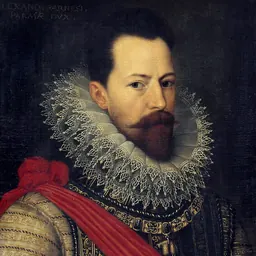


Related people
Same field, nearest in time
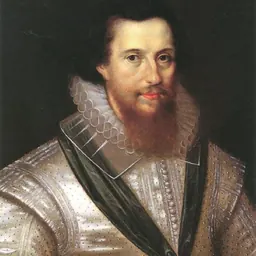

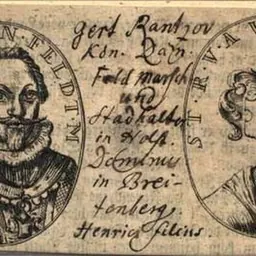
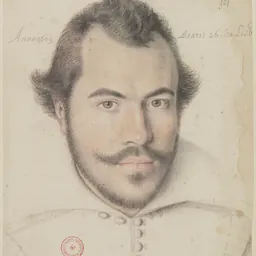
Contemporaries
People whose lives overlapped Francisco de Cuellar's





Frequently asked questions
Who was Francisco de Cuellar?
Spanish sailor
When was Francisco de Cuellar born?
Francisco de Cuellar was born in 1562 in Valladolid.
When did Francisco de Cuellar die?
Francisco de Cuellar died in 1607.
What was Francisco de Cuellar's occupation?
Francisco de Cuellar was a military personnel and sailor.
What nationality was Francisco de Cuellar?
Francisco de Cuellar was Spanish.
Sources & further reading
· Wikipedia: Francisco de Cuellar
· DBpedia: Francisco de Cuellar
Cite this page
APA: Biography.guide. (2026). Francisco de Cuellar. https://biography.guide/francisco-de-cuellar/
MLA: "Francisco de Cuellar." Biography.guide, https://biography.guide/francisco-de-cuellar/.
Chicago: "Francisco de Cuellar." Biography.guide. https://biography.guide/francisco-de-cuellar/.
Data last updated: 2026-09-20 · Spot an error? Report a correction.
Page generated 2026-09-27 05:04 UTC