
About Francisco d’Andrade
Lived 1859 – 1921 (aged 62). Francisco d’Andrade was a Portuguese singer and opera singer, known for Baritone.
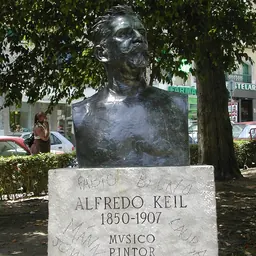
Francisco Augusto D'Andrade, or De Andrade, (11 January 1856 – 8 February 1921) was a Portuguese baritone who sang leading roles in opera houses throughout Europe, including five years as the principal baritone at the Royal Italian Opera in London and thirteen years at the Berlin Hofoper. Considered a "very elegant and cultured singer," he was particularly admired for his portrayal of the title role in Mozart's Don Giovanni. In his native city of Lisbon, D'Andrade created the role of Adaour in the 1888 world premiere of Alfredo Keil's Donna Bianca, appearing with his elder brother, the tenor António D'Andrade.
Life and career D'Andrade was born in Lisbon. His father was a prominent jurist there, and he initially trained as a lawyer. However, like his older brother António, D'Andrade also had a keen interest in opera and theatre. Both frequently attended performances in the Teatro do Ginásio and participated in amateur productions with the Sociedade Taborda. He studied the basics of acting and music with Manuel Carreira and Arturo Pontecchi, the principal conductor of the Teatro São Carlos, and gave his first public recital in 1879 at the Salão da Trindade in Lisbon. In the spring of 1881, he left for Milan to continue his musical training, first with the tenor Corrado Miraglia, and after Miraglia's death later that year with the baritone Sebastiano Ronconi.
D'Andrade made his operatic debut on 23 December 1882 at the Teatro Principe Amedeo in Sanremo as Amonasro in Verdi's Aida. Over the next four years he sang in the opera houses of Portugal, Spain and Italy, including the Teatro Costanzi in Rome, where he sang Count de Luna in Verdi's Il trovatore and Severo in the theatre's first performance of Donizetti's Poliuto. Both he and his brother were engaged as singers at the Théâtre Privé d'Opéra in Moscow for the 1885/86 season. They would appear together again in several other productions, most notably the 1888 world premiere of Alfredo Keil's Donna Bianca at the Teatro São Carlos with Francisco as Adaour and António as Aben-Afan.
D'Andrade began a five-year association with the Royal Italian Opera in London in 1886. During that time he sang a wide range of leading baritone roles with the company including Renato (Ballo in maschera), Figaro (Il barbiere di Siviglia), Escamillo (Carmen), Giorgio Germont (La traviata), Enrico Ashton (Lucia di Lammermoor), Telramund (Lohengrin), and the title roles in Rigoletto and Don Giovanni. Throughout his career he was widely admired for his portrayal of Don Giovanni and also sang it at the Salzburg Festival in 1901. The first of these, Der weiße D'Andrade ("The White D'Andrade") painted in 1902, depicts D'Andrade singing the "Champagne Aria" from act 1. It was an immediate success at the 1902 Berlin Secession Exhibition and marked Slevogt as a major exponent of German Impressionism. Der schwarze D'Andrade ("The Black D'Andrade") painted in 1903 depicts the final scene of the opera where the white marble hand of the Commendatore summons Don Giovanni to hell.
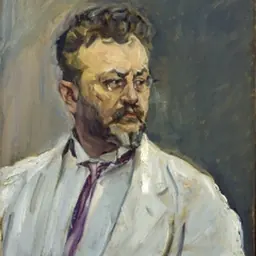
The young Max Slevogt first encountered D'Andrade in 1894 when he was captivated by his triumphant performance as Don Giovanni in Munich. It was the beginning of Slevogt's fascination with Mozart and particularly Don Giovanni. It was also the beginning of a friendship with D'Andrade that would last until the singer's death. When D'Andrade died suddenly in 1921, Slevogt rushed to his house to paint him one last time, but was so overcome by the sight of his dead friend that he was unable do so. Only later did he create a sketch of the coffin from memory entitled Grablegung Don Giovannis ("The burial of Don Giovanni"). Five of the 1906 recordings were also released by the Symposium label in 2006 on the CD Major Vocal Rarities: "The Champagne Aria ("Finch' han dal vino") from Don Giovanni; "Largo al factotum" from Il barbiere di Siviglia; "Sois immobile" from Guillaume Tell; "O, du mein holder Abendstern" from Tannhäuser; and "Vien Leonora" from La favorita.
Don’t just read it —
keep it.
Full-length biographies made to live with: read them, listen on the way to work, watch them tonight.
- E-book
- Audio
- Video
Instant download · yours to keep · every purchase keeps this site free
Important facts
People in Francisco d’Andrade's life
Named in this biography and alive at the same time


Related people
Same field, nearest in time


Contemporaries
People whose lives overlapped Francisco d’Andrade's


Frequently asked questions
Who was Francisco d’Andrade?
Portuguese opera singer (1859–1921)
When was Francisco d’Andrade born?
Francisco d’Andrade was born on 11 January 1859 in Lisbon.
When did Francisco d’Andrade die?
Francisco d’Andrade died on 8 February 1921 in Berlin.
What was Francisco d’Andrade's occupation?
Francisco d’Andrade was a singer and opera singer.
What was Francisco d’Andrade known for?
Francisco d’Andrade was known for Baritone.
What nationality was Francisco d’Andrade?
Francisco d’Andrade was Portuguese.
Sources & further reading
· Wikipedia: Francisco d’Andrade
· DBpedia: Francisco D'Andrade
Cite this page
APA: Biography.guide. (2026). Francisco d’Andrade. https://biography.guide/francisco-dandrade/
MLA: "Francisco d’Andrade." Biography.guide, https://biography.guide/francisco-dandrade/.
Chicago: "Francisco d’Andrade." Biography.guide. https://biography.guide/francisco-dandrade/.
Data last updated: 2026-09-20 · Spot an error? Report a correction.
Page generated 2026-09-27 05:30 UTC