
About Francisco Ballesteros
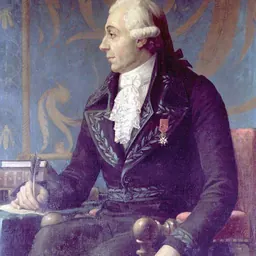
Lived 1771 – 1832 (aged 61). Francisco Ballesteros was a Spanish military personnel.
Francisco López Ballesteros (7 March 1770 – 1833) was a Spanish army officer.
Early career Ballesteros enlisted as a cadet in 1788 in the 1st Battalion of Volunteers of Aragón where, apart from a ten-month stint with the Battalion of Volunteers of Navarra, he stayed until transferring to a Catalan regiment, where he was promoted to captain in 1794.
Following Blake's defeat at Espinosa, the Asturians had reorganized and increased the numbers of their battalions during the winter of 1808. 3,000 of his men were captured, and the rest dispersed, many of them fleeing back to Asturias.
In July 1809, he sailed from Gijón to La Coruña on HMS Amazon and then made his way down through Castile to Andalucía.
On 25–26 March, his troops had an indecisive skirmish with one of Gazan's brigades,
He then saw action at El Villar (14 April 1810) A week later, on 9 March, Ballasteros surprised Remónd at La Palma, taking two guns, and driving the French force back into Seville.
On 12 April 1811, Ballesteros's division, numbering some 3,500 troops, were beaten by Maransin's seven battalions of infantry at Fregenal, on the borders of Estremadura. The situation was such that, in the words of Oman, During the midwinter of 1811-12 Soult's main attention was taken up by a serious enterprise in the extreme south of his viceroyalty, which [...] rendered it impossible for him to take the offensive in any other direction. This was the attempt to crush Ballasteros, and to capture Tarifa... (Oman, 1914: p. 111.)
On 5 November, when the three French columns hunting him were forced, due to lack of provisions, to withdraw and to disperse, he attacked their rearguard, Ballesteros mutinied and was dismissed on 12 December
Post-war career In 1815, Fernando VII appointed him minister for War but later dismissed him and banished him to Valladolid.
Liberal Revolution
When the liberal revolution broke out in 1820, he was called back to Madrid, where on 7 March he was appointed commander-in-chief of the Army of the centre. He became vice-president of the junta provisional two days later, closing many prisons of the Holy Inquisition and restoring municipal rights.
On 7 July 1822, Ballesteros defeated the Royal Guards, preventing a coup against the Constitution. For this he was named Captain General of Madrid. In 1823, he fought the French invasion under Louis-Antoine, Duke of Angoulême in Navarra and Aragón, but he had to capitulate on 21 August 1823 in Caporla.
On 1 October 1823 Fernando VII started his campaign of repression against all who had supported the constitutional government. Ballesteros fled to Cádiz, where he embarked on a British ship for France. He spent the rest of his life in Paris, where he died in 1833.
Don’t just read it —
keep it.
Full-length biographies made to live with: read them, listen on the way to work, watch them tonight.
- E-book
- Audio
- Video
Instant download · yours to keep · every purchase keeps this site free
Important facts
Related people
Same field, nearest in time


Contemporaries
People whose lives overlapped Francisco Ballesteros's



Frequently asked questions
Who was Francisco Ballesteros?
Spanish general
When was Francisco Ballesteros born?
Francisco Ballesteros was born on 7 March 1771 in Brea de Aragón.
When did Francisco Ballesteros die?
Francisco Ballesteros died on 29 June 1832 in Paris.
What was Francisco Ballesteros's occupation?
Francisco Ballesteros was a military personnel.
What nationality was Francisco Ballesteros?
Francisco Ballesteros was Spanish.
Sources & further reading
· Wikipedia: Francisco Ballesteros
· DBpedia: Francisco Ballesteros
Cite this page
APA: Biography.guide. (2026). Francisco Ballesteros. https://biography.guide/francisco-ballesteros/
MLA: "Francisco Ballesteros." Biography.guide, https://biography.guide/francisco-ballesteros/.
Chicago: "Francisco Ballesteros." Biography.guide. https://biography.guide/francisco-ballesteros/.
Data last updated: 2026-09-26 · Spot an error? Report a correction.
Page generated 2026-09-27 05:16 UTC