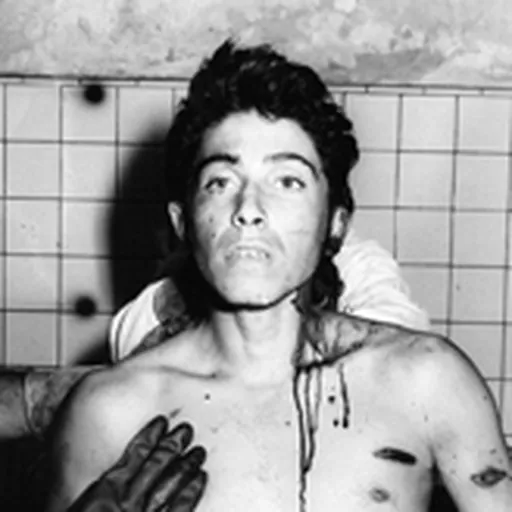
About Francisco Antonio Laureana
Lived 1952 – 1975 (aged 22–23). Francisco Antonio Laureana was an Argentine serial killer.
Francisco Antonio Laureana (1954 – February 27, 1975) was a young Argentine man killed by the Buenos Aires police, who believed him to be a rapist and serial killer called The Satyr of San Isidro, who for a period of six months—from 1974 and 1975—raped women, 13 of whom he murdered. He killed most of his victims on Wednesdays and Thursdays near 6:00 p.m.
Crimes The police reconstructed the events based on what they believed to be a series of murders and the psychological profile of the murderer. Francisco Laureana, 22, had been an intern in a Catholic school in the city of Corrientes in northern Argentina. The police claimed that Laureana had fled Corrientes because he had raped and hanged a nun from the stairs of the school.
After committing one of his homicides, a witness saw the perpetrator fleeing on the roof of a house, but he was shot at with a gun. Said witness was unharmed and was key to making an identikit of the suspect that began to circulate around the city.
Death On Thursday, February 27, 1975, an eight-year-old girl saw Francisco Laureana and thought he looked like the serial killer. After telling her mother, the woman pretended to call her husband but notified the authorities. Laureana passed by, smiled, and continued on.
The police found him a few blocks away and because his characteristics were similar to the identikit's, they approached the suspect, asking him to accompany them for an interrogation. According to the police report, Laureana then took a gun from his shoulder bag and started firing at the officers, initiating a shootout in which he was shot in the shoulder. The badly injured Laureana escaped, hiding from the police in a chicken coop near a mansion. However, a dog "marked" Laureana's hiding place to its owner, prompting the police to approach the coop and pepper Laureana with bullets.
The authorities regretted killing him, as they wanted to interrogate him about his motives for committing murders. Two hens were found dead in the coop (it is unknown if the police or Laureana with his violent urges killed them). When his wife was informed, she said that "There must have been a mistake. My husband could not have done all that. He was a good father, a good husband, and a craftsman who loved what he did."
As the killer was a fetishist, many of his crimes were solved when the police found the boot in which the victims' items were stashed, along with firearms.
The case of Francisco Antonio Laureana, one of the most prolific murderers in Argentine history, went relatively unnoticed due to the complex political climate during the government of Isabel Perón, which led to open confrontation with the guerrilla group Montoneros, to the Operation Independence and eventually to the 1976 military coup.
Suspected victims Argentine justice claims Laureana murdered at least 13 women, but he is also the prime suspect in many other unsolved murders.
"The Satyr of Corrientes" case Between 1973 and 1974, a series of rapes and murders of women occurred in the city of Corrientes, where Laureana was originally from. The suspect was nicknamed "The Satyr of Corrientes." There were at least three murders.
A young man named Horacio Di Montova was tried and convicted for one of the murders. In later years, his guilt has been questioned. Some criminologists believe that Francisco Laureana was responsible, since the killer had a similar modus operandi, and the rapes and murders stopped after he left the city.
Laureana was one of the many people the police investigated as a possible suspect, since the murder occurred a few months after her arrival in the city.
Criminal expert Osvaldo Raffo performed autopsies on the victims. It was reported that 24 suspects were ruled out as the killer because their teeth did not match those obtained from the bite marks on the bodies.
Prior to Laureana's death, the press believed that the Cannibal of San Isidro and the Satyr of San Isidro were the same killer. This theory was never confirmed, and is strongly believed to be incorrect, as Laureana never cut off body parts from his victims. Furthermore, there is no evidence that Laureana ever visited the city before he moved there in 1974. However, many modern sources still refer to him as The Cannibal.
Laureana had family in San Isidro before he moved there in 1974, so it is suspected that, if he was the Cannibal, he may have committed the murders during visits to his relatives.
Don’t just read it —
keep it.
Full-length biographies made to live with: read them, listen on the way to work, watch them tonight.
- E-book
- Audio
- Video
Instant download · yours to keep · every purchase keeps this site free
Important facts
Related people
Same field, nearest in time



Contemporaries
People whose lives overlapped Francisco Antonio Laureana's

Frequently asked questions
Who was Francisco Antonio Laureana?
Argentine serial killer
When was Francisco Antonio Laureana born?
Francisco Antonio Laureana was born in 1952 in Corrientes.
When did Francisco Antonio Laureana die?
Francisco Antonio Laureana died on 27 February 1975 in San Isidro.
What was Francisco Antonio Laureana's occupation?
Francisco Antonio Laureana was a serial killer.
What nationality was Francisco Antonio Laureana?
Francisco Antonio Laureana was Argentine.
Sources & further reading
· Wikipedia: Francisco Antonio Laureana
· DBpedia: Francisco Antonio Laureana
Cite this page
APA: Biography.guide. (2026). Francisco Antonio Laureana. https://biography.guide/francisco-antonio-laureana/
MLA: "Francisco Antonio Laureana." Biography.guide, https://biography.guide/francisco-antonio-laureana/.
Chicago: "Francisco Antonio Laureana." Biography.guide. https://biography.guide/francisco-antonio-laureana/.
Data last updated: 2026-09-23 · Spot an error? Report a correction.
Portrait: Wikimedia Commons · author & licence
Page generated 2026-09-27 05:07 UTC