
Francisco Antônio de Almeida Júnior
Brazilian engineer and astronomer
About Francisco Antônio de Almeida Júnior
Lived 1848 – 1928 (aged 79–80). Francisco Antônio de Almeida Júnior was an astronomer, engineer, university teacher, writer, chief of police and military personnel.
Francisco Antônio de Almeida Júnior (4 May 1851 – 12 September 1928) from his marriage to Joaquina Francisca de Miranda. While young, Almeida was sent to Europe to study engineering in Paris. In 1870, he married Mathilde Martins (1854–1933), at around the same time when Almeida took up the role of "block inspector" in the city of Rio de Janeiro. In that same year, he requested enrollment as a first year student at the Central School, where he was already attending classes.
1874 expedition
In 1871, Emperor Pedro II offered to the French scientist Emmanuel Liais the directorship of the Imperial Observatory of Rio de Janeiro, who accepted the invitation on the condition that he be allowed to modernize the institution and train its employees. To that end, on the following year, Interim Director Viscount of Prados requested from the Ministry of War that two of the Observatory's students, Julião de Oliveira Lacaille and Francisco Antônio de Almeida, were sent to France to study astronomy. The request was accepted in June 1872, with the study term set to last for three years.
For the 1874 transit of Venus, Liais advised the French government to include Almeida as an attaché in one of the various scientific expeditions planned by the French to observe the astronomical event, with backing from the Brazilian government.
He departed on 19 August from the port of Marseille, in France, on board the packet boat Ava, a vessel at service of the French Compagnie des Messageries Maritimes that regularly made the route from France to Japan. In his itinerary, Almeida visited places such as Naples, Port Said, Aden, Sri Lanka, Malacca, Singapore, Cochinchina (now known as Vietnam), Hong Kong, Yokohama, Nagasaki and Tokyo. In his 48-day trip eastward, Almeida stopped by various ports and faced, unharmed, a typhoon in Hong Kong that killed around eight thousand people, according to English newspapers of the time cited in his account. He arrived in Yokohama on 3 October and stayed in Japan for the following three months.
On 8 December, Janssen sent some of the members of his party to Kobe as insurance, in case bad weather made it difficult to observe the transit, but kept Almeida and other collaborators with him in the city of Nagasaki. Atop Mount Konpira, Almeida operated Janssen's photographic revolver, an instrument through which 47 images of the transit of Venus in front of the solar disk were recorded.
On the way back from Japan, Almeida and the rest of the crew spent a few days in Shanghai and then, aboard the Messageries Maritimes packet boat La Provence, made the trip home, with stop overs in Saigon, Singapore, Sri Lanka, Aden, Suez, Naples and eventually Paris, after a nine-month sojourn in Asia. On their stop in Egypt, they visited Alexandria. Interactive map, click to zoom. description=300px Commission assembled. Departed for Marseille on 15 August 1874. description2=300px Arrival in Marseille on 15 August 1874. Voyage commencement on the morning of 19 August.
description14=300px Arrival after seven days of voyage since departure from Aden. One day to explore the town. Departure for Singapore on 8 September
description18=300px Hit by a powerful typhoon on the night of 22 September. Departure for Yokohama scheduled for the 25th.
description21=300px Departure at the end of October, onboard a packet boat. 15-day stay.
description25=300px Stopover for a few days, on the way back. Between Shanghai and Alexandria, they stopped at Saigon, Singapore, Sri Lanka and Aden. From here, he journeyed back to Naples
Return to Brazil
After his voyage, Almeida remained in Europe for two years. In 1875, he was accepted as a member of the Société de Géographie of Paris, where Janssen served as vice-president, and the following year, he graduated as doctor in Physics and Mathematics, defending his thesis entitled De motibus aeris at the University of Bonn, partly based on data on the 1874 Hong Kong typhoon he experienced. Almeida returned to Brazil in February 1876. after presenting to the then director Viscount of Rio Branco a dissertation on the iron ore mines at Jacupiranguinha River and the basis for an exploitation project. In 1880, he returned to Europe, where he edited a technical publication on engineering,
A republican and an abolitionist, engineer at the Companhia Cantareira e Viação Fluminense in April 1890; member of the Governance Board of Niterói on the recommendation of Governor Francisco Portela from April to July 1890; director of Brazil's official gazette, the Diário Oficial, between July and November 1891 and chief of police of Niterói.
A critic of President Floriano Peixoto, Almeida was identified as a participant in the Manifesto of the Thirteen Generals of 10 April 1892, and was thus detained for 100 days at the Villegagnon Fortress and, subsequently, at the São João Fortress. but had his petition denied. Almeida left prison on his own accord a few months later, on 19 July, while the following month, a general amnesty was granted to all political prisoners.
After his arrest, he traveled to France, but returned soon after due to diseases in his family and disputes among his siblings for his father's inheritance.
By the end of 1894, Floriano Peixoto nominated him consul at the Brazilian Consulate in Montreal, and appointed him as an aide for a consular mission to China, as one of Peixoto's last measures as president. However, since he didn't sign the presidential decrees, Almeida's nomination to the consulate had no effect and was canceled in December. The mission to China, planned since 1892, suffered from delays due to a bubonic plague epidemic in Hong Kong and the outbreak of the First Sino-Japanese War, and was finally terminated. Almeida never left Rio de Janeiro in the interim, but was compensated for his preparatory work.
He also served in the National Guard as lieutenant-colonel commander of the First Battalion of Position Artillery between 1890 and 1892 and captain in 1904. He was also cited as an honorary colonel in the Army in 1894.
Personal life From his marriage to Mathilde Martins, he had two sons: Abel de Almeida (1883–1958),
Legacy
In his time, Almeida was object of public satire in the anti-monarchist magazine Revista Illustrada, who referred to the observation of the transit of Venus as an 'old thing' in the field of Astronomy and criticized the 1874 expedition as a waste of public money on behalf of the Imperial government, Congressman Ferreira Viana mocked Almeida's role as being that of a mere "[shipper] of instruments for the wise men of France."
Despite the criticism, Francisco Antônio de Almeida acquired some prestige following the publication of From France to Japan, an easy-to-read book filled with exoticisms For his contributions, Almeida was awarded in 1875 the title of knight of the Imperial Order of the Rose, and a commemorative medal granted by the French government. In 2020, the Embassy of Brazil in Tokyo celebrated Almeida's contributions to science and highlighted the novelty of his visit to Japan.
Works
List of works by Francisco Antônio de Almeida:
Don’t just read it —
keep it.
Full-length biographies made to live with: read them, listen on the way to work, watch them tonight.
- E-book
- Audio
- Video
Instant download · yours to keep · every purchase keeps this site free
Important facts
People in Francisco Antônio de Almeida Júnior's life
Named in this biography and alive at the same time


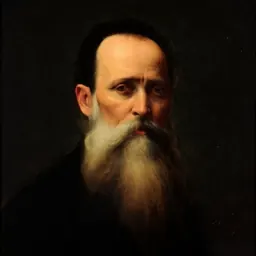
Related people
Same field, nearest in time

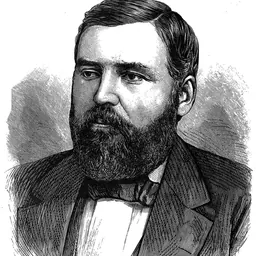
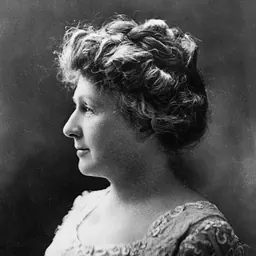

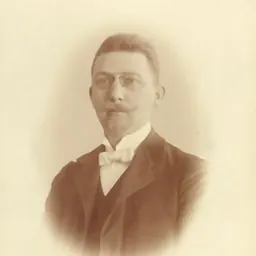
Contemporaries
People whose lives overlapped Francisco Antônio de Almeida Júnior's




Frequently asked questions
Who was Francisco Antônio de Almeida Júnior?
Brazilian engineer and astronomer
When was Francisco Antônio de Almeida Júnior born?
Francisco Antônio de Almeida Júnior was born in 1848 in Rio de Janeiro.
When did Francisco Antônio de Almeida Júnior die?
Francisco Antônio de Almeida Júnior died on 12 September 1928.
What was Francisco Antônio de Almeida Júnior's occupation?
Francisco Antônio de Almeida Júnior was an astronomer, engineer, university teacher, writer, chief of police and military personnel.
What nationality was Francisco Antônio de Almeida Júnior?
Francisco Antônio de Almeida Júnior's recorded nationality: Empire of Brazil.
Sources & further reading
· Wikipedia: Francisco Antônio de Almeida Júnior
· DBpedia: Francisco Antônio de Almeida Júnior
Cite this page
APA: Biography.guide. (2026). Francisco Antônio de Almeida Júnior. https://biography.guide/francisco-antonio-de-almeida-junior/
MLA: "Francisco Antônio de Almeida Júnior." Biography.guide, https://biography.guide/francisco-antonio-de-almeida-junior/.
Chicago: "Francisco Antônio de Almeida Júnior." Biography.guide. https://biography.guide/francisco-antonio-de-almeida-junior/.
Data last updated: 2026-09-25 · Spot an error? Report a correction.
Page generated 2026-09-27 05:09 UTC