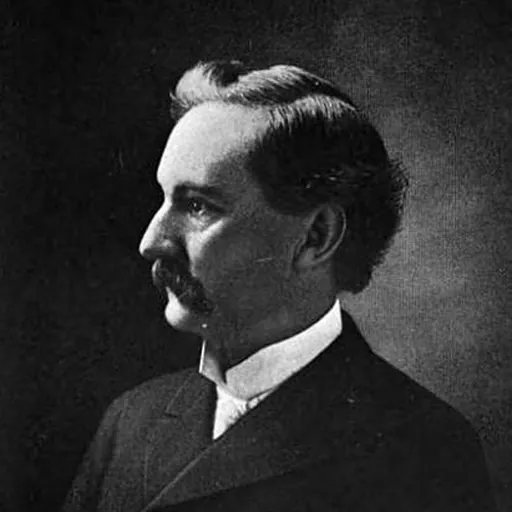
Francis I. McKenna
Land and real estate developer
About Francis I. McKenna
Lived 1859 – 1914 (aged 54). Francis I. McKenna was an American teacher, land development and real estate development.
Francis I. McKenna (February 25, 1859 – February 24, 1914) was a real estate and land developer, and architect from the 1890s to the 1920s in Portland, Oregon. McKenna moved to Portland in 1889 and purchased the land now known as the University Park neighborhood. He went on to establish the Portland Belt Line Company, which lobbied city officials to extend the cable car system to St. Johns, Oregon. The project was constructed in 1905. McKenna was also known as an advocate of civic improvement and industrialization.
Born to farmers in Illinois, McKenna was orphaned at the age of 12. This forced him to find work in labor, including farming and building railroads. When he turned 18, McKenna had enough formal and informal education to ascertain a job at a rural Ohio public school. Eventually, he was offered a job at Creighton University which he held for two years. McKenna quit his profession and packed up for Oregon in 1889 with his wife Laura and son Coe. North McKenna avenue and McKenna park were named in honor of the University Park developer. His son, Coe, continued the family's real estate legacy.
Early and personal life Francis I. McKenna was born on February 25, 1859, in Perry County, Illinois, to William and Charity McKenna (née) Burgoon. The McKenna family originally hailed from Belfast, Ireland. McKenna served as the president of the Portland Belt Company since its founding in 1893. Their main purpose was advocating the construction of a cable car from East Portland, Oregon, to St. Johns, Oregon, along the Columbia Slough.
Land development In 1889, McKenna moved to Portland, Oregon, and invested in a large amount of land, the majority of which was in the University Park neighborhood. With the rapid growth of the city came a growth in investments for McKenna. His first newspaper advertisement appeared in 1890 where he was noted as the manager of the Conservative Real Estate & Trust Company. By 1892, McKenna was advertising as the sole agent for the University Park neighborhood. In 1894, McKenna constructed a three-story brick building in the heart of University Park. When the Archdiocese of Portland purchased the land of the former Portland University to erect a new University of Portland, they went to McKenna to secure more 23 acres of more land for $20,000 ($ adjusted for inflation). In 1910, McKenna purchased 1,280 acres of land for US$12,800 in a rural area near Chitwood, Oregon, where he established a ranch.
McKenna Park, named for the University Park developer, was created to accommodate the Portsmouth baseball team in the Tri-City League during the 1910 season. Officially the park was fenced off five years before, but it was not being used during that time. In 1919, the park was considered for the site of a new highschool, but eventually another plot was selected. The sites original boundaries stretched from to Lombard street on the Northside, McKenna avenue to the east and Dawson street to the south. In 1909, he made a large land acquisition from the University Land Company, buying most of their plots. McKenna's purchased included 500 lots for US$180,000 ($ adjusted for inflation). In 1894, McKenna lobbied the Albina, Oregon, city council to construct wide boulevards, which was approved. They were the first of the kind in the Portland area. McKenna established the United Artisans club in Portland. He announced his resignation from office in 1903, and again planned to resign following some controversy in 1907, but reconsidered and kept the position. He served as the Oregon Board of Trade chairman starting in 1901.
Death and legacy McKenna died of a brain aneurysm on February 24, 1914, after battling severe mental health problems. His funeral was held on February 26, 1914, and he was interred at Mount Cavalry Cemetery. After his death, the McKenna estate was valued a US$187,748 ($ adjusted for inflation). His wife and son had to pay $711 a piece in inheritance taxes. Coe McKenna went on to take over the family development business. He later served on the Multnomah County planning board and in the Oregon Senate.
Don’t just read it —
keep it.
Full-length biographies made to live with: read them, listen on the way to work, watch them tonight.
- E-book
- Audio
- Video
Instant download · yours to keep · every purchase keeps this site free
Important facts
Family & relationships
Related people
Same field, nearest in time


Contemporaries
People whose lives overlapped Francis I. McKenna's



Frequently asked questions
Who was Francis I. McKenna?
Land and real estate developer
When was Francis I. McKenna born?
Francis I. McKenna was born on 25 February 1859 in Perry County.
When did Francis I. McKenna die?
Francis I. McKenna died on 24 February 1914 in Portland.
What was Francis I. McKenna's occupation?
Francis I. McKenna was a teacher, land development and real estate development.
What nationality was Francis I. McKenna?
Francis I. McKenna was American.
Sources & further reading
· Wikipedia: Francis I. McKenna
Cite this page
APA: Biography.guide. (2026). Francis I. McKenna. https://biography.guide/francis-i-mckenna/
MLA: "Francis I. McKenna." Biography.guide, https://biography.guide/francis-i-mckenna/.
Chicago: "Francis I. McKenna." Biography.guide. https://biography.guide/francis-i-mckenna/.
Data last updated: 2026-09-23 · Spot an error? Report a correction.
Portrait: Wikimedia Commons · author & licence
Page generated 2026-09-27 05:05 UTC