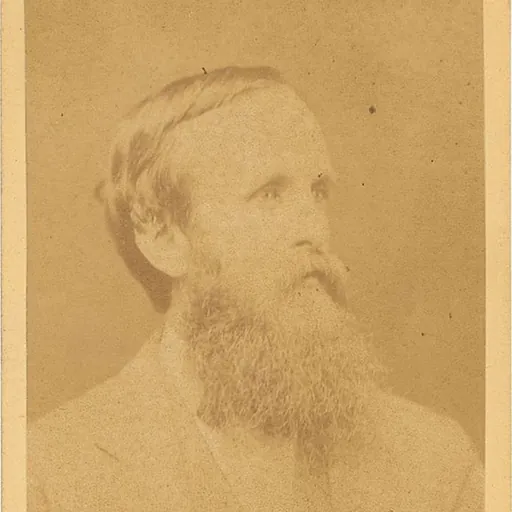
Francis Ellingwood Abbot
American philosopher and theologian
About Francis Ellingwood Abbot
Lived 1836 – 1903 (aged 66). Francis Ellingwood Abbot was an American philosopher, theologian and writer.
Francis Ellingwood Abbot (November 6, 1836 – October 23, 1903) was an American philosopher and theologian who sought to reconstruct theology in accordance with the scientific method.
His lifelong romance with his wife, Katharine Fearing Loring, forms the subject of If Ever Two Were One, a collection of his correspondence and diary entries.
Biography Abbot was born to Joseph Hale Abbot and Fanny Ellingwood Larcom on November 6, 1836 in Boston, Massachusetts. He married Katherine Fearing on August 3, 1859 in Nashua, New Hampshire. The couple had three children: Everett Vergnies, Fanny Larcom, and Edward Stanley Abbot.
As a spokesman for "free religion", he asserted that Christianity, understood as based on the lordship of Christ, is no longer tenable. He rejected all dogma and reliance on Scriptures or creeds, teaching the truth is open to every individual.
Abbot graduated from Harvard University and the Meadville Theological School.
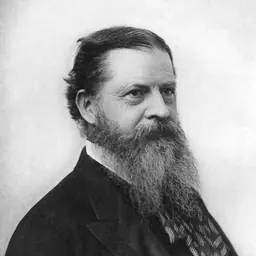
Following the controversy in New Hampshire, Abbot left the ministry in 1868 to write, edit, and teach. Abbot's theological position was stated in Scientific Theism (1885) and The Way Out of Agnosticism (1890). In the latter book, Josiah Royce wrote an article so scathing that Abbot took it as an unfair attempt to destroy his reputation, and eventually responded publicly with Mr. Royce's Libel (1891 October) in which he sought redress from Royce's employer Harvard University. The debate moved to the pages of The Nation, where Charles Sanders Peirce took Abbot's side; William James and Joseph Bangs Warner, less so. In his 1903 obituary of Abbot, Peirce praised Abbot's philosophical work and love of truth, and wrote that, in the introduction to Scientific Theism (wherein Abbot criticized nominalism and traced it through Kant among others), Abbot "put his finger unerringly [...] upon the one great blunder of all modern philosophy." (For the full texts of the public controversy and the obituary, see "External links" below.)
Abbot committed suicide in 1903 by taking sleeping pills at his wife's gravesite in Central Cemetery, Beverly, Massachusetts, on the 10th anniversary of her death.
Don’t just read it —
keep it.
Full-length biographies made to live with: read them, listen on the way to work, watch them tonight.
- E-book
- Audio
- Video
Instant download · yours to keep · every purchase keeps this site free
Important facts
People in Francis Ellingwood Abbot's life
Named in this biography and alive at the same time


Related people
Same field, nearest in time



Contemporaries
People whose lives overlapped Francis Ellingwood Abbot's




Frequently asked questions
Who was Francis Ellingwood Abbot?
American philosopher and theologian (1836-1903)
When was Francis Ellingwood Abbot born?
Francis Ellingwood Abbot was born on 6 November 1836 in Boston.
When did Francis Ellingwood Abbot die?
Francis Ellingwood Abbot died on 23 October 1903 in Beverly.
What was Francis Ellingwood Abbot's occupation?
Francis Ellingwood Abbot was a philosopher, theologian and writer.
What nationality was Francis Ellingwood Abbot?
Francis Ellingwood Abbot was American.
Sources & further reading
· Wikipedia: Francis Ellingwood Abbot
· DBpedia: Francis Ellingwood Abbot
Cite this page
APA: Biography.guide. (2026). Francis Ellingwood Abbot. https://biography.guide/francis-ellingwood-abbot/
MLA: "Francis Ellingwood Abbot." Biography.guide, https://biography.guide/francis-ellingwood-abbot/.
Chicago: "Francis Ellingwood Abbot." Biography.guide. https://biography.guide/francis-ellingwood-abbot/.
Data last updated: 2026-09-22 · Spot an error? Report a correction.
Portrait: Wikimedia Commons · author & licence
Page generated 2026-09-27 05:03 UTC