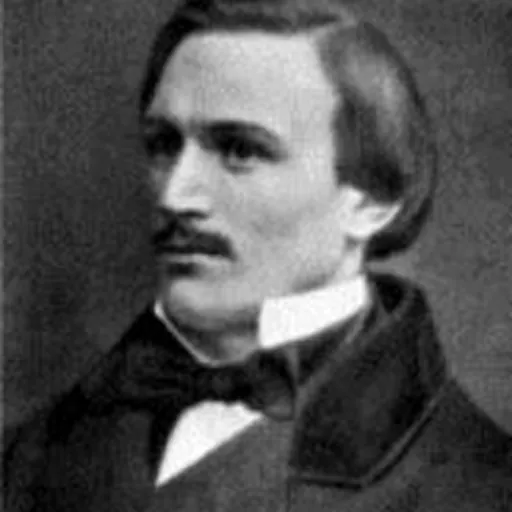
About Francis Edward Bache
Lived 1833 – 1858 (aged 24). Francis Edward Bache was a British composer, organist and musician.
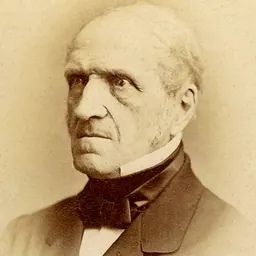
Francis Edward Bache (; 14 September 183324 August 1858) was an English organist and composer.
Born at Birmingham as the eldest of seven children of Samuel Bache, a well-known Unitarian minister, he studied with James Stimpson, Birmingham City Organist, and with violinist Alfred Mellon while being educated at his father's school. He played the violin in the 1846 Birmingham festival, and in 1849 went to London as a private composition student for three years under William Sterndale Bennett
In October 1850 Bache became organist of All Saints, Gordon Square. While continuing his studies with Sterndale Bennett, Bache composed concertos, overtures, two operettas, a string quartet and a piano trio along with many piano pieces. He made his debut as a concert performer at Keighley, Yorkshire on 21 January 1851. When he played the Allegro of an unpublished piano concerto of his own in June 1852, Henry Chorley remarked, "We have met with no Englishman for whom we have so long been waiting than Mr. Bache." In November 1851 Bache went to live with Mellon, who was then living in London, and in 1852 was given a contract by Addison, Hollier and Lucas to write light piano pieces; he turned out these works in considerable numbers. Of one of these he wrote, "I must say that I would sooner have written my Galop di Bravura than a Sonata which is only printed to lie on the shelf like a dead weight on account deficiency of anything like idea."
His younger brother, Walter Bache (1842–1888), was a successful pianist and conductor.
A memoir of the two brothers, by their sister Constance Bache, appeared in 1901 under the title Brother Musicians.
Selected works Andante and Allegro in D major, for organ 5 Charakterstücke for piano, op. 15 (pub. 1855) Duo brillante for violin and piano Flute Concerto (1852) 3 Impromptus for piano, op. 1 4 Mazurkas de Salon, op. 13 (pub. 1855) 6 Melodies, songs for voice and piano, op. 16 (1850) Piano Concerto in E major, op. 18 (1856) Piano Trio in D minor, op. 25 (c. 1852, pub. 1865) Polonaise for piano and orchestra, op. 9 (1854) 2 Romances for violin and piano (or cello and piano), op. 21 (pub. 1859) Rubezahl, opera (1852) Souvenirs d'Italie for piano, op. 19 Souvenirs de Torquay for piano, op. 26 (pub. 1859) String Quartet in F major, (1851) Which is Which, opera
Don’t just read it —
keep it.
Full-length biographies made to live with: read them, listen on the way to work, watch them tonight.
- E-book
- Audio
- Video
Instant download · yours to keep · every purchase keeps this site free
Important facts
People in Francis Edward Bache's life
Named in this biography and alive at the same time




Related people
Same field, nearest in time

Contemporaries
People whose lives overlapped Francis Edward Bache's


Frequently asked questions
Who was Francis Edward Bache?
British composer and pianist (1833–1858)
When was Francis Edward Bache born?
Francis Edward Bache was born on 14 September 1833 in Birmingham.
When did Francis Edward Bache die?
Francis Edward Bache died on 24 August 1858 in Birmingham.
What was Francis Edward Bache's occupation?
Francis Edward Bache was a composer, organist and musician.
What nationality was Francis Edward Bache?
Francis Edward Bache was British.
Sources & further reading
· Wikipedia: Francis Edward Bache
· DBpedia: Francis Edward Bache
Cite this page
APA: Biography.guide. (2026). Francis Edward Bache. https://biography.guide/francis-edward-bache/
MLA: "Francis Edward Bache." Biography.guide, https://biography.guide/francis-edward-bache/.
Chicago: "Francis Edward Bache." Biography.guide. https://biography.guide/francis-edward-bache/.
Data last updated: 2026-09-22 · Spot an error? Report a correction.
Portrait: Wikimedia Commons · author & licence
Page generated 2026-09-27 05:02 UTC