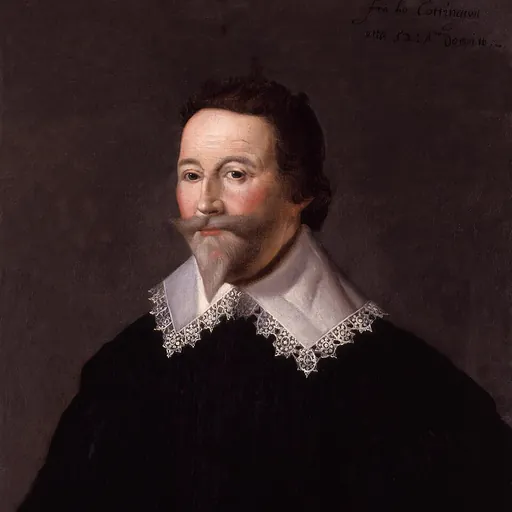
About Francis Cottington, 1st Baron Cottington
Lived 1579 – 1652 (aged 72–73). Francis Cottington, 1st Baron Cottington was a diplomat and politician.
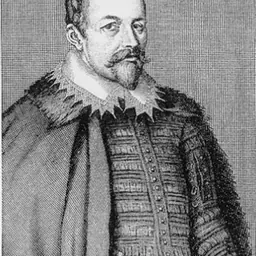
Francis Cottington, 1st Baron Cottington (c. 15791652) was the Lord High Treasurer of England, an ambassador, and the leader of the pro-Spanish, pro-Roman Catholic faction in the court of Charles I.
Early life He was the fourth son of Philip Cottington of Godmanstone, now Godminster near Bruton in Somerset. According to Hoare, his mother was Jane, daughter of Thomas Biflete, but according to Clarendon, "a Stafford nearly allied to Sir Edward Stafford", through whom he was recommended to Sir Charles Cornwallis, ambassador to the court of Philip III of Spain, becoming a member of his suite and acting as English agent on the latter's recall, from 1609 to 1611.
Career In 1612 Cottington was appointed English consul at Seville. Returning to England, he was made a clerk of the council in September 1613. His Spanish experience rendered him useful to King James, and his bias in favour of Spain was always marked. He seemed to have promoted the Spanish policy from the first, and pressed on Diego Sarmiento de Acuña, conde de Gondomar, the Spanish ambassador, the proposal for the Spanish in opposition to the French marriage for Prince Charles (later King Charles I).
In 1616 he went as ambassador to Spain, transferring in 1618 the proposal of mediation by James I in the dispute with Frederick V, Elector Palatine. He strongly disapproved of the prince's expedition to Spain, as an adventure likely to upset the whole policy of marriage and alliance, but was overruled and chosen to accompany him. His opposition greatly incensed George Villiers, 1st Duke of Buckingham, and still more his perseverance in the Spanish policy after the failure of the expedition, and on Charles I's accession Cottington was through his means dismissed from all his employments and forbidden to appear at court. The duke's assassination, however, enabled him to return.
He was a Roman Catholic at least at heart, becoming a member of that communion in 1623, returning to Protestantism, and again declaring himself a Roman Catholic in 1636, and supporting the cause of the Roman Catholics in England. On 12 November 1628 he was made a privy councillor, and in March 1629 appointed chancellor of the exchequer. He continued, however, to take a large share in public business and served on the committees for foreign, Irish, and Scottish affairs. In the last, appointed in July 1638, he supported the war, and in May 1640, after the dismissal of the Short Parliament, he declared it his opinion that at such a crisis the king might levy money without the Parliament. His attempts to get funds from the City of London were unsuccessful, and he had recourse instead to a speculation in pepper.
Francis Cottington's title became extinct at his death because all his children predeceased him.
He had been appointed constable of the Tower, and he now prepared the fortress for a siege. In the trial of Strafford in 1641, Cottington denied on oath that he had heard him use the incriminating words about "reducing this kingdom". When the parliamentary opposition became too strong to be any longer defied, Cottington, as one of those who had chiefly incurred their hostility, hastened to retire from the administration, giving up the court of wards in May 1641 and the chancellorship of the exchequer in January 1642. where he was maintained by the Jesuits. He died there on 19 June 1652, his body being subsequently buried in Westminster Abbey.
He had amassed a large fortune and built two magnificent houses at Hanworth near Heathrow and Fonthill near Tisbury, Wiltshire. Cottington was evidently a man of considerable ability, but the foreign policy he pursued was opposed to the national interests and futile in itself. According to Clarendon's verdict "he left behind him a greater esteem of his parts than love of his person."
Personal life He married in 1623 Anne, a daughter of Sir William Meredith and the widow of Sir Robert Brett. Lord and Lady Cottington are buried in Westminster Abbey. All his children predeceased him, and his title became extinct at his death.
Don’t just read it —
keep it.
Full-length biographies made to live with: read them, listen on the way to work, watch them tonight.
- E-book
- Audio
- Video
Instant download · yours to keep · every purchase keeps this site free
Important facts
People in Francis Cottington, 1st Baron Cottington's life
Named in this biography and alive at the same time

Related people
Same field, nearest in time




Contemporaries
People whose lives overlapped Francis Cottington, 1st Baron Cottington's



Frequently asked questions
Who was Francis Cottington, 1st Baron Cottington?
ambassador
When was Francis Cottington, 1st Baron Cottington born?
Francis Cottington, 1st Baron Cottington was born in 1579.
When did Francis Cottington, 1st Baron Cottington die?
Francis Cottington, 1st Baron Cottington died in 1652.
What was Francis Cottington, 1st Baron Cottington's occupation?
Francis Cottington, 1st Baron Cottington was a diplomat and politician.
Sources & further reading
· Wikipedia: Francis Cottington, 1st Baron Cottington
· DBpedia: Francis Cottington, 1st Baron Cottington
Cite this page
APA: Biography.guide. (2026). Francis Cottington, 1st Baron Cottington. https://biography.guide/francis-cottington-1st-baron-cottington/
MLA: "Francis Cottington, 1st Baron Cottington." Biography.guide, https://biography.guide/francis-cottington-1st-baron-cottington/.
Chicago: "Francis Cottington, 1st Baron Cottington." Biography.guide. https://biography.guide/francis-cottington-1st-baron-cottington/.
Data last updated: 2026-09-23 · Spot an error? Report a correction.
Portrait: Wikimedia Commons · author & licence
Page generated 2026-09-27 05:05 UTC