
About Francis-André Wollman
Born 1953. Francis-André Wollman is a French biologist and researcher.
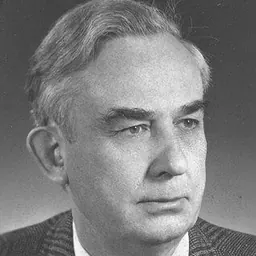
Francis-André Wollman is a French biologist born on 5 May 1953. He is a research director at the CNRS and works at the Institut de biologie physico-chimique (IBPC) in Paris. He is a member of the French Academy of sciences.
His grandparents, Eugène and Elisabeth Wollman, researchers at the Pasteur Institute, were the pioneers of discoveries on phage and lysogeny (André Lwoff's later work earned him the Nobel Prize in 1965). Their work was brutally interrupted in December 1943 following their arrest by the French police and their murder in Auschwitz (a prize from the Academy of Sciences is dedicated to them). His father Élie Wollman, also a researcher at the Pasteur Institute, of which he was deputy director for many years, was one of the pioneers of bacterial genetics and brought to light the genetic nature of prophecy and the sexuality of bacteria. This last work was done in collaboration with François Jacob, who was awarded the Nobel Prize, also in 1965.
Biography After studying physico-chemistry at university, he received a scholarship from the Délégation Générale à la Recherche Scientifique et Technique (DGRST) in 1975 to study biological membranes. In 1977 he completed his PhD at the University of Paris VII (now Paris Diderot), followed in 1982 by a State Thesis (Habilitation) at the same university. He spent his entire career at the CNRS, where he was appointed Director of Exceptional Class Research in 2005 after having joined in 1980 as a research associate.
He does all his scientific research at the IBPC in Paris, a research establishment founded in 1927 He showed how dynamic this organization is in allowing photosynthesis to react to changes in the environment.
His work on the biogenesis of the photosynthetic apparatus has led him to identify post-endosymbiotic innovations that are decisive for the genetic integration of nucleo-cytosolic and chloroplastic compartments. His work shows how the nucleus of the photosynthetic cell has taken control of the expression of chloroplast genes. He discovered, in the chloroplast, an original mechanism of self-regulation of translation for certain photosynthesis proteins that are only produced if they can be assembled in a functional protein complex (CES process). Recently, he revisited the early days of endosymbiosis by showing how protein addressing signals to intracellular organelles would derive from antimicrobial peptides against which the ancestors of mitochondria and chloroplasts developed resistance.
Honours and awards
Awards and honours
1984: Prize of the French Academy of sciences in homage to the French scientists murdered by the Germans 1996: Fuller's Prize of the French Academy of sciences 2000: CNRS Silver medal 2018: Chevalier of the Légion d'Honneur
Scientific societies
1999-2003: President of the French Society of Photosynthesis 2004-2010: Member of the Board of Directors of the International Society of Photosynthesis 2000: Member of EMBO (European Molecular Biology Organisation) 2017: Elected member of Academia Europaea 2017: Elected member of the French Academy of sciences Institutional activities 2000-2004: President of the Plant Biology Section of the National Committee for Scientific Research 2005-2014: Member of the Higher Council for Research and Technology, placed under the Ministry of Higher Education and Research. 2006-2014: Member of the Scientific Council of Life Sciences at the CNRS 2007-2010: Member of the Scientific Council of the Ile de France region. 2007-2012: Member of the Board of Directors of Henri Poincaré University, Nancy, France. 2007-2018: Member of the Assembly of 100 of the Institut Pasteur. 2014: Member of the executive committee of the University of Paris Sciences et Lettres (PSL) 2014-2018: Member of the CNRS Scientific Council 2019: Member of the Board of Directors of the Edmond de Rothschild Foundation
Editorial activities
Associate editor with Photosynthesis Research (1992-1996) Publisher associated with Current Genetics (2001- 2010) Consultant editor at The Plant Cell (2015-2018)
Don’t just read it —
keep it.
Full-length biographies made to live with: read them, listen on the way to work, watch them tonight.
- E-book
- Audio
- Video
Instant download · yours to keep · every purchase keeps this site free
Important facts
People in Francis-André Wollman's life
Named in this biography and alive at the same time

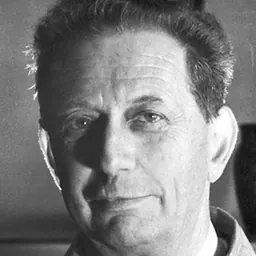

Related people
Same field, nearest in time

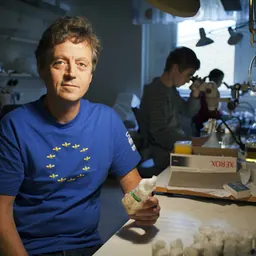
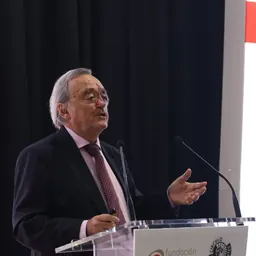
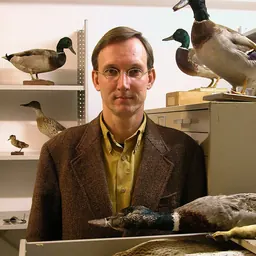
Contemporaries
People whose lives overlapped Francis-André Wollman's


Frequently asked questions
Who is Francis-André Wollman?
French biologist
When was Francis-André Wollman born?
Francis-André Wollman was born on 5 May 1953.
What is Francis-André Wollman's occupation?
Francis-André Wollman is a biologist and researcher.
What nationality is Francis-André Wollman?
Francis-André Wollman is French.
Sources & further reading
· Wikipedia: Francis-André Wollman
· DBpedia: Francis-André Wollman
Cite this page
APA: Biography.guide. (2026). Francis-André Wollman. https://biography.guide/francis-andre-wollman/
MLA: "Francis-André Wollman." Biography.guide, https://biography.guide/francis-andre-wollman/.
Chicago: "Francis-André Wollman." Biography.guide. https://biography.guide/francis-andre-wollman/.
Data last updated: 2026-09-20 · Spot an error? Report a correction.
Page generated 2026-09-27 05:26 UTC