
Francesco Scipione, marchese di Maffei
Italian historian, diplomatics, paleographer, playwriter and scholar
About Francesco Scipione, marchese di Maffei
Lived 1675 – 1755 (aged 79). Francesco Scipione, marchese di Maffei was an Italian archaeologist, playwright, poet, scholar, palaeographer and writer.
Francesco Scipione Maffei (; 1 June 1675 – 11 February 1755) was an Italian writer and art critic, author of many articles and plays. An antiquarian with a humanist education whose publications on Etruscan antiquities stand as incunables of Etruscology, he engaged in running skirmishes in print with his rival in the field of antiquities, Antonio Francesco Gori.
Early career Maffei was of the illustrious family that originated in Bologna; his brother was General Alessandro Maffei, whose memoirs he edited and published. He studied for five years in Parma, at the Jesuit College, and afterwards, from 1698, at Rome, and saw action in 1704 at the Battle of Schellenberg, near Donauwörth. His brother, Alessandro, was second in command at the battle.
In 1709, he went to Padua, where he briefly collaborated with Apostolo Zeno and Antonio Valisnieri in editing the ambitious literary periodical the Giornale de' Letterati d'Italia, which had but a short career. and received at Oxford University, where he was honoured with a doctoral degree; he returned through Holland and Germany to Verona. He was a friend of Francesco Algarotti, who wrote him many letters.
On his return to Verona, he built a museum, which he bequeathed, together with his valuable archaeological and artistic collection, to his native city. He bequeathed his collection of manuscripts to the canons of the cathedral of Verona. In later life he became interested in astronomy and physics, and built an observatory to study the stars.
Philosophical treatises Upon returning from his journey in 1736, Maffei wrote the Consiglio politico addressed to the Venetian government. In the treatise, Maffei questioned the structure of Venice's aristocratic government, and suggested the opening of public offices to the elites of the Venetian mainland domains. Ultimately, the Consiglio politico advocated introducing into the government of the Republic of Venice elements of political representation, which Maffei had identified in his antiquarian studies of the Roman constitution, and later observed in foreign lands during his European travels. Maffei did not actually present his Consiglio politico to the Venetian government. The treatise was only published posthumously, shortly before the fall of the Republic of Venice in 1797. It circulated during the Risorgimento, and might have influenced Carlo Cattaneo's federalist ideas.
The Jesuits requested Maffei to write in defence of the orthodox system of grace against the doctrine of the Jansenists, which resulted in his Istoria teologica delle doctrine e delle opinione corse ne cinque primo secoli della chiesa in proposito della divina grazia, del libero arbitrio e della predestinazione, published at Trent, 1742.
He also published a letter and a book arguing against the existence of supernatural magic and witches, that mixes both enlightenment thinking and theologic arguments based on scripture. This letter on magic was subsequently printed in Augustin Calmet's dissertation on magic and vampires titled Traité sur les apparitions des esprits et sur les vampires ou les revenans de Hongrie, de Moravie, &c. (1751).
Posthumous reputation The secondary school 'Liceo Maffei' in Verona is named in his honour.
He is also known for having written a description of Bartolomeo Cristofori's invention of a hammer mechanism for the harpsichord, work widely considered to comprise the invention of the piano. Maffei published the article in the Giornale de' Letterati d’Italia in 1711. Maffei was one of the editors of the Giornale. Maffei reprinted the article in his Rime e Prose, a collection of some of his writings, published in Venice in 1719.
The Italian poet and translator Ippolito Pindemonte published a biographical elegy on his friend.
Selected publications
Per la nascita del principe di Piemonte genteliaco (Rome, 1699); *Conclusioni di amore (Verona, 1702); La prima radunanza della colonia arcadica Veronese (Cervia, 1705); La scienza cavalleresca (Rome, 1710), a treatise against duelling; De fabula equestris ordinis Constantiniani (Zurich, 1712; Paris, 1714), written to prove that the orders of knighthood all date only from the Crusades and affording valuable information concerning the aristocracy of the early Middle Ages;
Dell' antica condizione di Verona (Venice, 1719); Istoria diplomatica (Mantua, 1727), publishing original documents; Teatro del Marchese Maffei (Venice, 1730), his collected works for the theater, including La Merope, La Ceremonie, La Fida Ninfa;
Consiglio politico finora inedito presentato al governo veneto nell'anno 1736 (1736; published in Venice, 1797); Graecorum siglae lapidariae collectae atque explicatae (Verona, 1746); Della formazione dei fulmini (Verona, 1747);
Il Raguet (Verona, 1787), a comedy;
Supplemento al Tesoro delle Inscrizioni di Muratori (Lucca, 1765); this was published by Donati according to notes collected by Maffei for a complete work on inscriptions
Besides these original works Maffei also collaborated in editions of the works of St. Hilary (Verona, 1730), St. Jerome (1734), and St. Zeno (1739).
Don’t just read it —
keep it.
Full-length biographies made to live with: read them, listen on the way to work, watch them tonight.
- E-book
- Audio
- Video
Instant download · yours to keep · every purchase keeps this site free
Important facts
People in Francesco Scipione, marchese di Maffei's life
Named in this biography and alive at the same time


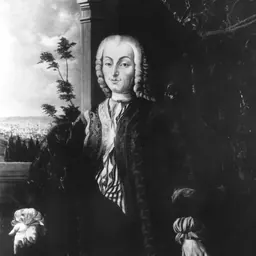
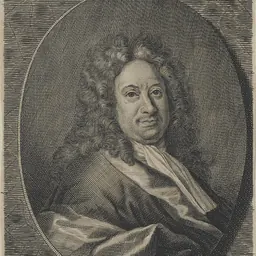

Related people
Same field, nearest in time

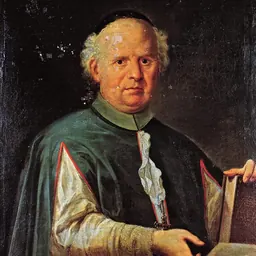

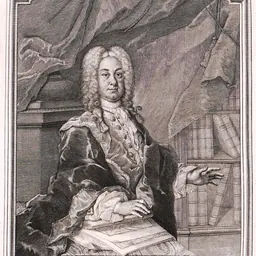
Contemporaries
People whose lives overlapped Francesco Scipione, marchese di Maffei's




Frequently asked questions
Who was Francesco Scipione, marchese di Maffei?
Italian historian, diplomatics, paleographer, playwriter and scholar (1675-1755)
When was Francesco Scipione, marchese di Maffei born?
Francesco Scipione, marchese di Maffei was born on 1 June 1675 in Verona.
When did Francesco Scipione, marchese di Maffei die?
Francesco Scipione, marchese di Maffei died on 11 February 1755 in Verona.
What was Francesco Scipione, marchese di Maffei's occupation?
Francesco Scipione, marchese di Maffei was an archaeologist, playwright, poet, scholar, palaeographer and writer.
What nationality was Francesco Scipione, marchese di Maffei?
Francesco Scipione, marchese di Maffei was Italian.
Sources & further reading
· Wikipedia: Francesco Scipione, marchese di Maffei
· DBpedia: Francesco Scipione Maffei
Cite this page
APA: Biography.guide. (2026). Francesco Scipione, marchese di Maffei. https://biography.guide/francesco-scipione-marchese-di-maffei/
MLA: "Francesco Scipione, marchese di Maffei." Biography.guide, https://biography.guide/francesco-scipione-marchese-di-maffei/.
Chicago: "Francesco Scipione, marchese di Maffei." Biography.guide. https://biography.guide/francesco-scipione-marchese-di-maffei/.
Data last updated: 2026-09-25 · Spot an error? Report a correction.
Page generated 2026-09-27 05:12 UTC