
About Francesco Maria Brancaccio
Lived 1592 – 1675 (aged 82). Francesco Maria Brancaccio was a catholic priest.
Francesco Maria Brancaccio (15 April 1592, in Canneto, near Bari – 9 January 1675) was an Italian Catholic cardinal.
Naples
Brancaccio was born on 15 April 1592, the son of Baron Muzio II Brancaccio, governor of Apulia and Zenobia in the Kingdom of Naples. He was educated by the Jesuits in Naples. He was ordained there as a priest in 1619 and was rose through local ecclesiastic ranks until 1627 when he became Bishop of Capaccio which was then within the Kingdom of Naples. On 8 Sep 1627, he was consecrated bishop by Cosimo de Torres, Cardinal-Priest of San Pancrazio, with Giuseppe Acquaviva, Titular Archbishop of Thebae, and Francesco Nappi (bishop), Bishop of Polignano, serving as co-consecrators. When the disagreement was elevated to armed conflict, a castrato in Brancaccio's employ killed the captain of the guard. The Vice-King ordered the bishop to stand trial and he obeyed; making arrangements to travel to Naples to give his account. But rather than travel to Naples he fled in a felucca towards Rome and upon arrival sought an audience with Pope Urban VIII to explain his side of the story. Urban agreed to defend the bishop and a furious Kingdom of Naples took custody of all the wealth and assets of Brancaccio's bishopric.
Pope Urban absolved Brancaccio of any crime and ordered that he be returned to Capaccio but the Viceroy in Naples opposed it and urged the pope to send him elsewhere. The Pope, in need of more cardinals loyal to the Barberini cause, instead kept Brancaccio in Rome and he was elevated to the rank of cardinal in his consistory of 28 November 1633.
Cardinalate
Now as a cardinal, there were few who would publicly speak ill of Brancaccio, though they may have wanted to. He was restored to his bishopric where he remained until 1635 when yet another conflict with yet another Viceroy saw him resign. While in Naples he worked closely with cardinals Francesco Boncompagni and Ippolito Aldobrandini.
He became Bishop of Viterbo in 1638; then he became cardinal-bishop of Sabina (1666–68), of Frascati (1668–71), and finally of Porto e Santa Rufina (1671–75). He attended the papal conclaves of 1644, 1655, 1667 and 1669, which elected popes Innocent X, Alexander VII, Clement IX and Clement X respectively.
Patron of the arts
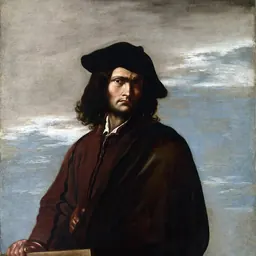
During his time in Rome, he formed the Biblioteca Brancacciana (which later moved to Naples and became that city's first public library – it is now part of the National Library of Naples) and housed the artist Salvator Rosa.
In 1642, Giovanni Gentile dedicated a teaching-collection of music entitled Solfeggiamenti et ricercari a due voci (Solfèges and ricercari for two voices – Lodovico Grignani, Rome, 1642) to him. The frontispiece gives him as "CARD. FRANCESCO MARIA / BRANCACCIO. / VESCOVO DI VITERBO" ("Cardinal Francesco Maria Brancaccio, bishop of Viterbo") and in the appendices is a canon in two voices "Cavato dalle lettere vocali del nome, e cognome / DELL'EMINENTISSIMO E REVERENDISSIMO / CARDINALE BRANCACCIO" ("Based on the vocal letters of the name and surname of the most eminent and most reverend / cardinal Brancaccio").
Episcopal succession Episcopal succession of Francesco Maria BrancaccioWhile bishop, he was the principal consecrator of:
and the principal co-consecrator of:
Placido Padiglia, Bishop of Lavello (1627); Tommaso d'Ancora (Ariconi), Bishop of Mottola (1630); Giovan Battista Curiale (Correale), Bishop of Nicastro (1632); and Marc'Antonio Verità, Bishop of Ossero (1633).
References and notes
Don’t just read it —
keep it.
Full-length biographies made to live with: read them, listen on the way to work, watch them tonight.
- E-book
- Audio
- Video
Instant download · yours to keep · every purchase keeps this site free
Important facts
People in Francesco Maria Brancaccio's life
Named in this biography and alive at the same time



Related people
Same field, nearest in time

Contemporaries
People whose lives overlapped Francesco Maria Brancaccio's




Frequently asked questions
Who was Francesco Maria Brancaccio?
Catholic cardinal (1592-1675)
When was Francesco Maria Brancaccio born?
Francesco Maria Brancaccio was born on 15 April 1592 in Adelfia.
When did Francesco Maria Brancaccio die?
Francesco Maria Brancaccio died on 9 January 1675 in Rome.
What was Francesco Maria Brancaccio's occupation?
Francesco Maria Brancaccio was a catholic priest.
Sources & further reading
· Wikipedia: Francesco Maria Brancaccio
· DBpedia: Francesco Maria Brancaccio
Cite this page
APA: Biography.guide. (2026). Francesco Maria Brancaccio. https://biography.guide/francesco-maria-brancaccio/
MLA: "Francesco Maria Brancaccio." Biography.guide, https://biography.guide/francesco-maria-brancaccio/.
Chicago: "Francesco Maria Brancaccio." Biography.guide. https://biography.guide/francesco-maria-brancaccio/.
Data last updated: 2026-09-23 · Spot an error? Report a correction.
Portrait: Wikimedia Commons · author & licence
Page generated 2026-09-27 05:08 UTC