
About Francesco Eschinardi
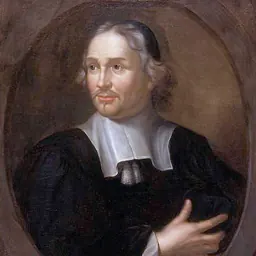
Lived 1623 – 1703 (aged 79). Francesco Eschinardi was a mathematician and physicist.
Francesco Eschinardi, (also known under the pseudonym Costanzo Amichevoli; 13 December 1623 – 12 January 1703), was an Italian Jesuit, physicist and mathematician.
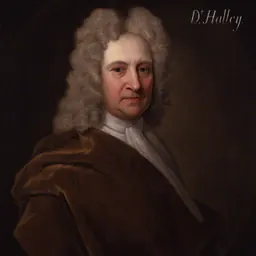
Life Eschinardi was born in Rome on 13 December 1623. He entered the Society of Jesus in 1637 at the age of 14 and subsequently joined the faculty of the Roman College, teaching logic in 1658, physics in 1659, and metaphysics in 1660. Traveling extensively, he taught at various Jesuit seminaries and Italian universities. He became professor of mathematics in Florence and at Perugia, then from 1665 he was again teaching at the Roman College, where he held the chair of mathematics, geometry and astronomy. He was also a skilled astronomer who carried out much valuable work. From his observatory at the Roman College, he was the first to observe the great comet of 1668. Cassini received the observations of the comet from Eschinardi while Edmond Halley was in Paris in the first weeks of 1681, and in the autumn of 1681 Halley met Eschinardi in Rome, where he learnt at first hand of the observations.
Eschinardi was an active member of the Physical-Mathematical Academy founded by Giovanni Ciampini and contributed regularly to the Giornale de' Letterati from 1668 to 1675. He died in Rome on 12 January 1703.
Contributions Eschinardi was one of the great Jesuit experimentalists of the latter half of the Seventeenth century. Though still tied to certain traditional patterns, especially in astronomy with the reaffirmation of the geocentric theory, he showed a sincere admiration for the innovative work of modern scholars and the desire to follow in their footsteps by using the experimental method. The Raguagli discuss also physical problems, including the improvement and use of thermometers, and Torricelli's experiment.
Eschinardi showed a keen interest in geography and engineering. In his “Speech on the cutting of the Isthmus between the Red Sea and the Mediterranean” delivered in 1680 at the Physical-Mathematical Academy, Eschinardi explored the idea of a proto-Suez Canal between the Mediterranean and the Red Sea.
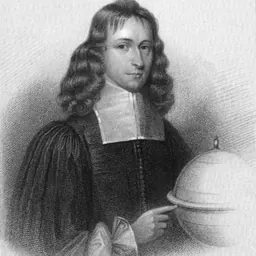
Historians of science today emphasize the importance of Eschinardi's work in optics and in the development of the thermometer. Eschinardi and James Gregory were engaged in a dispute regarding who was the initiator of the principle of optical equivalence.
Works
Don’t just read it —
keep it.
Full-length biographies made to live with: read them, listen on the way to work, watch them tonight.
- E-book
- Audio
- Video
Instant download · yours to keep · every purchase keeps this site free
Important facts
People in Francesco Eschinardi's life
Named in this biography and alive at the same time
Related people
Same field, nearest in time

Contemporaries
People whose lives overlapped Francesco Eschinardi's





Frequently asked questions
Who was Francesco Eschinardi?
Italian mathematician
When was Francesco Eschinardi born?
Francesco Eschinardi was born on 13 December 1623 in Rome.
When did Francesco Eschinardi die?
Francesco Eschinardi died on 12 January 1703 in Rome.
What was Francesco Eschinardi's occupation?
Francesco Eschinardi was a mathematician and physicist.
Sources & further reading
· Wikipedia: Francesco Eschinardi
· DBpedia: Francesco Eschinardi
Cite this page
APA: Biography.guide. (2026). Francesco Eschinardi. https://biography.guide/francesco-eschinardi/
MLA: "Francesco Eschinardi." Biography.guide, https://biography.guide/francesco-eschinardi/.
Chicago: "Francesco Eschinardi." Biography.guide. https://biography.guide/francesco-eschinardi/.
Data last updated: 2026-09-20 · Spot an error? Report a correction.
Page generated 2026-09-27 05:03 UTC