
Francesca Gino
Italian-American behavioral scientist
About Francesca Gino
Born 1978. Francesca Gino is an Italian behavioral scientist, university teacher and economist.
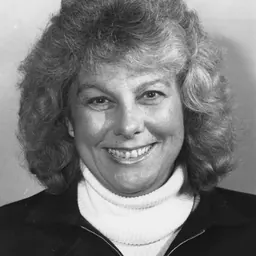
Francesca Gino (born April 18, 1978) is an Italian behavioral scientist who served as tenured Tandon Family Professor of Business Administration at Harvard Business School (HBS), focusing on "honesty and ethical behavior". After an investigation concluded in 2023 she had falsified research data, she was put on unpaid administrative leave, stripped of her title, and removed from her post as the head of the Unit of Negotiation, Organizations and Markets (NOM). Harvard revoked her tenure and fired her in May 2025.
Early life and education She was raised in Tione di Trento, Italy. She received a bachelor's degree from the University of Trento in Trento, Italy, in 2001, and then a master's degree and a doctorate from Sant'Anna School of Advanced Studies in Pisa, Italy, in 2004. During these studies, she came to Harvard Business School as a visiting fellow, and stayed on as a postdoctoral fellow after completing her doctorate (2004−06).
Career Gino taught at University of North Carolina at Chapel Hill (2008−10) and at Carnegie Mellon University (2006−08). She joined Harvard University's permanent faculty in 2010. Gino conducted research on rule-breaking, which she discussed in her 2018 book, Rebel Talent. She was also affiliated with Harvard Law School's Program on Negotiation, and with Harvard University's Mind, Brain, Behavior Initiative. Between December 2016 and 2019, she served as editor-in-chief of Organizational Behavior and Human Decision Processes. In 2020 she received a total compensation from Harvard of $1,049,532, making her the 5th-highest-paid individual at the school. Gino co-authored many peer-reviewed articles and was described by behavioral scientist Maurice Schweitzer at the Wharton School as a "leading scholar in the field" of behavioral science. According to Ziani, her academic advisers warned her not to criticize Gino, and two members of her dissertation committee refused to approve her thesis unless she deleted criticism of Gino's paper from it. Harvard subsequently conducted its own internal investigation with the help of an outside firm, which discovered additional data alterations besides the cases raised by Data Colada. As described by the dean of HBS, "fter a comprehensive evaluation that took 18 months from start to completion, the investigation committee—comprising three senior HBS colleagues—determined that research misconduct had occurred." According to the report, Gino offered two explanations for the signs of data tampering: either that this was an honest mistake by her or her research assistants, or that "someone who had access to her computer, online data-storage account, and/or data files" tampered with her data out of malice, naming one of her coauthors in one of the since-retracted papers as the most likely suspect. Neither of the two explanations was accepted by Harvard's investigators, who wrote in the report that "Although we acknowledge that the theory of a malicious actor might be remotely possible, we do not find it plausible," adding that Gino’s "repeated and strenuous argument for a scenario of data falsification by bad actors across four different studies, an argument we find to be highly implausible, leads us to doubt the credibility of her written and oral statements to this committee more generally." The four now-retracted papers at the heart of the allegations:
The first of these papers had already been retracted due to an unrelated data issue, also uncovered by Data Colada. The other three papers were retracted in response to Harvard's investigation.
Defamation lawsuit Gino subsequently filed a defamation suit against Harvard, Harvard Business School Dean Srikant Datar, and the three data investigators of Data Colada for $25 million, alleging that they had conspired to damage her reputation with false accusations and that the penalties against her amounted to gender-based discrimination under Title IX.
On October 10, 2023, Harvard University and Dean Datar filed a motion to partially dismiss the lawsuit, "citing the need for the University to have autonomy in its academic decision-making". On November 8, 2023, the Data Colada defendants filed a motion to dismiss the claims against them, contending that Gino's lawsuit does not meet the pleading standards for a viable defamation action. As part of its motion to partially dismiss, Harvard submitted its internal 1200-page report as evidence. Initially it was kept under seal, but the university as well as The New Yorker and the Reporters Committee for Freedom of the Press filed motions to make it public, which were opposed by Francesca Gino's lawyers, who filed a motion to keep the report from the public. In March 2024, Judge Myong J. Joun ruled to unseal it (with some redactions) as a judicial record "to which there exists a presumptive right of public access."
On September 11, 2024, the judge dismissed all of Gino's claims against the Data Colada defendants (defamation and other claims), and dismissed Gino's defamation and certain other claims (such as violation of privacy) against the Harvard University defendants, while allowing some breach of contract claims against Harvard to continue. In May 2025, Gino's tenure and employment at Harvard were terminated before the end of her two-year suspension in June 2025. The school declined to provide specific reasoning for their decision but did state that this kind of revocation of tenure is rare and had not occurred for decades.
Harvard countersuit On August 18, 2025 Harvard counter-sued Gino, alleging that she sent the school a falsified dataset in an attempt to exonerate herself and make Harvard's investigation look bad. In fall 2023, Gino began to publicly claim that Harvard's investigation was improperly conducted and ignored key files, and she published a spreadsheet file that she claimed exonerated herself in one of the cases. Harvard's countersuit argues that the file in question “was fabricated by Professor Gino and placed on her laptop” and that the University “suffered reputational damage and economic losses” as a result of Gino's allegedly false statements.
Many Co-Authors Project Following the revelations by Harvard and Data Colada, the Many Co-Authors Project was launched by a group of Gino's co-authors, a "mass self-auditing effort" where over 140 collaborators of Francesca Gino are trying "to collect and share information on the provenance and availability of the data for all articles co-authored by Francesca Gino."
Personal life Gino has resided in Cambridge, Massachusetts. She is married to Greg Burd, an engineer, has four children, and is said to be "motorcycle-obsessed".
Books
Don’t just read it —
keep it.
Full-length biographies made to live with: read them, listen on the way to work, watch them tonight.
- E-book
- Audio
- Video
Instant download · yours to keep · every purchase keeps this site free
Important facts
People in Francesca Gino's life
Named in this biography and alive at the same time


Related people
Same field, nearest in time



Contemporaries
People whose lives overlapped Francesca Gino's





Frequently asked questions
Who is Francesca Gino?
Italian-American behavioral scientist
When was Francesca Gino born?
Francesca Gino was born on 18 April 1978 in Tione di Trento.
What is Francesca Gino's occupation?
Francesca Gino is a behavioral scientist, university teacher and economist.
What nationality is Francesca Gino?
Francesca Gino is Italian.
Sources & further reading
Cite this page
APA: Biography.guide. (2026). Francesca Gino. https://biography.guide/francesca-gino/
MLA: "Francesca Gino." Biography.guide, https://biography.guide/francesca-gino/.
Chicago: "Francesca Gino." Biography.guide. https://biography.guide/francesca-gino/.
Data last updated: 2026-09-20 · Spot an error? Report a correction.
Page generated 2026-09-27 05:04 UTC