
About Frances Gertrude McGill
Lived 1877 – 1959 (aged 81–82). Frances Gertrude McGill was a Canadian pathologist, criminologist, allergist, allergologist, bacteriologist and forensic pathologist.
Frances Gertrude McGill (November 18, 1882 – January 21, 1959) was a Canadian forensic pathologist, criminologist, bacteriologist, allergologist and allergist. Nicknamed "the Sherlock Holmes of Saskatchewan" for her deductive skills and public fame, McGill influenced the development of forensic pathology in Canadian police work and was internationally noted for her expertise in the subject.
After completing her medical degree at the University of Manitoba in 1915, McGill moved to Saskatchewan, where she was hired first as the provincial bacteriologist and then as the provincial pathologist. She worked extensively with the Royal Canadian Mounted Police (RCMP) and local police forces for more than thirty years, and was instrumental in establishing the first RCMP forensic laboratory. She directed the RCMP laboratory for three years, and trained new RCMP recruits in forensic detection methods. After retiring in 1946, McGill was appointed Honorary Surgeon for the RCMP by the Canadian Minister of Justice, becoming one of the first official female members of the force, and she continued to act as a consultant to the RCMP until her death in 1959.
Alongside her pathological work, McGill operated a private medical practice for the diagnosis and treatment of allergies. She was acknowledged as a specialist in allergy testing, and doctors across Saskatchewan referred patients to her care.
McGill is a member of the Canadian Science and Engineering Hall of Fame. After her death, McGill Lake in northern Saskatchewan was named in her honour.
Early life and education Portrait of the McGill children in 1885. From left to right: Harold, Herbert, Margaret (baby) and Frances. Frances Gertrude McGill was born on November 18, 1882, (Although some sources give McGill's birth year as 1877, the 1882 date is further supported by McGill's birth record (freely available for viewing online via the Manitoba Vital Statistics Agency).) In addition, McGill's older brother Harold was born in 1879, She paid for much of her schooling through scholarships. In 1915, McGill completed her medical degree at the University of Manitoba, receiving the Hutchison Gold Medal for highest academic standing, the Dean's Prize and an award for surgical knowledge. McGill also treated returning First World War soldiers for venereal disease.
Pathologist In 1920, McGill became provincial pathologist for Saskatchewan, and by 1922 she had become director of the provincial laboratory. Her personal motto was reportedly "Think like a man, act like a lady and work like a dog."
McGill was acknowledged for her "untiring" efforts and "excellent" service in annual reports by RCMP Commissioners James Howden MacBrien and Stuart Taylor Wood. During the Great Depression of the 1930s, McGill made do with dramatically fewer resources and a much smaller staff. In 1933, she kept within a budget of $17,000 for testing work that would normally have cost more than $122,000. and over the next several years she concentrated on other projects such as developing a polio serum and becoming a specialist in allergy research. As her expertise in allergy testing gained wider notice, doctors across the province began sending their patients to McGill. She coped with the growing demands on her time by hiring an assistant and opening a private after-hours allergy clinic located at her apartment. having conducted more than 64,000 laboratory examinations over the course of her civil service career. She continued working at her allergy clinic two days per week, and spent more time on outdoor activities and trips with friends. Several months afterwards, McGill decided to start a new project providing vaccinations for preschool children, and subsequently set up inoculation clinics at schools across Regina.
In her new role as director, McGill conducted investigations across Saskatchewan
Retirement and consultancy By 1946, McGill had formally retired from directing the RCMP forensic laboratory, In 1956, after an American detective magazine ran a story on her work, McGill received a request for assistance addressed to "Dr. Frances McGill, Canada's Famous Pathologist, Regina, Canada." The letter was from a woman in New York City whose brother had died under suspicious circumstances; no autopsy had been performed, and the woman had struggled to get the answers she wanted. Although McGill could not assist directly in the matter, she responded with advice on how to contact the FBI and arrange to have the body exhumed. farmer Joseph Shewchuk was found dead from a gunshot wound at his home in Lintlaw, Saskatchewan. Police found bloodstains all across the room – presumed evidence of a violent struggle – and also located a rifle hidden in a nearby wheat bin. The local doctor deemed it suspicious and ruled out suicide, and police arrested a neighbour who had been unable to satisfactorily explain several bloodstains on his coat. Investigators uncovered Schwab's remains and found that the trapper's skull had been shattered into dozens of pieces by the gunshot. After completing an autopsy, McGill took the skull fragments back to her laboratory and painstakingly reconstructed it. Her work, revealing the bullet's clear trajectory and black lead markings,
South Poplar Case During a period of cold weather, a hitchhiker was found frozen to death in a southern Saskatchewan field near South Poplar, his skull apparently fractured by a blow to the head. A local doctor ruled it murder and sent the victim's remains to McGill's laboratory for further examination. For bedtime reading, she often indulged in crime fiction. the Business and Professional Women's Club, and the Regina Women's Canadian Club.
In 2024 she was recognized as "a person of national historic significance" under Parks Canada's National Program of Historical Commemoration.
McGill Lake, located north of Lake Athabasca in Saskatchewan, is named in her honour.
Don’t just read it —
keep it.
Full-length biographies made to live with: read them, listen on the way to work, watch them tonight.
- E-book
- Audio
- Video
Instant download · yours to keep · every purchase keeps this site free
Important facts
Family & relationships
People in Frances Gertrude McGill's life
Named in this biography and alive at the same time
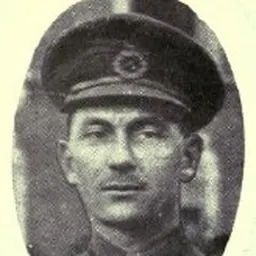
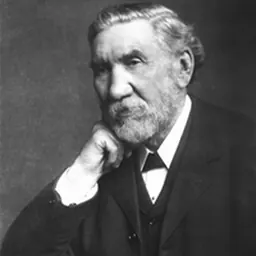

Related people
Same field, nearest in time
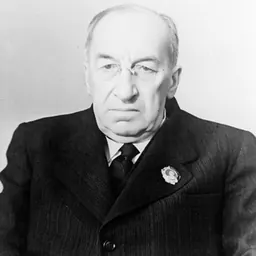
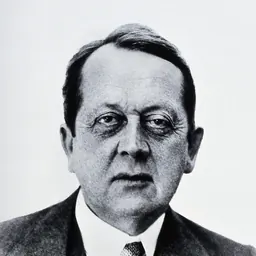



Contemporaries
People whose lives overlapped Frances Gertrude McGill's




Frequently asked questions
Who was Frances Gertrude McGill?
Canadian forensic pathologist
When was Frances Gertrude McGill born?
Frances Gertrude McGill was born in 1877 in Minnedosa.
When did Frances Gertrude McGill die?
Frances Gertrude McGill died on 21 January 1959 in Winnipeg.
What was Frances Gertrude McGill's occupation?
Frances Gertrude McGill was a pathologist, criminologist, allergist, allergologist, bacteriologist and forensic pathologist.
What nationality was Frances Gertrude McGill?
Frances Gertrude McGill was Canadian.
Sources & further reading
· Wikipedia: Frances Gertrude McGill
· DBpedia: Frances Gertrude McGill
Cite this page
APA: Biography.guide. (2026). Frances Gertrude McGill. https://biography.guide/frances-gertrude-mcgill/
MLA: "Frances Gertrude McGill." Biography.guide, https://biography.guide/frances-gertrude-mcgill/.
Chicago: "Frances Gertrude McGill." Biography.guide. https://biography.guide/frances-gertrude-mcgill/.
Data last updated: 2026-09-20 · Spot an error? Report a correction.
Page generated 2026-09-27 05:25 UTC