
About Fortunato de Felice, 2nd Count Panzutti
Lived 1723 – 1789 (aged 65). Fortunato de Felice, 2nd Count Panzutti was a Swiss and Italian lexicographer, linguist, writer, historian, philosopher and mathematician.
Fortunato Bartolomeo de Felice (24 August 1723 – 13 February 1789), 2nd Comte de Panzutti, also known as Fortuné-Barthélemy de Félice and Francesco Placido Bartolomeo De Felice, was an Italian nobleman, a famed author, philosopher, scientist, and is said to have been one of the most important publishers of the 18th century. He is considered a pioneer of education in Switzerland, and a formative contributor to the European Enlightenment.
Life Fortunato Bartolomeo de Félice was born in Rome to a Neapolitan family, as the eldest of six children, on 24 August 1723. He was confirmed in 1733, in the parish of St. Celso e Giuliano. At the age of 12, he studied at Rome and Naples under the Jesuits, taught by the Franciscan Fortunato da Brescia.
On 28 May 1746, he was ordained by papal dispensation, whilst also teaching philosophy. Through his studies at the monastery of San Francesco in Ripa, he discovered a love of physics, becoming friends with Celestino Galiani. In 1753, Galiani appointed de Félice chair of Ancient and Modern Geography, and the chair of experimental physics and mathematics at Naples University. There he became friends with the Prince Raimondo di Sangro who aided him in his translation of the physicist John Arbuthnot's works from Latin.
After rescuing the imprisoned Countess Panzutti, Félice and his new wife Agnese fled to Bern, with the help of his friend Albrecht von Haller, due to religious persecution from the Catholic Church in Rome. He then converted to Protestantism.
In 1758, he founded with :de:Vincenz Bernhard Tscharner the Typographic Society of Bern, which was an Italian-speaking ( l'Estratto de la europea letterature until 1762) and a Latin (, to 1766) literary and scientific journal.
In 1762, after the death of the Countess Panzutti due to influenza at Tscharner's residence, Château Lansitz, de Felice moved to Yverdon where he founded an educational institute for young people from all over Europe, and a printing press. The latter quickly developed into one of the most distinguished in Switzerland, producing the Yverdon Encyclopedia, for which Panzutti is now famous. In 1769, he became a citizen of Yverdon and thereby became Swiss.
He was married four times and had 13 children: in 1756 to Countess Agnese Arcuato, Countessa di Panzutti (1720–1759)
He also had a portrait commissioned, done by an unknown artist. The current holder of the portrait, the de Felice Duchi Estate, puts this painting as the best representation of de Felice in existence.
Works Etrennes aux désœuvrés ou Lettre d'Quaker à ses frères et à un grand docteur. 1766th (In this work Felice railed against the so-called philosophers and Voltaire ) Mémoires de la Société oeconomique de Berne (24 volumes, 1763–72) Essay manière la plus sûre d'un système de police établir of grains. Yverdon 1772nd Dictionnaire géographique, historique et politique de la Suisse. 2 vols. Neuchâtel 1775th Dictionnaire de justice naturelle et civile. 1778th 13 volumes Tableau philosophique de la religion Chrétienne, considérée dans son ensemble dans sa morale et dans ses consolations. Yverdon 1779th Eléments de la police générale d'un Etat. Yverdon 1781st Le développement de la raison . Oeuvres posthumous. Yverdon 1789th Encyclopédie, ou Dictionnaire universel raisonné of connaissances humaines. 42 volumes and 6 supplementary volumes. Yverdon 1770–1776. Reissue: Fischer Verlag, Erlangen 1993. (38,000 pages on 257 microfiches.)
Don’t just read it —
keep it.
Full-length biographies made to live with: read them, listen on the way to work, watch them tonight.
- E-book
- Audio
- Video
Instant download · yours to keep · every purchase keeps this site free
Important facts
Family & relationships
People in Fortunato de Felice, 2nd Count Panzutti's life
Named in this biography and alive at the same time
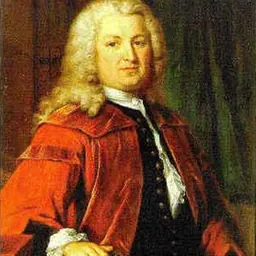

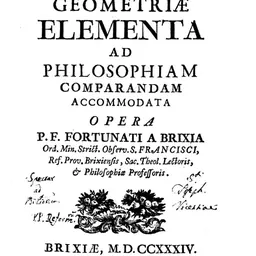
Related people
Same field, nearest in time

Contemporaries
People whose lives overlapped Fortunato de Felice, 2nd Count Panzutti's




Frequently asked questions
Who was Fortunato de Felice, 2nd Count Panzutti?
Italian printer
When was Fortunato de Felice, 2nd Count Panzutti born?
Fortunato de Felice, 2nd Count Panzutti was born on 24 August 1723 in Rome.
When did Fortunato de Felice, 2nd Count Panzutti die?
Fortunato de Felice, 2nd Count Panzutti died on 10 February 1789 in Yverdon-les-Bains.
What was Fortunato de Felice, 2nd Count Panzutti's occupation?
Fortunato de Felice, 2nd Count Panzutti was a lexicographer, linguist, writer, historian, philosopher and mathematician.
What nationality was Fortunato de Felice, 2nd Count Panzutti?
Fortunato de Felice, 2nd Count Panzutti was Swiss and Italian.
Sources & further reading
· Wikipedia: Fortunato de Felice, 2nd Count Panzutti
· DBpedia: Fortunato de Felice, 2nd Count Panzutti
Cite this page
APA: Biography.guide. (2026). Fortunato de Felice, 2nd Count Panzutti. https://biography.guide/fortunato-de-felice-2nd-count-panzutti/
MLA: "Fortunato de Felice, 2nd Count Panzutti." Biography.guide, https://biography.guide/fortunato-de-felice-2nd-count-panzutti/.
Chicago: "Fortunato de Felice, 2nd Count Panzutti." Biography.guide. https://biography.guide/fortunato-de-felice-2nd-count-panzutti/.
Data last updated: 2026-09-20 · Spot an error? Report a correction.
Page generated 2026-09-27 05:32 UTC