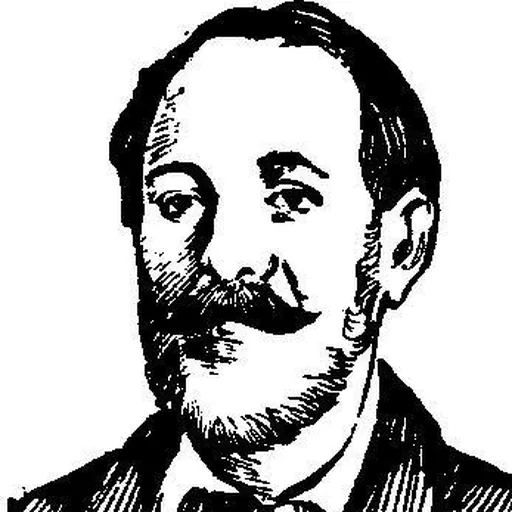
About Florian Aaron
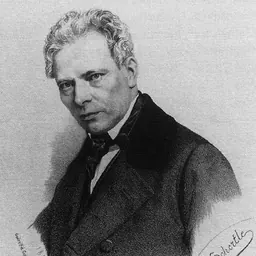
Lived 1805 – 1887 (aged 82). Florian Aaron was a Romanian journalist, university teacher, historian, writer and romanist.
Aaron Florian (January 21, 1805–July 12, 1887) was an Imperial Austrian-born Romanian historian, journalist and revolutionary.
Biography Early years and teaching The son of Romanian Orthodox priest Ioan Florian, he was born in Rod, a village located in the Mărginimea Sibiului region which at the time belonged to the Austrian Empire’s Principality of Transylvania and is now in Romania. After attending primary school in Sibiu, he studied at the gymnasium in Blaj. He then enrolled at the Royal University of Pest. In 1826, the Wallachian boyar intellectual Dinicu Golescu invited Florian to teach Latin at the school in Golești, where he remained until 1830. At that point, he transferred to the Craiova Central School.
In 1832, Florian was named teacher of world history at Saint Sava College in Bucharest, the capital of Wallachia. This ushered in the most stable phase of his career, lasting a decade and a half. He became one of the institution’s more prominent faculty members, inspiring his students to cherish their national history. Moreover, Florian published textbooks and took part in committees for bettering the education system. In 1836, he was editor at Ion Heliade Rădulescu’s Muzeul național, while also making consistent contributions to the Brașov-based Foaie pentru minte, inimă și literatură, run by his friend George Bariț. His dispatches from Bucharest, usually unsigned, presented a lucid analysis of the local political scene.
1848 Revolution In his textbooks on history, Florian emphasized the role of the masses in achieving change, anticipating his pupil Nicolae Bălcescu. He criticized the boyars for impeding social progress, believing the lower classes would have to take power by force. Thus, he naturally joined the revolutionary movement from its first days. Writing to Bariț on June 12, 1848, he welcomed the “new era” based on principles of liberté, égalité, fraternité, and heralded the constitution as “an enchanted word, a joyous deed”. Appointed by the provisional government, he served as administrator of Ilfov County (June 23–August 7) and of Dolj County (August 7–September 22). In late June, he was ordered to lead the government members back from their temporary refuge at Rucăr. In September, at Craiova, he orchestrated the burning of Regulamentul Organic. He also tried to stop a messenger from Ottoman military commander Fuad Efendi to the pasha of the Vidin Sanjak, seeking reinforcements to crush the revolution in Oltenia. He remained loyal to the movement until the end, calling for constitutional principles to be applied.
Fired from his teaching job, Florian was given a passport thanks to the intervention of his close friend Gheorghe Magheru. He stopped at Sibiu, where he was named secretary of the Romanian National Committee. After Transylvania’s own revolution was defeated, he attempted to seek refuge in Wallachia. Arrested in Ploiești in May 1849, he was sent to Râmnicu Vâlcea and Bucharest, investigated, tried and deported for three years.
Aftermath and legacy In 1853, Florian was chief editor of the Brașov Telegraful Român newspaper, where he launched a sustained campaign in favor of a national culture and of the Romanian language. He argued for replacing Romanian Cyrillic with the Latin alphabet, and for phonetic spelling. Similarly careful phrasing and reasoned arguments were also employed in an 1840-1841 work he co-wrote, endorsing the use of French neologisms. He returned to Bucharest in late 1853, and was named head of the Brâncovenesc Hospital, where he remained until 1860. By 1857, he was arguing that the entire territory inhabited by Romanians should be considered their fatherland. In 1858, on the eve of the union of the Principalities, he published a monograph on Michael the Brave, suggesting that the ruler had united all Romanians into a single state.
In 1865, shortly after the University of Bucharest was founded, Florian began teaching a course on world history, but illness soon forced him to retire. From 1866 to 1872, he belonged to a council on public education. His health steadily deteriorated until his death in 1887.
Don’t just read it —
keep it.
Full-length biographies made to live with: read them, listen on the way to work, watch them tonight.
- E-book
- Audio
- Video
Instant download · yours to keep · every purchase keeps this site free
Important facts
People in Florian Aaron's life
Named in this biography and alive at the same time



Related people
Same field, nearest in time


Contemporaries
People whose lives overlapped Florian Aaron's





Frequently asked questions
Who was Florian Aaron?
Romanian journalist (1805–1887)
When was Florian Aaron born?
Florian Aaron was born on 21 January 1805 in Rod.
When did Florian Aaron die?
Florian Aaron died on 12 July 1887 in Bucharest.
What was Florian Aaron's occupation?
Florian Aaron was a journalist, university teacher, historian, writer and romanist.
What nationality was Florian Aaron?
Florian Aaron was Romanian.
Sources & further reading
Cite this page
APA: Biography.guide. (2026). Florian Aaron. https://biography.guide/florian-aaron/
MLA: "Florian Aaron." Biography.guide, https://biography.guide/florian-aaron/.
Chicago: "Florian Aaron." Biography.guide. https://biography.guide/florian-aaron/.
Data last updated: 2026-09-22 · Spot an error? Report a correction.
Portrait: Wikimedia Commons · author & licence
Page generated 2026-09-27 05:02 UTC