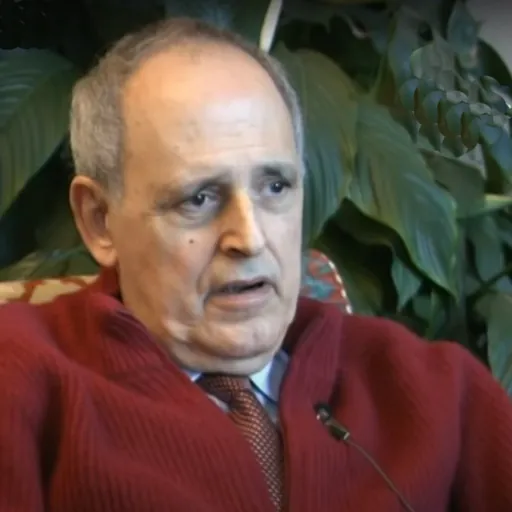
About Flavio Costantini
Lived 1926 – 2013 (aged 86). Flavio Costantini was an Italian painter and writer.
Flavio Costantini (21 September 1926 – 20 May 2013) was an Italian painter and illustrator. Costantini created portraits of writers and artists for newspapers, and illustrated several novels. His early works were inspired by the novelist Franz Kafka, and by literary, utopian, and anarchist ideals. His later work presented a pessimistic view of civilization. He created series of paintings exploring historical themes: anarchy, the wreck of the Titanic, alchemy, Mozart, the French Revolution and its victims, Yekaterinburg, and the murder of Nicholas II and his family. His last series offered a dark reading of Pinocchio, which he considered one of the three or four greatest Italian novels.
Biography In September 1926 he was born in Rome to middle-class parents. His father was an amateur painter, and as a child, Costantini was crafty, and kept a diary accompanied with newspaper cut-outs, collages, photos and drawings. He was forced to drop out of the first high school he attended after he failed his French and Latin exams. He subsequently enrolled at the nautical high school, and later certified as a sea captain. He served for a short time in the Italian Navy, and from 1951 to 1954 worked in the Merchant Marine, which enabled him to travel to new cities around the world. He was a member of the artists group that founded the Galleria del Deposito in Boccadasse, Genoa. Other members were Eugenio Carmi, Emanuele Luzzati, Carlo Vita, etc. A collector of old illustrated magazines, he used this material to create in his Rapallo home and studio paintings and portraits, which typically include period pieces and advertisements. He often depicted scenes in Genoa (squares, shops, buildings, boats), contrasting the old and the new. Costantini died on 20 May 2013, in Genoa after a short illness. A memorial, with talks by friends and critics, was held on 12 June 2013 at the Museo Luzzati, Genoa, which holds a number of his works.
Inspiration Costantini first experimented with illustration as a hobby during his time at sea, when he was inspired to make a series of roughly one hundred black and white drawings after reading Kafka's novels: "I started to draw because I read the Kafka books … it was impossible to write like Kafka, so I began to draw."
It was Costantini's childhood experiences of World War II that first led him to address the suffering and meaninglessness of the world in his art. But it was after a month-long visit to Moscow in 1962, that Costantini became disabused of his communist beliefs and became interested in utopianism. Shortly thereafter, he read Victor Serge's Memoirs of a Revolutionary and became inspired by the era of French anarchism it depicted. Although full of contradictions, he referred to the anarchists it depicted as "people who demanded, before anything else, harmony between words and deeds." Of this time, Costantini said, "I started to promote the idea of anarchism as far as I could," and he continued to depict anarchism in his works over the course of the next several decades. Costantini undertook furious historical research about the figures and locations he depicted, visiting the Paris police archives at the Quai des Orfévres and the Bibliothèque Nationale in Paris, as well as the Archivio di Stato in Rome, and titling each paintings with the date and place of the incident featured. Levine's later poem "On a Drawing by Flavio" describes Costantini's stark portrait of the Rabbi of Auschwitz, who "bows his head and prays / for us all," and used this illustration on the cover of his book Ashes: Poems New and Old (1978).
Novels illustrated The Pony by Vladimir Mayakovsky (1969, reprint 2006) Heart by Edmondo De Amicis (1977) The Shadow-Line by Joseph Conrad (1989) Notes from Underground by Fyodor Dostoyevsky (1997)
Don’t just read it —
keep it.
Full-length biographies made to live with: read them, listen on the way to work, watch them tonight.
- E-book
- Audio
- Video
Instant download · yours to keep · every purchase keeps this site free
Important facts
People in Flavio Costantini's life
Named in this biography and alive at the same time


Related people
Same field, nearest in time


Contemporaries
People whose lives overlapped Flavio Costantini's

Frequently asked questions
Who was Flavio Costantini?
Italian artist (1926-2013)
When was Flavio Costantini born?
Flavio Costantini was born on 21 September 1926 in Rome.
When did Flavio Costantini die?
Flavio Costantini died on 20 May 2013 in Genoa.
What was Flavio Costantini's occupation?
Flavio Costantini was a painter and writer.
What nationality was Flavio Costantini?
Flavio Costantini was Italian.
Sources & further reading
· Wikipedia: Flavio Costantini
Cite this page
APA: Biography.guide. (2026). Flavio Costantini. https://biography.guide/flavio-costantini/
MLA: "Flavio Costantini." Biography.guide, https://biography.guide/flavio-costantini/.
Chicago: "Flavio Costantini." Biography.guide. https://biography.guide/flavio-costantini/.
Data last updated: 2026-09-22 · Spot an error? Report a correction.
Portrait: Wikimedia Commons · author & licence
Page generated 2026-09-27 05:02 UTC