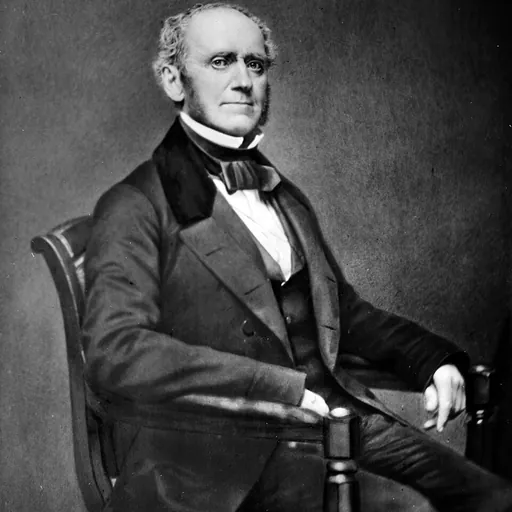
About Fitz-Greene Halleck
Lived 1790 – 1867 (aged 77). Fitz-Greene Halleck was an American poet and writer.
Fitz-Greene Halleck (July 8, 1790 – November 19, 1867) was an American poet and member of the Knickerbocker Group. Born and raised in Guilford, Connecticut, he went to New York City at the age of 20, and lived and worked there for nearly four decades. He was sometimes called "the American Byron". His poetry was popular and widely read but later fell out of favor. It has been studied since the late twentieth century for its homosexual themes and insights into nineteenth-century society.
In 1832, Halleck, a cultural celebrity, started working as personal secretary and adviser to the philanthropist John Jacob Astor, who appointed him as one of the original trustees of the Astor Library. Given an annuity by Astor's estate, in 1849 Halleck retired to Guilford, where he lived with his sister Marie Halleck for the remainder of his life.
Life and career
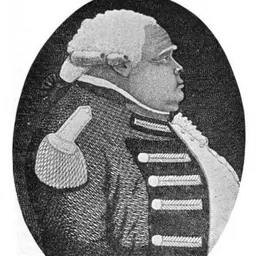
Early life Fitz-Greene Halleck was born on July 8, 1790, in Guilford, Connecticut, in a house at the corner of Whitfield and Water Streets. His father was Israel Halleck, who claimed descendance from a Peter Hallock who came to America from England with John Youngs in 1638. Israel Halleck was a loyalist during the American Revolution, and though he claimed to be a British Commissary, his son speculated that he was in reality only a sutler to the British forces. Israel Halleck also associated with the future King William IV of England, who was a midshipman in the navy at the time. As a boy, Halleck attended the Academy on Guilford Green, whose schoolmaster was then Samuel Johnson, Junior, the compiler of A School Dictionary, the first dictionary both compiled and published in the United States. Halleck was a favorite of Johnson, who gave him a copy of Thomas Campbell's first book of poems, The Pleasures of Hope, which was Halleck's first personal book.
At the age of 15, Halleck finished at the Guilford school and started work at a store run by a maternal relative. In 1809, he joined the state militia, and also found work teaching evening school. He worked for Barker for the next 20 years.
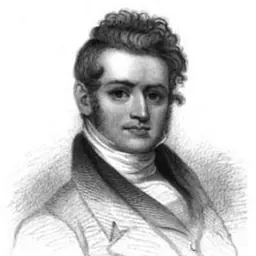
Halleck began to write with his friend Joseph Rodman Drake. In 1819 they wrote and published the anonymous Croaker Papers, which were satires of New York society. These 35 poems were published individually in the New York Evening Post and National Advertiser over several months. An unauthorized collection was published in 1819 with 24 selections. They published the poems under the pseudonyms Croaker; Croaker, Jr.; and Croaker and Co., taken from a character in Oliver Goldsmith's The Good‐Natured Man.
Both Halleck and Drake became associated with the New York writers known as the Knickerbocker Group, led by William Cullen Bryant, James Fenimore Cooper and Washington Irving, pioneers in their fields. Drake advised Halleck to pursue becoming a nationally known poet and to sit on "Appalachia's brow." He thought contemplating the immense power of American nature would inspire his friend's imagination. A medical student, Drake died in 1820 of consumption (tuberculosis) at age 25. Halleck commemorated his friend in "The Death of Joseph Rodman Drake" (1820), which begins, "Green be the turf above thee".
Sarah Eckford Drake, the student's young widow, was left with their daughter. She showed interest in having Halleck as her second husband. His satires included her as a figure, and in one he referred to her as a witch. She died in 1828 at a young age. In 1832, Halleck was hired as the private secretary to John Jacob Astor. The wealthy fur trader merchant turned philanthropist later appointed him as one of the original trustees of the Astor Library (the basis of the New York Public Library). Halleck also served as Astor's cultural tutor, advising him on pieces of art to purchase.
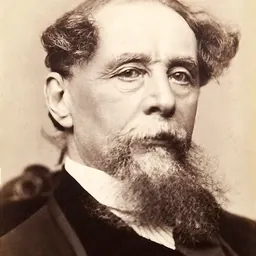
During this period, Halleck was widely read and was part of New York literary society. As one of the younger members of the Knickerbocker Group, he published with them and met associated visiting writers, such as Charles Dickens. His satires were thought to challenge the era's "sacred institutions" and Halleck was known for his wit and charm.
Halleck often turned down requests for public appearances in his later years, and he complained about being pestered by "frequent appeals for letters to hard-hearted editors". When people named children after him, Halleck seemed annoyed rather than honored. He wrote, "I am favored by affectionate fathers with epistles announcing that their eldest-born has been named after me, a calamity that costs me a letter of profound gratefulness". He is buried at Alderbrook Cemetery in Guilford.
Sexuality Halleck never married. His biographer, John W. M. Hallock, believes that he was homosexual. He found that Halleck was enamored at the age of 19 with a young Cuban named Carlos Menie, to whom he dedicated a few of his early poems. Hallock suggests that Halleck was in love with his friend Joseph Rodman Drake. James Grant Wilson noted how the poet described serving as best man at Drake's wedding:
"[Drake] has married, and, as his wife's father is rich, I imagine he will write no more. He was poor, as poets, of course, always are, and offered himself a sacrifice at the shrine of Hymen to shun the 'pains and penalties' of poverty. I officiated as groomsman, though much against my will. His wife was good natured, and loves him to distraction. He is perhaps the handsomest man in New York, — a face like an angel, a form like an Apollo; and, as I well knew that his person was the true index of his mind, I felt myself during the ceremony as committing a crime in aiding and assisting such a sacrifice."
Hallock described the poet Halleck's last major work, "Young America", as both "a jaded critique of marriage and a pederastic boy-worship reminiscent of classical homosexuality." In 1903, plans were set to move the bodies of Drake, his wife, daughter, sister, and nephew to Halleck's plot in Guilford.
Critical response In the mid to late 19th century, Halleck was regarded as one of America's leading poets and had a wide general readership; he was dubbed "the American Byron". Among his most well-known poems was "Marco Bozzaris", which Halleck noted was "puffed in a thousand (more or less) magazines and newspapers" in the United States, England, Scotland, and Ireland. Charles Dickens spoke fondly of the "accomplished writer" in a January 1868 letter to William Makepeace Thackeray (as recounted in Thackeray in the United States). It is not clear whether Dickens admired Halleck's poetic skills or his wit and charm, which was often lauded by his contemporaries. Abraham Lincoln was known to occasionally read Halleck's poetry aloud to friends in the White House.
The American writer and critic Edgar Allan Poe reviewed Halleck's poetry collection Alnwick Castle. Regarding Halleck's poem "Fanny", he said, "to uncultivated ears... [it is] endurable, but to the practiced versifier it is little less than torture." In the September 1843 issue of Graham's Magazine, Poe wrote that Halleck "has nearly abandoned the Muses, much to the regret of his friends and to the neglect of his reputation."
Since the later 20th century, Halleck's poetry has been studied for its homosexual themes, and for what it reveals about the social world of the nineteenth century.
Legacy
In 1869, the collected Poetical Writings and a traditional Life and Letters, both edited and written by James Grant Wilson, were published. Also in 1869, a granite monument was erected to Halleck in Guilford, the first to memorialize an American poet. The writer Bayard Taylor spoke at the commemoration. Taylor wrote America's first homosexual novel, Joseph and His Friend (1870), believed to be a fictional account of the relationship between Halleck and Drake. In 1877 the memorial statue of Halleck was erected in New York's Central Park; Halleck is the only American writer on the Literary Walk. It was dedicated by President Rutherford B. Hayes, with 10,000 people attending. After that, requirements for memorial statues in the park became more stringent. In 2006 the Fitz-Greene Halleck Society was founded to raise awareness of Halleck and his work.
Works Croaker Papers (1819), complete edition, 1860 Marco Bozzaris (1825) Alnwick Castle, with Other Poems (1827)
Don’t just read it —
keep it.
Full-length biographies made to live with: read them, listen on the way to work, watch them tonight.
- E-book
- Audio
- Video
Instant download · yours to keep · every purchase keeps this site free
Important facts
People in Fitz-Greene Halleck's life
Named in this biography and alive at the same time

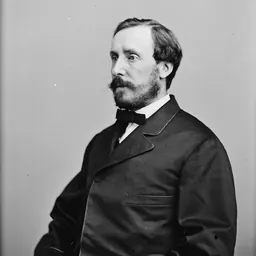
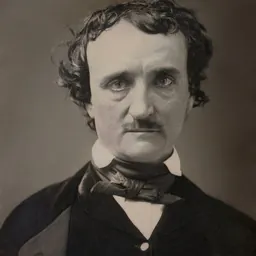

Related people
Same field, nearest in time
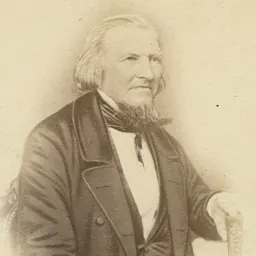

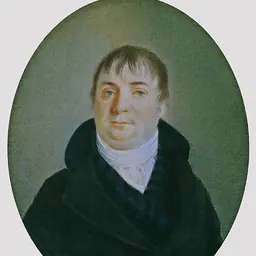
Contemporaries
People whose lives overlapped Fitz-Greene Halleck's


Frequently asked questions
Who was Fitz-Greene Halleck?
American writer (1790–1867)
When was Fitz-Greene Halleck born?
Fitz-Greene Halleck was born on 8 July 1790 in Guilford.
When did Fitz-Greene Halleck die?
Fitz-Greene Halleck died on 19 November 1867 in Guilford.
What was Fitz-Greene Halleck's occupation?
Fitz-Greene Halleck was a poet and writer.
What nationality was Fitz-Greene Halleck?
Fitz-Greene Halleck was American.
Sources & further reading
· Wikipedia: Fitz-Greene Halleck
· DBpedia: Fitz-Greene Halleck
Cite this page
APA: Biography.guide. (2026). Fitz-Greene Halleck. https://biography.guide/fitz-greene-halleck/
MLA: "Fitz-Greene Halleck." Biography.guide, https://biography.guide/fitz-greene-halleck/.
Chicago: "Fitz-Greene Halleck." Biography.guide. https://biography.guide/fitz-greene-halleck/.
Data last updated: 2026-09-23 · Spot an error? Report a correction.
Portrait: Wikimedia Commons · author & licence
Page generated 2026-09-27 05:07 UTC