
About Fiore dei Liberi
Lived 1350 – 1420 (aged 69–70). Fiore dei Liberi was a fencer, diplomat, fencing master and mercenary.
Fiore Furlano de Cividale d'Austria, delli Liberi da Premariacco (Fiore dei Liberi, Fiore Furlano, Fiore de Cividale d'Austria; born ca. 1350; died after 1409) was a late 14th century knight, diplomat, and itinerant fencing master.
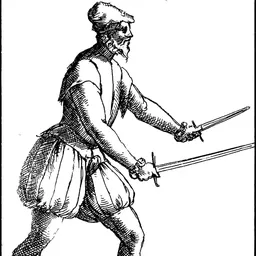
He is the earliest Italian master from whom an martial arts manual has survived. His Flower of Battle (Fior di Battaglia, Flos Duellatorum) is among the oldest surviving fencing manuals.
Life
Fiore dei Liberi was born in Cividale del Friuli, a town in the Patriarchal State of Aquileia in the Friuli region of modern-day Italy, the son of Benedetto and scion of a Liberi house of Premariacco. The term Liberi, while potentially merely a surname, probably indicates that his family had imperial immediacy, either as part of the Edelfrei (nobili liberi, "free nobles"), the Germanic unindentured knightly class which formed the lower tier of nobility in the Middle Ages, or possibly of the rising class of Imperial Free Knights. It has been suggested by various historians that Fiore and Benedetto were descended from Cristallo dei Liberi of Premariacco, who was granted immediacy in 1110 by Emperor Henry V, but this has yet to be confirmed.
Fiore wrote that he had a natural inclination to the martial arts and began training at a young age, ultimately studying with "countless" masters from both the Italian and German parts of the Holy Roman Empire.
He also writes of meeting many "false" or unworthy masters who lacked even the limited skill he'd expect in a good student, Niccolo Unricilino (Nikolo von Urslingen), Galeazzo Cattaneo dei Grumelli (Galeazzo Gonzaga da Mantova), Lancillotto Beccaria di Pavia, Giovannino da Baggio di Milano, and Azzone di Castelbarco, and also highlights some of their martial exploits. That same year, the Aquileian War of Succession erupted as a coalition of secular nobles from Udine and surrounding cities sought to remove the newly appointed Patriarch, Philippe II d'Alençon. Fiore seems to have sided with the secular nobility against the cardinal as in 1383 there is record of him being tasked by the grand council with inspection and maintenance on the artillery pieces defending Udine (including large crossbows and catapults). There are also records of him working variously as a magistrate, peace officer, and agent of the grand council during the course of 1384, but after that the historical record is silent. The war continued until a new Patriarch was appointed in 1389 and a peace settlement was reached, but it's unclear if Fiore remained involved for the duration. Given that he appears in council records five times in 1384, it would be quite odd for him to be completely unmentioned over the subsequent five years,
After the war, Fiore seems to have traveled a good deal in northern Italy, teaching fencing and training men for duels. In 1395, Fiore can be placed in Padua training the mercenary captain Galeazzo Gonzaga of Mantua for a duel with the French Marshal Jean II Le Maingre (who used the war name "Boucicaut"). Galeazzo made the challenge when Boucicaut called into question the valor of Italians at the royal court of France, and the duel was ultimately set for Padua on 15 August. Both Francesco Novello da Carrara, Lord of Padua, and Francesco I Gonzaga, Lord of Mantua, were in attendance. The duel was to begin with spears on horseback, but Boucicaut became impatient and dismounted, attacking his opponent before he could mount his own horse. Cattaneo landed a solid blow on the Frenchman's helmet, but was subsequently disarmed. At this point, Boucicaut reached for his poleaxe but the lords intervened to end the duel.
Fiore surfaces again in Pavia in 1399, this time training Giovannino da Baggio for a duel with a German squire named Sirano. It was fought on 24 June and attended by Gian Galeazzo Visconti, Duke of Milan, as well as the duchess and other nobles. The duel was to consist of three bouts of mounted lance followed by three bouts each of dismounted poleaxe, estoc, and dagger. They ultimately rode two additional passes and on the fifth, Baggio impaled Sirano's horse through the chest, slaying the horse but losing his lance in the process. They fought the other nine bouts as scheduled, and due to the strength of their armor (and the fact that all of the weapons were blunted), both combatants reportedly emerged from these exchanges unharmed.
Fiore was likely involved in at least one other duel that year, between his final named student Azzone di Castelbarco and Giovanni degli Ordelaffi, as the latter is known to have died in 1399. After Castelbarco's duels, Fiore's activities are unclear. Based on the allegiances of the nobles that he trained in the 1390s, he seems to have been associated with the ducal court of Milan in the latter part of his career. we may assume that he devoted a considerable amount of time to writing during this decade.
Beyond this, nothing certain is known of Fiore's activities in the 15th century. Francesco Novati and D. Luigi Zanutto both assume that some time before 1409 he accepted an appointment as court fencing master to Niccolò III d'Este, Marquis of Ferrara, Modena, and Parma; presumably he would have made this change when Milan fell into disarray in 1402, though Zanutto went so far as to speculate that he trained Niccolò for his 1399 passage at arms. However, while two surviving copies of "the Flower of Battle" are dedicated to the marquis, it seems more likely that the manuscripts were written as a diplomatic gift to Ferrara from Milan when they made peace in 1404. The time and place of Fiore's death remain unknown.
Despite the depth and complexity of his writings, Fiore dei Liberi does not seem to have been a very influential master in the development of Italian fencing. That field was instead dominated by the tradition of his near-contemporary the Bolognese master Filippo di Bartolomeo Dardi. Even so, there are a number of later treatises which bear strong resemblance to his work, including the writings of Philippo di Vadi and Ludwig VI von Eyb of Hartenstein. This may be due to the direct influence of Fiore or his writings, or it may instead indicate that the older tradition of Johane and Nicholai survived and spread outside of his direct line.
The Flower of Battle
Four illuminated manuscript copies of this treatise survive, and there are records of at least two others whose current locations are unknown. The Ms. Ludwig XV 13 and the Pisani Dossi Ms. are both dedicated to Niccolò III d'Este and state that they were written at his request and according to his design. The Ms. M.383, on the other hand, lacks a dedication and claims to have been laid out according to his own intelligence while the Mss. Latin 11269 lost any dedication it might have had along with its prologue. Each of the extant copies of the Flower of Battle follows a distinct order, though both of these pairs contain strong similarities to each other in order of presentation.
The major sections of the work include: abrazare, unarmed plays (usually translated as wrestling but more literally grappling); daga, including both unarmed defenses against the dagger and plays of dagger against dagger; spada a un mano, the use of the sword in one hand (also called "the sword without the buckler"); spada a dui mani, the use of the sword in two hands; spada en arme, the use of the sword in armor (primarily techniques from the halfsword); azza, plays of the poleaxe in armor; lancia, spear and staff plays; and mounted combat (including the spear, the sword, and grappling). Brief bridging sections serve to connect each of these, covering such topics as bastoncello, or plays of a small stick or baton against unarmed and dagger-wielding opponents; plays of longsword vs. dagger; plays of staff and dagger and of two clubs and a dagger; and the use of the chiavarina against a man on horseback.
The format of instruction is largely consistent across all copies of the treatise. Each section begins with a group of Masters (or Teachers), figures in golden crowns who each demonstrate a particular guard for use with their weapon. These are followed by a master called "Remedio" (remedy) who demonstrates a defensive technique against some basic attack (usually how to use one of the listed guards to defend), and then by his various Scholars (or Students), figures wearing golden garters on their legs who demonstrate iterations and variations of this remedy. After the scholars there is typically a master called "Contrario" (counter), wearing both crown and garter, who demonstrates how to counter the master's remedy (and those of his scholars), who is likewise sometimes followed by his own scholars in garters. In rare cases, a fourth type of master appears called "Contra-Contrario" (counter-counter), who likewise wears the crown and garter and demonstrates how to defeat the master's counter. Some sections feature multiple master remedies or master counters, while some have only one. There are also many cases in which an image in one manuscript will only feature a scholar's garter where the corresponding image in another also includes a master's crown. Depending on the instance, this may either be intentional or merely an error in the art.
Fior di Battaglia (Ms. M.383) The Ms. M.383, titled Fior di Battaglia, is in the holdings of the Morgan Library & Museum in New York City, NY. Novati described it as a small, thin, vellum folio, pen and ink with gold highlights, and illustrations of sword and lance combat on foot and horseback.
Written between 1400 and 1409. The Pisani Dossi Ms. dates to 1409 and states that the master had fifty years of experience in the martial arts; the Ms. M.383 and the Ms. Ludwig XV 13 both state that he had been training for "forty years and more", which makes them slightly older. before 1780 – it occupied ff 241–259 of a larger collective binding titled, Arte di armeggiare a piedi ed acavallo (codex Soranzo MCCLXI) in the Biblioteca Soranzo in Venice (Library of Jacopo Soranzo, Venetian senator, 18th century). The other contents of this codex are unknown. 1780–1836 – the collection of the Venetian former Jesuit Matteo Luigi Canonici (1727–c.1806) (sold London, Sotheby's, 15 June 1836, no. 40). 1836–1903 – owned by Rev. Walter Sneyd of Bagington Rectory, Coventry (sold London, Sotheby's, 19 Dec. 1903, no. 720). 1903–1909 – owned by Tammaro de Marinis (catalog 8, 1908, plate 9). 1909–1913 – owned by John Pierpont Morgan. 1913–1924 – owned by John Pierpont Morgan, Jr. (donated 1924). 1924–present – held by the Morgan Library & Museum.
The contents of the Ms. M.383 are as follows:
Prologue (ff 1r–2r) Mounted combat (ff 2v–8r) Spear vs. cavalry (ff 8r–8v) Lanza plays (ff 9r–9v) Spada en arme stances (ff 10r–10v) Spada en arme plays (ff 10v–11v) Spada a dui mani stances (ff 12r–13r) Spada a dui mani wide plays (ff 13v–14v) Spada a dui mani close plays (ff 15r–16v) Sword vs. dagger play (f 17r) Spada a un mano plays (f 17v) Longsword against spear/spear and dagger against spear (f 18r) Sword vs. dagger plays (ff 18r–18v) Spada a un mano play (f 19r)
Fior di Battaglia (Ms. Ludwig XV 13) The Ms. Ludwig XV 13, also titled Fior di Battaglia, is currently in the holdings of the J. Paul Getty Museum in Los Angeles, CA. Its prologue, format, illustrations, and text are all very similar to the Ms. M.383, though it's largely free of silver enamel. The text takes the form of descriptive paragraphs set in poor Italian verse, which are nevertheless fairly clear and informative. Despite its shared characteristics with the Ms. M.383, there are important differences, not the least of which is the vastly different order of the information. This is the longest and most comprehensive of the four manuscripts of Fior di Battaglia. This manuscript is typically referred to as the 'Getty version'.
The known provenance of the Ms. Ludwig XV 13 is: The Pisani Dossi Ms. is the only manuscript in the series that includes a date, claiming to be completed on 10 February 1409 after six months of effort. It consists of 36 folia and possesses two different prologues, one in Renaissance Latin and one in Italian. The body of the text consists of four to six illustrations per page, each with only a brief couplet or quatrain to explain it. This manuscript is typically referred to as either the 'Novati' or 'Pisani Dossi version'.
The Pisani Dossi Ms. was published in facsimile by Francesco Novati in 1902, including the only reproductions of a copy of the Flower of Battle that are clearly in the public domain. However, it is unclear how accurate this facsimile is as evidence suggests that Novati may have hired an artist to create a tracing of the original manuscript rather than reproducing it directly. This would have provided ample opportunity for errors to creep into the images, and might also account for the significant divergences from the artistic style of the Getty and the Morgan.
The known provenance of the Pisani Dossi Ms. is: Any preface it once possessed is missing from the current form of the manuscript; it consists of 44 folios with two pairings per page, and is the only copy of Fiore's treatise whose illustrations are fully painted. Unlike Fiore's other works, this manuscript is written entirely in Latin; its descriptions are cast in couplets and quatrains similar to the Pisani Dossi Ms. This manuscript is generally referred to as either the Florius or the Paris. Mondschein speculates that this was a presentation copy made for Lionello d'Este.
The known provenance of the Mss. Latin 11269 is:
The contents and current whereabouts of these copies of the Flower of Battle are unknown. It is possible that these listings refer to manuscripts listed above, though none currently possess the correct number of folios or match the physical descriptions.
Don’t just read it —
keep it.
Full-length biographies made to live with: read them, listen on the way to work, watch them tonight.
- E-book
- Audio
- Video
Instant download · yours to keep · every purchase keeps this site free
Important facts
People in Fiore dei Liberi's life
Named in this biography and alive at the same time
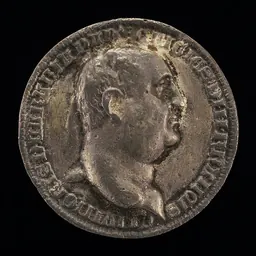
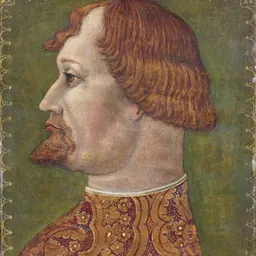
Related people
Same field, nearest in time
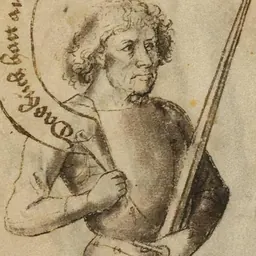


Contemporaries
People whose lives overlapped Fiore dei Liberi's




Frequently asked questions
Who was Fiore dei Liberi?
late-14th Century Italian knight, diplomat, and master of arms
When was Fiore dei Liberi born?
Fiore dei Liberi was born in 1350 in Cividale del Friuli.
When did Fiore dei Liberi die?
Fiore dei Liberi died in 1420.
What was Fiore dei Liberi's occupation?
Fiore dei Liberi was a fencer, diplomat, fencing master and mercenary.
What nationality was Fiore dei Liberi?
Fiore dei Liberi's recorded nationality: Italian language.
Sources & further reading
Cite this page
APA: Biography.guide. (2026). Fiore dei Liberi. https://biography.guide/fiore-dei-liberi/
MLA: "Fiore dei Liberi." Biography.guide, https://biography.guide/fiore-dei-liberi/.
Chicago: "Fiore dei Liberi." Biography.guide. https://biography.guide/fiore-dei-liberi/.
Data last updated: 2026-09-20 · Spot an error? Report a correction.
Page generated 2026-09-27 05:26 UTC